Trump Expands Drug-Pricing Push With Nine New Pharmaceutical Deals as Administration Targets Lower Costs
The Trump administration has expanded its most-favored-nation drug-pricing initiative to nine additional pharmaceutical manufacturers, extending a policy designed to bring certain U.S. prescription-drug prices closer to the lower prices paid in other developed countries.
The Aug. 31 announcement brings the administration’s total number of pharmaceutical companies participating in the initiative to 26, which the White House says represents about 89% of the branded-drug market.
The latest companies are Alcon, Astellas Pharma, BeOne Medicines, BridgeBio, CSL, Kyowa Kirin, Sun Pharma, Teva Pharmaceuticals and UCB.
The agreements cover medicines used to treat conditions including hemophilia, Parkinson’s disease, glaucoma, macular degeneration, liver disease, dermatological conditions and cancer.
But while the administration has promoted the agreements as a major expansion of its effort to lower American drug costs, important details remain unavailable publicly, including the precise discounts on individual medicines and how much patients will ultimately save.
What the New Drug Deals Do
The agreements are built around the administration’s most-favored-nation, or MFN, pricing model.
Under the framework, participating manufacturers agree to provide state Medicaid programs with access to prices tied to the lowest prices paid in other developed nations.
The companies also agreed to apply MFN pricing to new innovative medicines they introduce in the United States, according to the White House.
The administration argues that American consumers have historically paid substantially more for many prescription medicines than patients in other wealthy countries. Reuters has reported that U.S. patients often pay nearly three times as much for prescription medicines as consumers in other developed nations.
President Trump has described the new agreements as part of a broader effort to reduce those differences.
However, the actual financial effect will depend on which medicines are covered, the negotiated prices and how the agreements interact with existing insurance and government purchasing arrangements.
Nine More Companies Join the Program
The latest group includes a mix of pharmaceutical, biotechnology and specialty-medicine manufacturers.
The nine companies are:
- Alcon
- Astellas Pharma
- BeOne Medicines
- BridgeBio
- CSL
- Kyowa Kirin
- Sun Pharma
- Teva Pharmaceuticals
- UCB
The expansion is significant because the administration’s earlier MFN agreements largely focused on some of the world’s largest drug manufacturers.
The White House says the 26 participating companies collectively account for 89% of the branded-drug market.
The administration has previously reached agreements with companies including Pfizer, Eli Lilly, Novo Nordisk, Amgen, Merck, Sanofi, Johnson & Johnson, AbbVie and Regeneron.
Administration Projects More Than $600 Billion in Savings
Trump said the expanded pricing arrangements could save Americans more than $600 billion.
The administration has characterized the figure as an estimate of savings over the next decade.
That projection should be distinguished from money already saved by consumers or government programs. The actual savings will depend on how the agreements are implemented and the prices ultimately paid.
Reuters reported that the terms of the latest arrangements were not sufficiently detailed publicly to establish the precise level of savings for either government programs or individual patients.
That uncertainty is particularly important because Medicaid already receives substantial statutory discounts and rebates from pharmaceutical manufacturers.
As a result, a lower MFN price does not necessarily translate dollar-for-dollar into an equivalent reduction in what an individual Medicaid beneficiary pays at the pharmacy counter.
Medicaid Is a Major Part of the Agreements
The new arrangements give state Medicaid programs access to MFN pricing on medicines produced by the participating companies.
Medicaid is jointly funded by the federal government and the states and already operates under rules requiring manufacturers to provide rebates on covered prescription drugs.
The administration nevertheless argues that additional negotiated price reductions could generate significant savings for government health programs and taxpayers.
The precise impact remains dependent on the final prices, the medicines covered and how the new arrangements interact with existing Medicaid rebates. Reuters noted that those details were not fully disclosed.
For patients, the effect could also vary considerably depending on whether they receive their medicines through Medicaid, private insurance, Medicare or direct purchases.
The Agreements Extend Beyond Existing Medicines
One of the more significant features of the initiative is that the companies have agreed to MFN treatment for new innovative medicines introduced in the United States.
The White House says this provision is intended to prevent future medicines from entering the American market at prices substantially above those paid in comparable developed countries.
That provision also makes the agreements broader than a one-time reduction on a particular group of existing products.
The practical impact, however, will depend on how the individual agreements define eligible products and pricing arrangements.
Nearly $20 Billion in U.S. Manufacturing Commitments
The agreements also contain a manufacturing component.
The nine companies collectively committed at least $19.6 billion in near-term investments in pharmaceutical manufacturing in the United States, according to the White House.
The administration says those investments will strengthen domestic manufacturing capacity and pharmaceutical supply chains.
The manufacturing commitments are part of a broader administration strategy that links drug pricing with domestic production and supply-chain security.
The White House has argued that expanding U.S. pharmaceutical manufacturing could reduce reliance on overseas production while creating additional capacity for medicines considered important to national security.
The exact timing and scope of individual projects, however, varies by company.
Drug Ingredients Added to a Federal Reserve
Several participating manufacturers also agreed to provide active pharmaceutical ingredients, or APIs, for the Strategic Active Pharmaceutical Ingredients Reserve.
The reserve is intended to help the United States maintain access to critical pharmaceutical ingredients during emergencies or disruptions in global supply chains.
Among the announced commitments, UCB agreed to provide levetiracetam. Sun Pharma committed clindamycin and doxycycline, while other participating companies also pledged additional ingredients.
The initiative therefore extends beyond prescription prices.
It combines drug-price negotiations with domestic manufacturing and efforts to build a reserve of pharmaceutical ingredients considered strategically important.
The Policy Began With a 2025 Executive Order
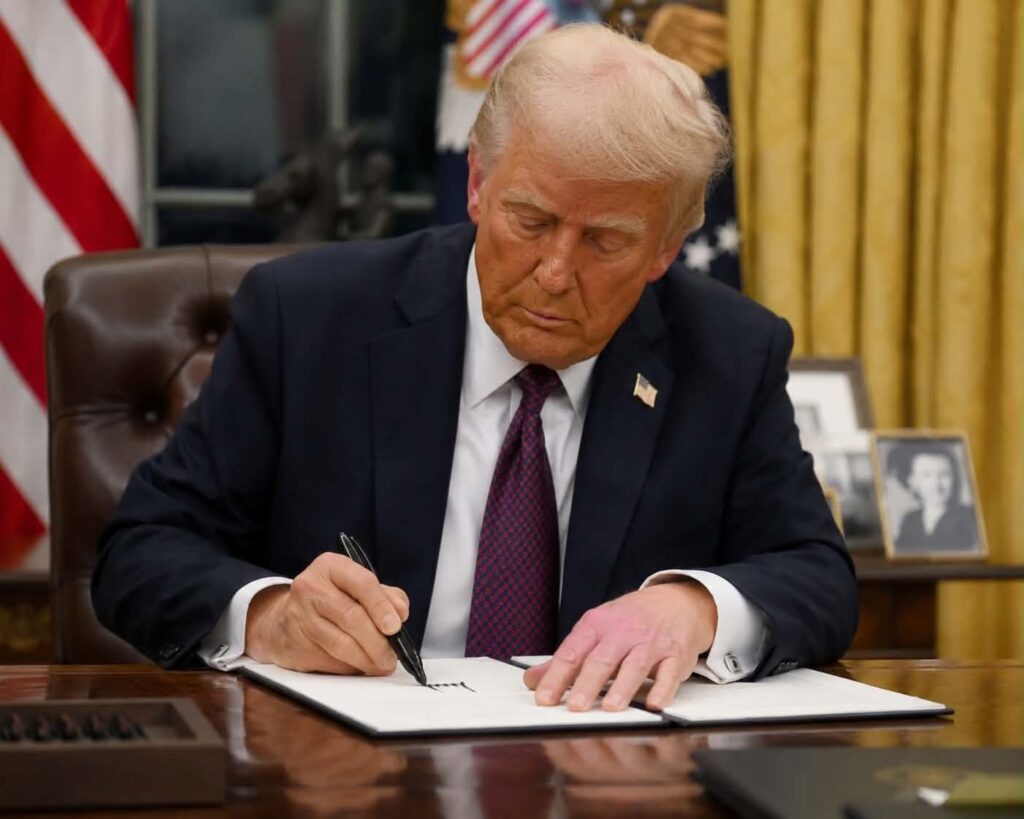
The current MFN initiative dates back to May 2025, when Trump signed an executive order directing the administration to pursue policies aimed at bringing American prescription-drug prices into closer alignment with those paid in other developed nations.
Trump subsequently sent letters to 17 major pharmaceutical manufacturers outlining requested pricing changes and other commitments.
The administration eventually reached agreements with all 17 of those companies, according to the White House.
The first agreement was announced with Pfizer in September 2025. Additional agreements followed over the next several months, eventually expanding to companies including Eli Lilly, Novo Nordisk, Amgen, Merck, Novartis and others.
The Aug. 31 announcement represents the next phase of that strategy, moving further into midsize and specialty pharmaceutical manufacturers.
TrumpRx Adds Another Piece to the Strategy
The administration has also created a direct-to-consumer component through TrumpRx.gov, which launched in February 2026.
The government website is designed to connect consumers with discounted prices on participating medicines.
The White House says the platform is part of the broader MFN initiative and allows some consumers to obtain medicines at prices aligned with negotiated discounts.
Reuters has reported that TrumpRx does not itself dispense medicines but directs consumers toward purchasing options, and that discounts obtained through the platform can operate differently from prices available through insurance.
That distinction matters because a lower cash price does not necessarily mean every insured patient will pay less.
Earlier Deals Focused on Major Drugmakers
The administration’s earlier agreements included some of the largest pharmaceutical companies in the world.
Among them were Pfizer, Eli Lilly and Novo Nordisk, whose products include widely used medicines for diabetes and obesity.
The administration has particularly highlighted price reductions involving weight-loss medications and other high-cost treatments.
In May, the White House said its MFN initiative was projected to produce $64.3 billion in savings for federal and state governments over 10 years. Reuters reported that the projection was an administration estimate rather than realized savings.
The new agreements represent an expansion of that framework rather than a separate drug-pricing program.
Questions Remain About How Much Patients Will Save
The central unanswered question is how much of the negotiated savings will ultimately reach individual patients.
The administration has announced broad commitments and projected large savings, but the public information does not provide a complete list of medicines, negotiated prices and patient-specific savings for every participating manufacturer.
Reuters reported that the latest agreements did not publicly disclose enough information to determine the precise discounts or overall savings.
That makes it difficult to translate the administration’s headline savings figures into a specific dollar amount for an individual patient.
Someone taking a covered medicine through Medicaid could experience a different financial effect from someone purchasing the same medicine through private insurance or paying cash.
Critics Question the Scope of the Agreements
The administration’s approach has drawn criticism from organizations that argue voluntary agreements do not go far enough to bring American prices into line with those in other wealthy countries.
Public Citizen’s Peter Maybarduk characterized the latest agreements as a distraction from what he views as shortcomings in the broader MFN effort.
The pharmaceutical industry has also expressed concerns about linking U.S. prices to those in foreign markets, while individual companies have emphasized that their pricing decisions depend on their own products and markets.
At the same time, supporters of the administration’s approach point to the combination of Medicaid discounts, direct-purchase pricing, manufacturing investment and supply-chain commitments.
Teva’s Status Required Additional Clarification
One detail surrounding the announcement also illustrates why the public terms deserve careful examination.
The White House listed Teva Pharmaceuticals among the nine companies participating in the new agreements.
Teva, however, said on Aug. 31 that it remained in discussions with the administration regarding a potential agreement. Reuters reported that distinction in its coverage of the announcement.
The discrepancy does not necessarily mean the broader initiative is invalid, but it demonstrates that the status and terms of individual arrangements can differ from the administration’s headline description.
What the New Agreements Could Mean
The Aug. 31 announcement combines several policy objectives into a single framework.
For Medicaid, the agreements are intended to provide access to lower negotiated prices.
For patients, the administration says MFN pricing and TrumpRx can create opportunities for lower-cost purchases, although the benefit depends on the specific medicine and method of payment.
For taxpayers, lower government drug spending could produce savings if the negotiated prices reduce costs beyond existing statutory rebates.
For manufacturing, the participating companies have committed at least $19.6 billion toward U.S. production.
And for national security, the pharmaceutical-ingredient reserve is intended to provide an additional buffer against supply disruptions.
The Bigger Test Will Be Implementation
The expansion to 26 pharmaceutical manufacturers represents a substantial increase in the reach of the administration’s MFN strategy.
But the announcement itself does not settle how much consumers will ultimately save.
The most important measures will be the prices actually paid for covered medicines, the number of products receiving discounts, the interaction with existing Medicaid and insurance arrangements, and whether the promised manufacturing investments materialize on the announced timetable.
The administration says its agreements could generate hundreds of billions of dollars in savings over time. Those figures remain projections rather than independently established savings.
For consumers, the practical question is simpler: whether the new arrangements translate into noticeably lower prices for the medicines they actually need.
That answer will become clearer only as the agreements are implemented and more detailed pricing information becomes available.

Benjamin Harris is a RapidReports front page contributor and editor,proud father of four.