Texas Democratic PAC Faces Scrutiny After Organizer Describes $25 Voter Outreach Program
A Democratic-aligned political action committee in Texas is facing scrutiny after an undercover video showed one of its organizers describing a $25 voter-outreach program as a “roundabout way of paying people for their votes.”
The video, first published by Townhall on September 16, identifies the speaker as Sky McAdams, an organizing manager for Texas Majority PAC. In the recording, McAdams discusses a program in which participants are paid $25 to attend a one-hour Zoom session focused on voting and Republican policies.
McAdams’ description has prompted questions about where the line falls between legitimate compensation for political organizing and prohibited payments intended to influence how someone votes.
Texas Majority PAC has disputed his characterization, saying participants were compensated for grassroots organizing work and that McAdams was fired after the video became public.
What the Undercover Video Shows
In the footage published by Townhall, McAdams describes what he calls a “paid relational program.”
He says participants receive $25 for attending a one-hour Zoom class designed to explain the importance of voting and criticize Republican policies.
McAdams then characterizes the arrangement as a “roundabout way” of paying people for their votes.
He also acknowledges in the recording that directly offering someone money to vote for a particular candidate would be prohibited. He distinguishes that from paying someone to attend a class, while describing the legal boundary as “a little gray.”
The comments are McAdams’ description of the program. They do not, by themselves, establish that participants were actually paid on the condition that they cast ballots for a particular candidate.
Texas Majority PAC Disputes the Characterization
Texas Majority PAC has rejected McAdams’ description of the program.
A spokesperson said participants were being paid for grassroots organizing work, including attending events, learning how to organize their personal networks and encouraging friends and family members to vote.
The PAC said McAdams’ characterization was inaccurate and that he was immediately fired after the video surfaced.
That distinction is important.
A political organization can generally pay employees, contractors and organizers for legitimate campaign services. Federal election rules regulate campaign expenditures, but not every payment made during a campaign is a payment for a vote. The Federal Election Commission specifically recognizes campaign expenditures for activities such as staffing, voter outreach and get-out-the-vote operations.
The legal question would turn on the purpose and conditions attached to the payments, rather than simply on whether money changed hands during a political campaign.
Federal Law Prohibits Paying for Votes
Federal law establishes a clear prohibition against paying someone to vote for or against a candidate.
Under 18 U.S.C. § 597, a person who makes or offers an expenditure to induce someone to vote, withhold a vote, or vote for or against a candidate can face criminal penalties. The statute also applies to someone who accepts such an expenditure in consideration of their vote.
The Justice Department has similarly identified paying voters to register or vote in federal elections as conduct that can provide a basis for federal prosecution under federal election statutes.
That does not mean every paid voter-contact program violates the statute.
Campaigns and political organizations routinely compensate people for services such as canvassing, phone banking, voter education and organizing. The distinction is whether compensation is provided for legitimate services or is conditioned on the individual’s vote.
The Relational Organizing Model
The program described in the video is presented as a form of relational organizing.
Rather than relying exclusively on traditional canvassers contacting strangers, relational organizing asks participants to communicate with people they already know—friends, relatives, coworkers or members of their communities.
Relentless, the company associated with the program, describes its paid relational programs as recruiting lower-propensity voters and compensating participants for their time spent reaching, persuading and mobilizing people in their personal networks.
The company also operates Rally, a software platform designed to help political organizations coordinate those conversations at scale.
Relentless has said it used similar programs in several states during the 2024 election cycle.
A $500,000 Payment Appears in Campaign Finance Records
The controversy is also drawing attention to Texas Majority PAC’s financial relationship with Relentless.
Campaign finance records show the PAC made a payment of approximately $500,000 to Relentless for a “relational organizing program.” Current campaign-finance data also lists payments to Rally by Relentless and to Relentless Positive Action PAC.
The existence of the payment confirms that Texas Majority PAC funded a relational-organizing operation.
It does not, by itself, establish that the money was used to purchase votes.
The purpose and implementation of the program would be relevant to determining whether participants were compensated for organizing services or whether any payments were conditioned on voting behavior.
Connection to the Texas Senate Race
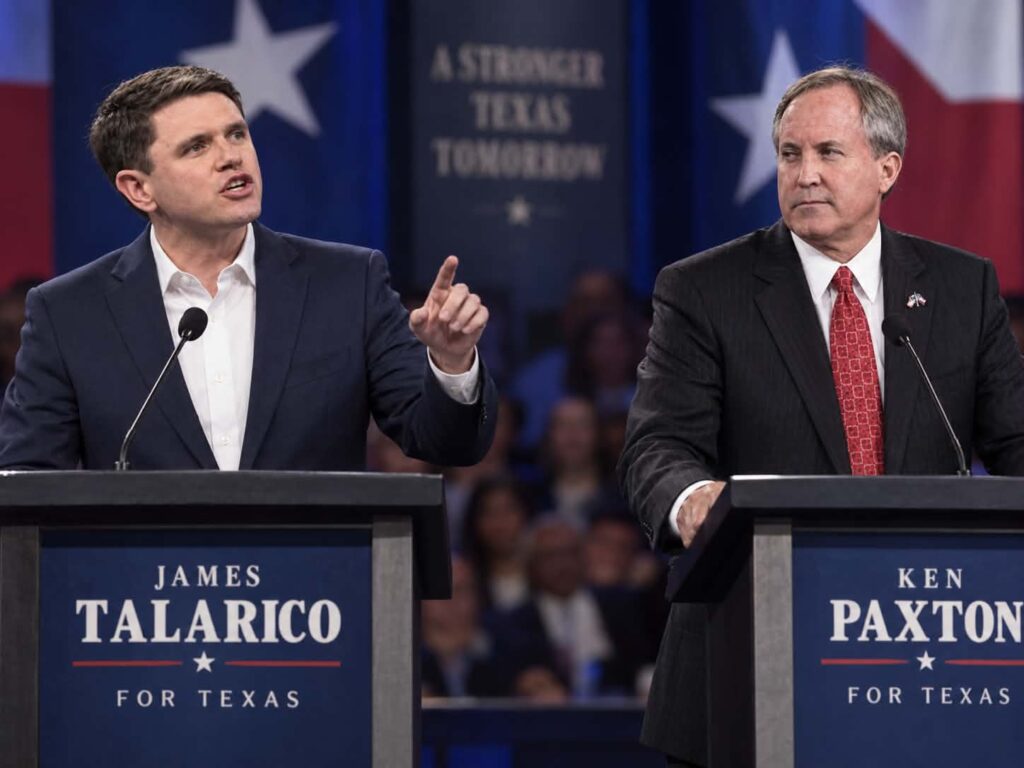
Texas Majority PAC has been involved in Democratic electoral efforts in the state, including activity associated with the campaign environment surrounding Democratic Senate candidate James Talarico.
The undercover-video reports have therefore drawn attention to the program in the context of the November Senate contest.
However, the material released so far does not establish that Talarico personally designed, directed or financed the $25 program.
Texas Majority PAC is a separate political organization, and claims about the PAC’s activities should not automatically be attributed to Talarico or his campaign without evidence establishing such a connection.
The Difference Between Organizing and Vote Buying
The distinction can be summarized simply.
Paying someone to perform campaign work can include compensation for attending training, contacting voters, organizing friends and family members, making calls or performing other campaign-related services.
Paying someone because they agreed to vote for a particular candidate is a different matter and can implicate federal criminal law.
The Federal Election Commission recognizes numerous legitimate campaign expenditures, including salaries, staffing, voter outreach and other campaign-related expenses.
At the same time, federal law specifically prohibits expenditures made to influence how an individual casts a ballot.
That makes the actual terms of the Texas program important.
What Remains Unresolved
Several questions cannot be answered solely from the publicly released video.
It is not yet established from the available material whether participants had to vote for a particular candidate to receive the $25.
It is also not established whether participants were required to perform additional organizing work, contact specific people or complete other tasks as a condition of receiving compensation.
Those details could matter when evaluating whether the payments constituted compensation for campaign services or something prohibited by federal law.
The undercover video provides McAdams’ account of the program, while Texas Majority PAC has provided a different explanation.
McAdams Has Been Fired
Texas Majority PAC has said McAdams was terminated after the video surfaced.
The PAC characterized him as a “rogue employee” and said his description did not accurately represent how the organization operates.
That response creates two competing accounts of the program: McAdams’ description in the undercover recording and the organization’s subsequent explanation that participants were paid for organizing work.
Additional documentation or an investigation would be needed to establish whether the program operated in the manner McAdams described.
Why the Story Is Drawing Attention
The controversy comes during a closely watched Texas Senate campaign and at a time when both parties are investing heavily in voter-contact operations.
The issue is particularly sensitive because federal law draws a direct line against paying people in exchange for their votes.
But the existence of paid political organizing is not itself evidence of vote buying.
The key question is whether the $25 payment was compensation for legitimate political work or was offered as consideration for how an individual voted.
Based on the material currently available, the undercover video establishes that a Texas Majority PAC organizer described the program in terms that raised that question. The PAC disputes that description and says the participants were being paid for organizing services.
Until additional evidence establishes the actual conditions of the program, the distinction between an employee’s characterization and a proven violation remains important.
For now, the controversy centers on an undercover recording, a documented payment to the organizing firm and competing explanations of what participants were actually being paid to do.
Benjamin Harris is a RapidReports front page contributor and editor,proud father of four.