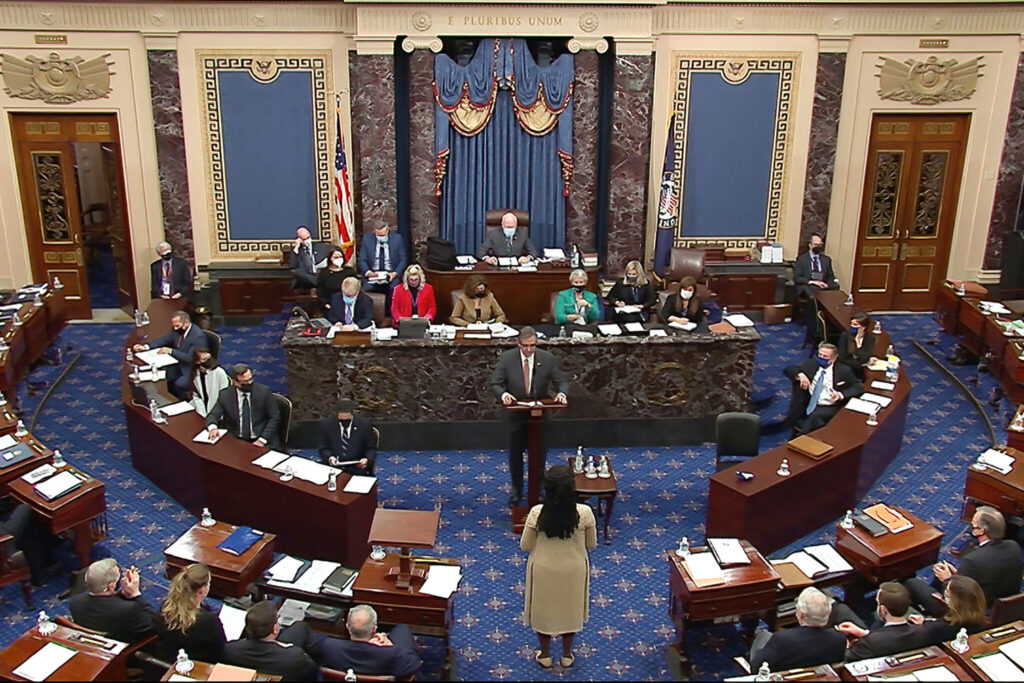

Scott Wiener Defeats Nancy Pelosi-Backed Candidate in California Congressional Race, Delivering Major Political Setback for Former House Speaker
California State Senator Scott Wiener has defeated San Francisco Supervisor Connie Chan in the closely watched contest to succeed former House Speaker Nancy Pelosi in California’s 11th Congressional District. The result represents a significant political setback for Pelosi, whose endorsement, fundraising assistance, and organizational support failed to secure victory for her preferred successor as she prepares to leave Congress after nearly four decades in Washington.
The Democratic congressional contest attracted considerable attention because it represented more than an ordinary election between two members of the same political party. It became a test of political influence, party leadership, local alliances, and the future direction of one of San Francisco’s most prominent Democratic constituencies.
According to the Associated Press, Wiener defeated Chan, ending a closely watched succession battle within San Francisco’s Democratic political establishment.
The outcome means that Pelosi’s longtime congressional seat will remain in Democratic hands, but the person selected to succeed her will not be the candidate she publicly supported.
For a political figure who has spent decades building influence within the Democratic Party, the result highlights the limitations of even the most powerful endorsements when voters ultimately make their own decisions.
Nancy Pelosi’s Endorsement Fails to Deliver Victory for Preferred Successor
Pelosi’s involvement in the congressional race made Connie Chan’s campaign one of the most closely observed Democratic contests in California.
Chan, who serves on the San Francisco Board of Supervisors, received Pelosi’s endorsement as well as fundraising assistance and support from members of the former speaker’s political network.
The backing was significant because Pelosi remains one of the most recognizable figures in American Democratic politics. During her long congressional career, she became a central figure in Democratic legislative strategy, party fundraising, and leadership negotiations.
Her support was expected to provide Chan with an important advantage in a competitive Democratic primary.
However, the endorsement ultimately failed to produce the desired result.
Wiener secured the victory, demonstrating that established political relationships and institutional support do not necessarily determine the outcome of elections.
The contest also highlighted the importance of local political networks, campaign organization, candidate visibility, and the ability to connect with voters across different neighborhoods.
For Pelosi, the defeat represents an unsuccessful effort to influence the next generation of political representation in her longtime San Francisco constituency.
Scott Wiener Positioned Himself for the Congressional Seat Before Pelosi Announced Retirement
One important factor in the election was the timing of Wiener’s political preparation.
The California state senator had reportedly begun positioning himself for the congressional opportunity well before Pelosi publicly announced her retirement.
That early preparation potentially provided him with additional time to build political support, establish campaign relationships, and communicate his legislative record to voters.
By comparison, Chan entered the contest with the advantage of Pelosi’s endorsement and support from influential Democratic figures.
Both candidates brought experience in local government and established connections throughout San Francisco.
Nevertheless, the election demonstrated that political preparation over an extended period can become an important advantage when a major congressional seat becomes available.
Wiener’s victory also ends speculation about which Democrat would inherit Pelosi’s political position in the district.
Although the district remains firmly within the Democratic political landscape, the outcome reflects a decision by voters to choose a different successor from the one supported by the former speaker.
California’s 11th Congressional District Becomes a Center of Democratic Succession Politics
The race attracted national attention because Pelosi’s retirement represents an important transition for the Democratic Party.
Having represented San Francisco in Congress for almost 40 years, Pelosi developed an extensive political network and became one of the most influential lawmakers in modern American history.
Her leadership roles included serving as speaker of the House, where she helped guide major legislative initiatives and Democratic congressional priorities.
Consequently, the selection of her successor carried political significance beyond the boundaries of California.
The contest also illustrated the challenges political leaders can face when attempting to influence succession decisions.
Endorsements can provide candidates with fundraising opportunities, public recognition, experienced campaign personnel, and access to established political organizations.
However, voters may evaluate candidates according to their own priorities, including housing affordability, transportation, public safety, healthcare, economic development, and neighborhood concerns.
In this case, Pelosi’s preferred candidate did not receive enough support to overcome Wiener’s campaign.
The result offers a reminder that political influence and electoral popularity are not always interchangeable.
Political Disagreement Emerges Over Pelosi’s Intervention in the Race
Pelosi’s decision to support Chan also generated criticism from some of Wiener’s political allies.
According to accounts surrounding the campaign, supporters of Wiener questioned the former speaker’s motivation for intervening in the contest.
Some of his allies characterized her involvement as a personal vendetta against Wiener.
Pelosi denied that allegation.
The disagreement added another dimension to an already competitive race, transforming the contest into a broader discussion about political loyalty, party relationships, and the influence of established Democratic leaders.
For some observers, the controversy illustrated the tensions that can emerge when long-serving political figures attempt to influence who succeeds them.
For others, Pelosi’s endorsement represented a legitimate exercise of political support for a candidate whose experience and priorities she favored.
Regardless of the competing interpretations, the election result established that the voters would ultimately determine who succeeded her.
The defeat of Pelosi’s preferred candidate could also encourage discussions about the future of political leadership within San Francisco’s Democratic establishment.
Who Is Scott Wiener? California State Senator Brings Extensive Legislative Experience to Washington
Scott Wiener enters the congressional transition with an established background in California politics.
He first won election to the California State Senate in 2016 after previously serving on the San Francisco Board of Supervisors.
His experience in state and local government has given him a substantial legislative record covering housing, transportation, healthcare, climate policy, criminal justice, and LGBTQ-related issues.
Before entering elected office, Wiener worked as an attorney.
His professional background included serving as a deputy city attorney in San Francisco and practicing law in the private sector.
He earned his undergraduate degree from Duke University and his law degree from Harvard Law School.
Wiener has lived in San Francisco’s Castro neighborhood since 1997, maintaining a longstanding connection with the city he has represented in public office.
His transition from California government to the United States House of Representatives will place his legislative priorities before a national audience.
Republican lawmakers and political commentators will also have an established policy record to examine as they assess his positions on housing, transportation, public spending, and social issues.
Housing Affordability Has Been One of Wiener’s Major Legislative Priorities
Housing policy has been among Wiener’s most prominent areas of legislative activity.
California has faced persistent housing affordability challenges, with high residential costs and limited housing availability affecting residents across numerous communities.
Wiener has supported legislation intended to increase housing development, simplify approval procedures, and give local governments additional tools to encourage residential construction.
One of the best-known measures associated with his legislative record is Senate Bill 35.
The law was designed to streamline housing approval procedures in communities that were not meeting established housing production goals.
By reducing certain administrative obstacles, the legislation sought to accelerate the development of qualifying residential projects.
Wiener also authored Senate Bill 10, which allows local governments to expedite certain zoning changes for residential buildings containing up to 10 housing units.
Another important measure was Senate Bill 9, which Wiener co-authored.
The legislation expanded opportunities for duplex development and certain property subdivisions in areas that had traditionally been restricted to single-family residential housing.
These measures reflect a broader policy approach focused on increasing housing supply and reducing barriers to residential construction.
Supporters argue that expanding development opportunities can help address housing shortages and improve long-term affordability.
Critics of certain housing reforms have raised concerns about neighborhood planning, infrastructure capacity, local control, and the potential effects of increased development on existing communities.
The debate over housing policy is likely to remain relevant as Wiener moves into federal politics.
Although housing regulations are often determined at the state and local levels, federal funding, financing programs, tax policies, and infrastructure initiatives can also influence the national housing market.
Transportation, Public Infrastructure and Climate Policy Remain Important Issues
Transportation policy is another area that has featured prominently in Wiener’s work in California.
His legislative priorities have included public transportation funding, bicycle infrastructure, and alternatives to private automobile travel.
These issues are particularly significant in major metropolitan areas such as San Francisco, where transportation networks play an important role in employment, economic activity, housing development, and environmental policy.
Supporters of expanded public transportation investment argue that reliable transit systems can improve mobility, reduce congestion, and provide residents with alternatives to driving.
Bicycle infrastructure has also become part of wider discussions about urban planning and public safety.
Wiener’s policy positions connect transportation planning with broader climate and environmental objectives.
As he prepares to enter Congress, these priorities could influence his approach to federal infrastructure spending, transportation funding, and environmental legislation.
The transition from state government to federal office will also require him to work within a different political environment, where legislative outcomes depend on congressional negotiations and relationships across party lines.
Connie Chan Brings Her Own Experience in San Francisco Local Government
Although Chan did not win the congressional contest, her campaign demonstrated that she had significant experience within San Francisco’s Democratic political establishment.
Chan was first elected to the San Francisco Board of Supervisors in 2020.
She represents District 1, which includes neighborhoods in the city’s Richmond District.
Her political background includes experience in local government, community organizing, public administration, and policy development.
According to her campaign biography, Chan became chair of the Board of Supervisors’ Budget Committee in February 2023.
The position provided her with experience examining municipal spending priorities and participating in discussions about the city’s financial planning.
Before becoming a supervisor, Chan worked with several prominent California Democratic political figures.
Her professional background included positions involving then-San Francisco District Attorney Kamala Harris, former Supervisor Aaron Peskin, and then-Assemblymember Kevin Mullin.
These experiences helped establish her connections within the city’s political network.
Chan’s campaign also highlighted her community involvement, volunteer interpreting, and work connected to parks and higher education.
Connie Chan’s Background and Education Shaped Her Political Career
Chan was born in Hong Kong and moved to San Francisco when she was 13 years old.
She later attended the University of California, Davis, where she earned her degree.
Her personal background and experience working with San Francisco communities became important parts of her political identity.
As a member of the Board of Supervisors, she represented residents in District 1 and participated in decisions involving municipal services, neighborhood development, public budgets, and local policy.
Her experience provided her with a foundation for pursuing federal office.
The congressional campaign also offered Chan an opportunity to present herself as a candidate with established local relationships and the backing of an influential Democratic leader.
Pelosi’s endorsement was a major component of that effort.
However, the final outcome showed that the former speaker’s support was not sufficient to secure the nomination.
Although Chan lost the congressional contest, her experience in local government leaves her with an established political background in San Francisco.
Why the Election Matters for Republicans and Democrats
The result has implications for both major political parties, even though the congressional district is expected to remain Democratic.
For Democrats, the contest demonstrates the complexity of leadership transitions.
Long-serving elected officials may have strong preferences about who should replace them, but their influence does not guarantee that voters will follow their recommendations.
The election also highlights the importance of competition within the Democratic Party, particularly in districts where Republican candidates are not among the final contenders.
For Republicans, the result offers an opportunity to examine Wiener’s policy record and develop arguments against his legislative positions.
His support for housing development reforms, public transportation investment, climate initiatives, and other progressive priorities could become subjects of political debate.
Republican lawmakers may seek to challenge his positions on federal spending, regulatory policy, and the role of government in addressing housing and economic issues.
Meanwhile, Democrats will likely view his experience in California government as an important qualification for representing a major metropolitan constituency in Congress.
The outcome also provides a useful example of how local political dynamics can influence national political developments.
California’s Top-Two Primary System Played an Important Role in the Contest
California uses a top-two primary system for most congressional elections.
Under this system, candidates from all political parties compete in the same primary election.
The two candidates who receive the highest number of votes advance to the general election, regardless of their party affiliation.
As a result, two Democrats can advance to the general election when they finish first and second in the primary.
That is what happened in the contest involving Wiener and Chan.
Both candidates advanced under California’s election rules, resulting in a general election between two Democratic candidates without a Republican finalist.
The system can create unusual political situations because members of the same party may compete directly for a congressional seat during the general election.
It can also make internal party disagreements more visible to voters.
In the San Francisco contest, the top-two system ensured that the final decision would be made between the two Democratic candidates who advanced through the primary.
The result kept the congressional seat within the Democratic Party while determining which candidate would represent the district following Pelosi’s retirement.
What Scott Wiener’s Victory Could Mean for San Francisco’s Political Future
Wiener’s victory marks a significant change in representation for California’s 11th Congressional District.
Pelosi’s departure closes an important chapter in San Francisco’s congressional history.
Her nearly four decades in the House established a political legacy that included major leadership positions, influence over legislative negotiations, and a central role in national Democratic politics.
Wiener now faces the challenge of establishing his own identity in Washington.
His experience in California’s legislature gives him a foundation in public policy, but serving in Congress will require navigating national political debates, federal legislative procedures, and relationships with lawmakers from across the country.
His priorities involving housing, transportation, healthcare, climate policy, and criminal justice may become part of broader congressional discussions.
The transition also raises questions about how San Francisco’s Democratic establishment will evolve after Pelosi’s retirement.
The defeat of her preferred successor suggests that political leadership within the city may become less dependent on the preferences of established national figures.
Instead, local electoral support, campaign organization, and policy positions could play an increasingly important role in determining the next generation of Democratic leadership.
Final Analysis: Pelosi’s Retirement Ends an Era, but Her Successor Will Follow a Different Political Path
Scott Wiener’s victory over Connie Chan represents a notable development in California politics and a difficult outcome for Nancy Pelosi’s preferred succession strategy.
The former House speaker supported Chan through an endorsement, fundraising assistance, and campaign organizational support, but voters ultimately selected Wiener.
The result demonstrates that even influential political figures cannot guarantee electoral success for candidates they support.
Wiener enters the next chapter of his political career with experience in California’s State Senate and San Francisco local government.
His legislative record on housing, transportation, healthcare, and climate policy provides an indication of the issues he may emphasize as he transitions into federal politics.
Chan, meanwhile, leaves the congressional contest with an established record in municipal government and connections throughout San Francisco’s Democratic community.
The election is therefore significant not simply because of who won, but because of what it reveals about political influence, party succession, and the changing relationship between established Democratic leaders and local voters.
As Pelosi prepares to retire after nearly 40 years in Congress, San Francisco is preparing for a new representative and a different chapter in its political history.
The central takeaway is clear: Pelosi’s endorsement carried considerable political weight, but it was not enough to determine who would succeed her. Scott Wiener won the contest, setting the stage for a new period of Democratic representation in California’s 11th Congressional District.
EXPLORE MORE:
Gina Hinojosa Faces Key Decision on Texas Border Security After Defeating Greg Abbott
Texas Governor-elect Gina Hinojosa faces an early test of her leadership as she prepares to take office: deciding what to do with Operation Lone Star, the multibillion-dollar border-security initiative established by outgoing Republican Gov. Greg Abbott.
Hinojosa’s victory over Abbott makes her the first Democratic governor of Texas since Ann Richards left office in January 1995. Her position on immigration enforcement could bring significant changes to the state’s approach to border security.
Abbott launched Operation Lone Star in 2021 as illegal border crossings increased during former President Joe Biden’s administration. The initiative expanded into a major state operation involving National Guard deployments, law-enforcement personnel and construction of barriers along the U.S.-Mexico border.
Texas has spent more than $11 billion on the program, with more than 10,000 National Guard members participating in its operations.
Hinojosa Criticizes Operation Lone Star Spending
During her campaign, Hinojosa repeatedly criticized Operation Lone Star and voted against its original funding while serving in the Texas Legislature.
However, she has not explicitly promised to eliminate the entire initiative after becoming governor.
“As governor, I’ll put in the work to secure the border, not waste working Texans’ money on political theater,” Hinojosa said.
She has argued that some of the program’s expenditures have delivered questionable value to taxpayers. One area of criticism involves spending on prosecutions of migrants accused of trespassing, while public funds also support legal representation for defendants.
“Public safety shouldn’t be a political stunt,” Hinojosa said.
“I will spend the money it takes to keep our community safe, not for political theater,” she added.
Her comments suggest that she intends to maintain a border-security role for the state while reviewing how Texas spends money on enforcement.
Border Barriers and Federal Immigration Enforcement
Hinojosa has also opposed additional border-wall construction in the Big Bend region, questioning whether barriers in that area would meaningfully improve security.
She has criticized some Immigration and Customs Enforcement operations and aspects of Texas cooperation with federal immigration authorities. She previously accused Abbott of allowing the state to become a “staging ground” for federal enforcement activities she opposed.
At the same time, Hinojosa has acknowledged the significant decline in illegal border crossings since President Donald Trump returned to office. She has credited Trump administration policies with helping reduce illegal immigration.
That position adds complexity to the debate over Operation Lone Star. Hinojosa could argue that lower crossing numbers reduce the need for an extensive state deployment, while Republicans could contend that the existing operation helped establish deterrence and enforcement capacity.
Abbott launched the initiative under different border conditions, when encounters reached elevated levels during the Biden administration. Trump subsequently reversed several Biden-era immigration policies and expanded federal enforcement.
The federal government retains primary responsibility for immigration enforcement, although states can undertake certain border-related law-enforcement and infrastructure activities.
Republican Legislature Could Limit Changes
Hinojosa’s ability to overhaul Operation Lone Star will depend partly on negotiations with the Republican-controlled Texas Legislature.
Republicans retained control of the Texas Senate, creating a potential obstacle to major changes involving state spending, border policy and the program’s legal framework.
Border funding could therefore become an early point of disagreement between the incoming Democratic governor and Republican lawmakers.
Abbott’s approach placed Texas at the center of national immigration disputes. The state deployed troops and law-enforcement officers, installed razor wire, constructed barriers and transported migrants to Democratic-led cities elsewhere in the country.
Hinojosa’s election could mark a shift away from that confrontational state strategy, although the extent of any changes remains uncertain.
Affordability and Other Campaign Priorities
Beyond immigration, Hinojosa campaigned on affordability, education and reducing what she described as excessive corporate influence in state government.
She has proposed using Texas budget reserves to provide eligible households with one-time payments of $1,500 and supports expanding Medicaid.
Those proposals could also face negotiations with Republican lawmakers, particularly over state spending and health policy.
For now, Operation Lone Star remains one of the most consequential questions facing the governor-elect. Hinojosa has promised to secure the border while eliminating expenditures she considers ineffective or politically motivated.
Whether that approach results in targeted reforms or the dismantling of major parts of Abbott’s signature initiative will become clearer as her administration develops its budget and policy plans.
After five years and more than $11 billion in reported spending, the future of Texas’ state-led border operation is set to become a major test of the state’s political transition.
EXPLORE MORE:
Republicans Take Early Lead in Guam Governor’s Race as Vote Count Continues
Republicans pulled ahead in Guam’s closely watched gubernatorial race early Wednesday, reversing a narrow Democratic lead as election officials reported additional precinct results.
The Republican ticket of Ada-Calvo led Democratic candidates Therese Terlaje and Sabina Perez by 497 votes as of approximately 1 a.m. Wednesday, according to the Guam Election Commission’s unofficial results.
Ada-Calvo had received 10,179 votes, or 51.08%, compared with 9,682 votes, or 48.58%, for Terlaje-Perez. The results covered 38 of Guam’s 59 precincts, leaving 21 precincts still to report.
The Republican lead marked a reversal from the earlier count, when Democrats held a narrow advantage.
At 11:54 p.m., Terlaje-Perez led Ada-Calvo by just 80 votes, receiving 5,243 votes compared with the Republican ticket’s 5,163. At that point, results from only 21 precincts had been reported, giving Democrats a lead of less than one percentage point.
Republicans Move Ahead in Guam Legislative Race
The Republican gains extended beyond the governor’s contest. The party also moved ahead in the race for Guam’s 15-member Legislature, with Republicans occupying eight of the top 15 positions in the unofficial standings.
Democrats had initially held eight of those positions before the overnight count shifted the balance.
Democratic Sen. Chris Barnett remained the leading legislative candidate with 12,790 votes, followed by fellow Democrat Amanda Shelton with 10,203.
Republican Sen. Sabrina Salas Matanane was in third place with 9,095 votes. Republican Sens. Jesse Lujan and Chris Duenas followed with 8,879 and 8,806 votes, respectively.
Other Republicans among the top 15 included Hoa Nguyen, Telo Taitague, Vince Borja, Shelly Calvo and Shawn Gumataotao.
Although the standings indicated potential Republican gains in the Legislature, the remaining precinct results could still change the rankings.
Democrat Leads Guam’s Congressional Delegate Race
Democrats maintained a narrow advantage in the contest for Guam’s delegate to the U.S. House of Representatives.
Democratic challenger Aliia Limtiaco led Republican incumbent Del. James Moylan with 10,016 votes, or 50.75%, compared with Moylan’s 9,692 votes, or 49.11%.
Limtiaco’s lead had narrowed as additional ballots were counted. Earlier results showed her receiving 51.8% of the vote, compared with 48.06% for Moylan.
The race remained competitive, with further results still outstanding.
Attorney General and Utilities Commission Races
The territory’s attorney general race also remained closely watched, with attorney Phillip Tydingco leading incumbent Attorney General Douglas Moylan.
Tydingco received 7,412 votes, or 38.06%, while Moylan had 6,481 votes, or 33.28%.
Thomas Fisher was in third place with 2,482 votes, followed by Peter Santos with 2,171 and Jordan Pauluhn with 913.
In the Consolidated Commission on Utilities contest, incumbent commissioners Simon Sanchez, Michael Limtiaco and Francis Santos occupied the three leading positions in the reported standings.
Guam Election Officials Continue Ballot Count
Election officials began transporting ballot boxes to the University of Guam Calvo Field House shortly after polls closed Tuesday evening.
Guam Election Commission workers started processing ballots at approximately 9:30 p.m., about an hour earlier than during the territory’s primary election.
Commission Executive Director Maria Pangelinan said officials were focused on maintaining an orderly counting process but declined to estimate when final results would be available.
With 21 of Guam’s 59 precincts still outstanding as of approximately 1 a.m., the gubernatorial contest remained undecided.
The latest figures showed Ada-Calvo ahead by 497 votes, while Republicans held eight of the top 15 legislative positions. Democrats, meanwhile, continued to lead the congressional delegate race.
The results were unofficial, and the final outcome of the races depended on the remaining ballots and the completion of the election count.
EXPLORE MORE:
Michigan Senate Race Remains Close as El-Sayed Trails Democratic Party Preference
A new poll of Michigan likely voters shows Democrat Abdul El-Sayed holding a narrow lead over Republican Mike Rogers in the state’s closely watched U.S. Senate race, while also finding that a larger share of voters would prefer Democrats to control the Senate.
The Washington Post-Schar School survey, conducted Sept. 10-14, found 48% of likely voters supporting El-Sayed and 45% supporting Rogers. The three-point difference falls within the poll’s 3.9-percentage-point margin of error, underscoring how closely divided the contest is at this stage of the campaign.
The poll also found that 53% of likely Michigan voters would prefer Democratic control of the Senate, five percentage points higher than El-Sayed’s share of support in the Senate contest.
El-Sayed’s Lead Is Within the Margin of Error
The Washington Post-Schar School poll surveyed 803 likely voters drawn from Michigan’s statewide voter database. Interviews were conducted by phone and text-to-online methods, with the overall margin of error listed at plus or minus 3.9 percentage points.
That means the poll does not establish a statistically clear separation between the two candidates.
Another survey released Sept. 17 by Emerson College Polling/Nexstar Media likewise showed a close race, with El-Sayed at 48% and Rogers at 46% among 1,000 likely voters. Four percent were undecided, and the poll reported a margin of error of approximately three percentage points.
Taken together, the recent surveys show a competitive race rather than a large polling advantage for either candidate.
Democrats Have an Edge in the Senate Preference Question
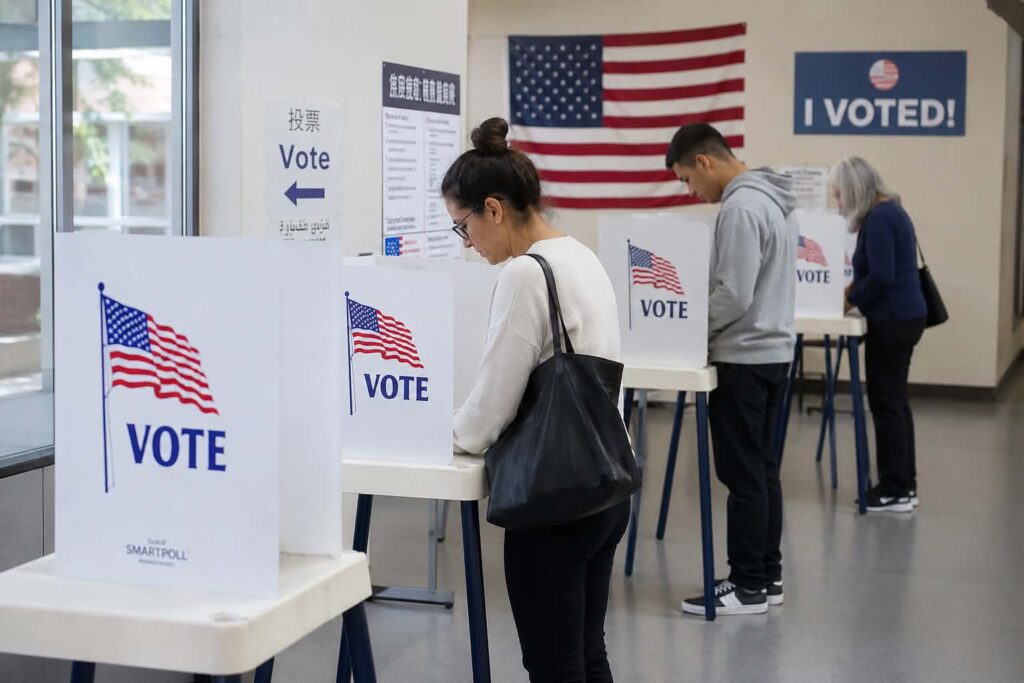
One of the more notable findings in the Post-Schar School survey is the difference between the Senate race and the broader party-control question.
While 53% of likely voters said they preferred Democrats to control the Senate, 48% backed El-Sayed in the Michigan contest. That gap suggests that some voters who prefer Democratic control of the chamber are not currently expressing the same level of support for the Democratic nominee.
The poll also found that Democratic nominee Jocelyn Benson held a larger advantage over Republican John James in the Michigan governor’s race. Benson led James by 12 percentage points in the survey.
The comparison does not determine how voters will ultimately vote, but it provides additional context for understanding El-Sayed’s position on the statewide ballot.
Voters’ Views of the Candidates
Neither Senate candidate received a net-positive overall assessment from Michigan voters in the Washington Post survey, although El-Sayed had the stronger favorable rating.
About 44% of likely voters viewed El-Sayed favorably, compared with 39% who viewed Rogers favorably.
The survey also found that 48% of likely voters considered El-Sayed too liberal, while 43% viewed Rogers as too conservative.
Those perceptions reflect the contrasting campaigns the candidates have run.
El-Sayed has emphasized issues including health care, economic policy and changes to the political system. His campaign has also promoted positions such as Medicare-for-all and eliminating Immigration and Customs Enforcement. Rogers, a former congressman who narrowly lost the 2024 Michigan Senate election, has emphasized his Republican credentials and relationship with President Donald Trump.
Demographic Differences Could Shape the Contest
The Post-Schar School survey identified several differences among major voter groups.
Among Black likely voters, 83% said they wanted Democrats to control the Senate, while 67% said they supported El-Sayed. The Washington Post reported that this difference is notable because Black voters have historically been an important part of the Democratic coalition in Michigan.
The poll also found a relationship between attitudes toward Muslim candidates and support for El-Sayed, who would become the first Muslim U.S. senator if elected.
More than four in 10 likely voters said they would be unwilling to support a Muslim candidate for president. El-Sayed received lower support than Benson among voters expressing that view.
These findings describe differences within the electorate; they do not establish why individual voters hold particular positions.
Education Is Another Major Divide
The latest Emerson College/Nexstar survey found a significant education gap in the Senate race.
Among voters without a four-year college degree, Rogers led El-Sayed 48% to 45%. Among college graduates, El-Sayed led 53% to 42%.
That division adds another layer to an already closely contested statewide race.
Earlier polling also showed the contest within a narrow range. A Washington Post report on an August Fox News survey found Rogers ahead among registered voters but El-Sayed ahead among voters who said they would definitely vote.
Because different polls use different samples, methodologies and field dates, individual surveys should not be treated as interchangeable measurements.
Economic Concerns Are Prominent
The Post-Schar School poll found that the cost of living was the most frequently cited top issue, with 48% of likely voters identifying it as their most important concern.
Nearly six in 10 likely voters also disapproved of Trump’s job performance, according to the survey. The political environment has therefore created both opportunities and challenges for the two campaigns, depending on which issues and voter groups ultimately drive turnout.
The Michigan race is also taking place against the backdrop of concerns over inflation, energy prices, tariffs and the broader economy.
A Key Race for Senate Control
Michigan is one of the Democratic-held Senate seats being closely watched nationally.
Sen. Gary Peters, a Democrat, is retiring rather than seeking another term, leaving an open seat for the 2026 election. El-Sayed won the Democratic primary in August after a closely contested campaign against Rep. Haley Stevens. Rogers won the Republican nomination and is seeking another opportunity after narrowly losing Michigan’s 2024 Senate election.
Democrats are seeking to retain Michigan as part of their broader effort to gain control of the Senate, while Republicans are targeting the seat as an opportunity to expand their majority.
What the Poll Shows — and What It Does Not
The latest surveys show a Michigan Senate contest that is currently close.
The Post-Schar School poll gives El-Sayed a 48%-45% edge, while the Emerson/Nexstar survey has the Democrat ahead 48%-46%. Both margins fall within the respective polls’ stated error ranges.
The broader party-control question produces a different result, with 53% of Post-Schar School respondents preferring Democratic control of the Senate. The governor’s race also shows a larger Democratic margin in the same survey.
Those figures provide context for the Senate race, but polling cannot determine the eventual result. Surveys measure voter preferences at the time they are conducted, and their estimates are subject to sampling and other sources of uncertainty.
With the general election still ahead, the Michigan Senate contest remains closely divided, with the candidates competing for support among independents, suburban voters, Black voters, working-class voters and other groups that could affect the final vote.
READ MORE:
Georgia Sets First-Day Early Voting Record as Closely Watched Midterm Races Approach
Georgia voters cast a record number of in-person ballots on the first day of early voting for the 2026 midterm elections, signaling a strong start to the state’s three-week voting period as competitive races for the U.S. Senate and governor draw national attention.
Georgia Secretary of State Brad Raffensperger reported that 188,667 voters cast in-person ballots on Tuesday, October 13. That was 53,705 more than the 134,962 in-person votes recorded on the first day of early voting in 2022, an increase of approximately 40%. In 2018, the comparable first-day total was 70,849.
The figures establish a new first-day early-voting record for a Georgia midterm election, according to the Secretary of State’s Office.
Raffensperger Highlights Election Administration
Raffensperger, a Republican, attributed the record turnout to voters’ confidence in the state’s election system and the work of local election officials.
“This record-breaking turnout proves that voters have confidence in the integrity of our elections,” Raffensperger said in a statement. He also praised the 159 county election officials responsible for administering elections across Georgia.
The state reported an additional 10,267 accepted absentee ballots, showing that voting activity extended beyond in-person polling locations.
The early figures measure ballots cast, however, and do not establish which candidates or political parties will benefit from the increased participation. The political preferences of voters are not determined by turnout totals alone.
Senate Race Puts Georgia in the National Spotlight
Georgia’s U.S. Senate contest is among the closely watched races that could help determine control of the chamber.
Democratic Sen. Jon Ossoff is seeking another term and faces Republican U.S. Rep. Mike Collins. Republicans are seeking to expand their Senate position, while Democrats are working to retain seats and compete for control of the chamber.
Recent polling has shown Ossoff ahead in some surveys, although polling is a snapshot of voter preferences at a particular time and does not determine the final result. The November 3 election will decide the contest.
Georgia’s political importance was also underscored by the 2024 presidential election, when Donald Trump carried the state by roughly two percentage points. That result illustrates how closely contested statewide elections in Georgia can be, but presidential results do not necessarily predict the outcome of a midterm race.
Governor’s Contest Adds to the Stakes
The governor’s race is another major contest on Georgia’s November ballot.
Republican businessman Rick Jackson is facing Democratic former Atlanta Mayor Keisha Lance Bottoms in the race to succeed Gov. Brian Kemp, who is not seeking another term.
The candidates are competing for a statewide electorate that will also choose other state officials and decide proposed constitutional amendments. The campaign has drawn national attention as both parties seek to make their case to Georgia voters.
Early Voting Continues Through October 30
Georgia’s early-voting period runs from October 13 through October 30, ahead of Election Day on Tuesday, November 3. Voters can use an early-voting location within their county, with specific locations and hours varying by jurisdiction.
The record opening day marks a notable start to the voting period, but turnout totals will continue to change as more ballots are cast. The eventual political impact will depend on the choices voters make and the final results across the state’s races.
For now, the clearest conclusion from the first-day figures is that Georgia’s 2026 midterm election has begun with substantially more in-person early voting than at the start of either of the previous two midterm cycles.
MIDTERM UPDATES:
Democratic Rep. Sheila Cherfilus-McCormick (FL-20) has formally resigned from the U.S. House of Representatives, with her resignation taking effect Tuesday at 1:30 p.m. EDT. Her departure comes amid an ongoing federal case and a congressional ethics review that has placed renewed attention on campaign finance rules, the use of federal relief funds, and accountability among elected officials. The resignation also adds to a series of recent departures from Congress involving lawmakers facing legal proceedings or ethics-related scrutiny.
As my colleague Frank Bruno reported late last month, an eight-member bipartisan subcommittee of the House Ethics Committee worked late into the night reviewing Cherfilus-McCormick’s conduct. The congresswoman faced allegations involving more than $5 million in federal disaster relief funds connected to a family business, with prosecutors alleging that a significant portion of the money was directed toward her 2022 congressional campaign. The case has drawn attention to the legal requirements governing federal assistance programs, campaign contributions, and financial disclosures by candidates seeking public office.
On Friday, the House Ethics Committee announced that, following approximately seven hours of deliberations, the subcommittee found “clear and convincing” evidence supporting 25 of the 27 allegations under review. Those findings could have moved the matter closer to a potential expulsion vote in the House of Representatives. Although the ethics proceedings represent a significant development, the committee’s conclusions should be distinguished from the separate federal criminal case, and allegations must be described in accordance with the relevant legal proceedings.
Throughout the controversy, Cherfilus-McCormick challenged the allegations and raised concerns about the treatment of her case, including claims of racial and gender bias. The dispute has highlighted broader questions about how congressional ethics investigations are conducted, how lawmakers respond to allegations of misconduct, and what standards should apply when elected officials face serious legal challenges. Her resignation now shifts attention toward the next steps in the federal case and the possible consequences for her political future.
Following the ethics subcommittee’s findings, Cherfilus-McCormick may also have faced the prospect of a difficult vote among House members if proceedings toward expulsion continued. Under House rules, expelling a member requires a two-thirds vote, making bipartisan support essential to such a decision. Rather than wait for the process to advance further, she submitted her formal resignation letter to House Speaker Mike Johnson (R-La.) ahead of a possible expulsion vote. Her departure leaves questions about the broader political implications of the case and how Congress will address other pending ethics matters.
READ MORE:
Her resignation comes amid a series of departures involving three lawmakers: Cherfilus-McCormick, former Democratic Rep. Eric Swalwell of California, and Republican Rep. Tony Gonzales of Texas. Their exits have intensified discussion about congressional oversight, political accountability, and the standards expected of elected representatives. Meanwhile, Republican Rep. Corey Mills of Florida is also facing calls for disciplinary action, potentially extending the recent period of uncertainty surrounding the House’s membership and internal proceedings.
Rep. Nancy Mace (R-SC) introduced a resolution seeking Mills’ expulsion following allegations involving domestic violence, sexual misconduct, claims concerning his military service, and the handling of federal contracts. Mills’ situation remains a separate matter, and the allegations should not be treated as established facts without appropriate findings or legal determinations. Whether the resolution receives sufficient Republican support remains uncertain. The developments nevertheless underscore the importance of transparent investigations, due process, and consistent ethical standards for public officials, regardless of party affiliation.
READ ALSO : Michigan Senate Race Tightens: New Poll Reveals Neck-and-Neck Contest
Ilhan Omar Accuses Trump Administration of Political Intimidation After Federal Agents Search Her Home
Rep. Ilhan Omar condemned President Donald Trump’s administration on Monday after federal agents searched her Washington, D.C., home as part of an ongoing criminal investigation, accusing the government of weaponizing law enforcement against political opponents.
The Minnesota Democrat responded on X after agents from Homeland Security Investigations arrived at her residence early Monday morning. The Justice Department confirmed that investigators had executed a court-authorized search warrant but did not disclose details about the investigation.
“I’m ok. Make no mistake: this is an attempt to target political enemies and weaponize federal law enforcement,” Omar wrote. She also accused Trump of directing years of attacks against her and declared, “I will not be silenced.”
The search, conducted weeks before the November 3 midterm elections, has intensified political tensions in Washington as Omar seeks reelection to the House. Federal authorities have not publicly outlined the specific allegations under investigation. (Associated Press; CBS News)
Justice Department Confirms Court-Authorized Search
Homeland Security Investigations agents arrived at Omar’s Washington-area residence at approximately 6 a.m., according to reports from Fox News and other outlets.
A Justice Department spokesperson confirmed that investigators carried out a search warrant obtained through the department, describing the operation as part of an ongoing federal criminal investigation.
Authorities have not publicly specified what evidence they sought, what materials were seized or whether any charges are being considered. The execution of a search warrant does not, by itself, establish that a crime occurred.
Reports Link Investigation to Immigration Paperwork
Fox News Digital reported that the investigation concerns alleged fraud involving immigration paperwork completed by Omar’s late father when she was a child. The Justice Department has not publicly confirmed those details or provided a full account of the allegations.
The search follows public comments by administration officials about an investigation involving Omar. In September, border czar Tom Homan acknowledged that a criminal investigation was underway.
Omar has denied wrongdoing and previously said she had not been contacted by federal authorities about an investigation. The precise scope of the inquiry remains unclear based on the information publicly released by the Justice Department. (CBS News; The Washington Post)
Omar Says Search Is Part of a Political Campaign Against Her
In her social media statement, Omar framed the search as the latest escalation in what she described as a prolonged effort by Trump to intimidate her.
“For ten years, Trump has targeted me with baseless lies and smear campaigns,” she wrote, adding that she would continue speaking out despite the search.
Omar, a prominent progressive Democrat who represents Minnesota’s 5th Congressional District, has frequently clashed with Trump and other Republican leaders. Her immigration background and political positions have repeatedly made her a target of criticism from the president and his allies.
Her allegation that the search was politically motivated has not been established as fact. Federal officials have described the operation as part of an ongoing criminal investigation but have not publicly explained its timing or provided detailed evidence supporting the reported focus of the probe.
Search Draws Scrutiny Ahead of Midterm Elections
The timing of the search has raised questions among Democrats because it occurred shortly before the midterm elections, when Omar is campaigning for another term in Congress.
Senior Democrats criticized the action and questioned whether the timing was consistent with longstanding Justice Department practices intended to avoid investigative steps that could improperly influence elections. Such concerns do not, on their own, establish that the search was politically directed.
Republicans and administration officials have previously called for scrutiny of Omar’s background, while Omar has consistently rejected allegations of immigration fraud.
The investigation’s next steps remain uncertain. The Justice Department has not publicly released further details about the evidence sought during Monday’s search or announced criminal charges in connection with the reported allegations.
For now, the search has placed Omar at the center of a new political and legal dispute just weeks before voters head to the polls, with key questions about the investigation still unanswered.
READ MORE: New Poll Shows Close Race in Florida Senate Contest
Ashley Moody and Angie Nixon Deadlocked at 45% in New Florida Senate Poll
Republican Sen. Ashley Moody and Democratic challenger Angie Nixon are virtually tied in a new Florida Senate poll, with each receiving 45% support among likely voters.
The St. Pete Polls survey, conducted September 15-17 for Florida Politics, found Moody at 45.2% and Nixon at 44.8% before rounding. Another 3% selected someone else, while 7% remained undecided.
The survey included 913 likely voters and has a margin of error of ±3.2 percentage points. The four-tenths-of-a-point difference between the candidates is therefore well within the poll’s margin of error.
A Dramatic Difference From the Previous Poll
The St. Pete Polls numbers differ significantly from another survey conducted only days earlier.
A Quantus Insights poll conducted September 8-10 found Moody at 50.1% and Nixon at 42.7% among 733 likely voters.
A Change Research survey conducted September 7-9, meanwhile, put the candidates at 47% each. Earlier University of North Florida and Emerson College surveys had also shown Moody ahead.
Those differences demonstrate why individual polls should be interpreted cautiously. Pollsters use different sampling, weighting and likely-voter methodologies, and a single survey does not establish a trend or determine the eventual result.
Nixon’s Support Among Independent Voters
One of the most striking findings in the new St. Pete Polls survey is Nixon’s advantage among voters who are not affiliated with either major party.
Nixon leads Moody 50% to 37% among independent and minor-party voters, according to the survey.
Nixon also receives 12% support from Republican voters, while Moody receives 8% among Democrats. The poll found Nixon retaining 85% of Democratic voters, compared with Moody retaining 77% of Republicans.
The survey was weighted to reflect Florida’s active voter population, with the final sample consisting of approximately 42% Republicans, 31% Democrats and 27% voters without a major-party affiliation or registered with minor parties. Republicans have a substantial voter-registration advantage statewide.
Age Differences Stand Out
The candidates’ support also varies sharply by age.
Nixon leads among voters younger than 30 by 64% to 25%, according to the poll.
Among voters ages 30 to 49, Nixon leads 54% to 35%.
Moody leads among voters ages 50 to 69, 47% to 42%, and has a larger advantage among voters 70 and older, 61% to 32%.
Subgroup findings generally have greater uncertainty than the overall result because they are based on smaller numbers of respondents.
Race and Ethnicity Show Different Patterns
The survey also found substantial differences by race and ethnicity.
Nixon leads among Black voters 74% to 14%, while Moody leads among White voters 53% to 37%.
Nixon also leads among Hispanic voters, 51% to 39%, according to the survey.
The Hispanic result is particularly notable because Hispanic voters have been an important part of Florida’s changing electoral coalition in recent presidential elections. But the Senate poll is a statewide survey of likely voters and should not be treated as evidence that any particular demographic group will vote a certain way in November.
Both Candidates Have Different Political Backgrounds
Moody currently holds Florida’s Senate seat after Gov. Ron DeSantis appointed her to replace Marco Rubio, who left the Senate after being selected to serve as secretary of state.
Before joining the Senate, Moody served as Florida attorney general and won statewide elections in 2018 and 2022.
Nixon is a Democratic member of the Florida House representing Jacksonville. She won the Democratic Senate nomination over Alex Vindman, receiving 56% of the vote.
The Democratic primary was closely watched because Vindman had substantially greater campaign spending, according to reporting on the contest.
Fundraising Remains a Major Difference
The two campaigns also entered the general election with substantially different financial resources.
Moody reported raising approximately $11.3 million through the end of July and having about $8.4 million cash on hand after the primary.
Nixon had raised less than $1 million by that point, although her campaign reported a subsequent increase in fundraising following her primary victory.
Nixon has also criticized Moody over her handling of campaign debates. Moody declined the first of three debate invitations issued earlier this month, according to Florida Politics.
Florida’s Governor’s Race Is Also Close
The same St. Pete Polls survey found a similarly narrow contest in the Florida governor’s race.
Republican Rep. Byron Donalds received 44%, compared with 43% for Democrat David Jolly.
The one-point difference also falls well inside the poll’s margin of error.
The simultaneous closeness of the two statewide contests provides a snapshot of the political environment in Florida, but the Senate and governor’s races involve different candidates, campaigns and issues.
The Survey Comes After Conflicting Polling
The latest survey stands out partly because of how sharply it differs from several previous polls.
Quantus Insights’ September 8-10 survey gave Moody a roughly seven-point advantage after rounding. The University of North Florida’s July poll showed Moody ahead by eight points, while an Emerson College survey conducted in March showed a larger Moody advantage. A Change Research survey conducted earlier this month had the Senate race tied at 47% each.
Consequently, the 45%-45% result should not be interpreted in isolation.
It is one new measurement taken during a campaign in which the candidates’ support has varied considerably across surveys.
What the Poll Actually Shows
The clearest finding from the St. Pete Polls survey is that the two candidates are currently separated by less than one percentage point among the voters surveyed.
It does not establish that either candidate has a statistically significant statewide advantage. The 3.2-point margin of error is substantially larger than the four-tenths-of-a-point difference between Moody and Nixon.
The survey also leaves 7% undecided, while another 3% selected a candidate other than Moody or Nixon.
Those voters represent an important portion of the electorate that was not committed to either major-party candidate when the survey was conducted.
Election Day Is Still Ahead
The 2026 general election is scheduled for November 3. Polling conducted in September provides information about voter preferences at that particular point in the campaign, but it does not determine the eventual result.
For now, the Florida Senate race presents a sharp contrast between recent surveys: one showed Moody with a sizable numerical advantage, another showed the candidates tied, and the newest St. Pete Polls survey again places them essentially level.
The coming weeks of campaigning, additional polling, debates and voter decision-making will provide further information about how the race develops.
READ MORE:
Tom Cotton Leads Hallie Shoffner by 11 Points in New Arkansas Senate Poll
Republican Sen. Tom Cotton leads Democratic challenger Hallie Shoffner by 11 percentage points in a new poll of likely voters in Arkansas, according to survey results released ahead of the November 2026 midterm elections.
The GrayHouse survey, conducted from September 30 through October 4 among 550 likely voters, found Cotton with 50% support and Shoffner with 39%. The remaining respondents were undecided or supported other candidates, according to the reported results.
The findings offer a snapshot of the Arkansas Senate contest as Republicans and Democrats compete for control of the chamber. However, a single poll measures voter preferences during a specific period and does not determine the election outcome.
What the Arkansas Senate Poll Found
The survey reported the following levels of support:
- Tom Cotton, Republican: 50%
- Hallie Shoffner, Democrat: 39%
- Reported margin: 11 percentage points
Some polling databases list both candidates one percentage point higher, at 51% for Cotton and 40% for Shoffner, while showing the same 11-point gap. Readers should consult the original survey release for the precise figures and full methodology.
The available polling records do not consistently provide a margin of error or detailed information about how respondents were contacted. As a result, the results should be interpreted with those limitations in mind.
Cotton Seeks a Third Senate Term
Cotton, a Republican and former member of the U.S. House of Representatives, is seeking a third six-year term in the Senate. He won his first Senate election in 2014 and secured reelection in 2020.
His political career has included a focus on national security, military policy and a tougher approach toward countries viewed by Washington as adversaries.
Arkansas has generally favored Republican candidates in recent federal elections, providing important context for the contest. Still, statewide political trends alone cannot establish how individual voters will decide the Senate race in November.
Shoffner Challenges the Incumbent
Shoffner, a farmer and the Democratic nominee, is seeking to unseat Cotton and offer voters an alternative to the state’s established Republican leadership.
The poll’s reported 39% support for Shoffner indicates a substantial share of surveyed likely voters backed the Democratic challenger during the fieldwork period. The survey alone does not explain why respondents preferred either candidate or how their views might change before Election Day.
The candidates’ campaign messages, policy positions, public appearances and outreach to voters will continue to shape the contest as the election approaches.
Why the Race Matters Nationally
The Arkansas contest is part of the wider 2026 Senate elections, in which both parties are seeking to gain or retain seats that will influence the chamber’s balance of power.
Republicans are defending seats in states across the country, while Democrats are pursuing opportunities to gain ground. The result in Arkansas will be one part of the broader national picture, alongside contests in more competitive states.
Because Cotton is the incumbent in a state that has leaned Republican in recent federal elections, the Arkansas race has a different political context from contests in closely divided states. Nevertheless, the outcome will be determined by votes cast in November, not by polling figures released beforehand.
What the Poll Can—and Cannot—Tell Voters
The GrayHouse survey provides a measure of support among 550 likely Arkansas voters interviewed between September 30 and October 4. It is not an official election result, and the reported margin should not be treated as a prediction.
The survey’s sponsorship and methodology are also relevant when evaluating its findings. A polling archive identifies America One Policies as the sponsor of a separate earlier GrayHouse survey in the Arkansas race, but the sponsorship of the September–October poll should be confirmed from its original release before being stated definitively.
With Election Day approaching, additional surveys, their methodologies and the broader campaign context will help provide a fuller picture of the contest. For now, the latest reported figures show Cotton at 50% and Shoffner at 39% among the likely voters surveyed.
READ MORE: Democratic Lawmaker Resigns Amid Ongoing Federal Legal Proceedings
Democratic Rep. Sheila Cherfilus-McCormick (FL-20) has formally resigned from the U.S. House of Representatives, with her resignation taking effect Tuesday at 1:30 p.m. EDT. Her departure comes amid an ongoing federal case and a congressional ethics review that has placed renewed attention on campaign finance rules, the use of federal relief funds, and accountability among elected officials. The resignation also adds to a series of recent departures from Congress involving lawmakers facing legal proceedings or ethics-related scrutiny.
As my colleague Frank Bruno reported late last month, an eight-member bipartisan subcommittee of the House Ethics Committee worked late into the night reviewing Cherfilus-McCormick’s conduct. The congresswoman faced allegations involving more than $5 million in federal disaster relief funds connected to a family business, with prosecutors alleging that a significant portion of the money was directed toward her 2022 congressional campaign. The case has drawn attention to the legal requirements governing federal assistance programs, campaign contributions, and financial disclosures by candidates seeking public office.
On Friday, the House Ethics Committee announced that, following approximately seven hours of deliberations, the subcommittee found “clear and convincing” evidence supporting 25 of the 27 allegations under review. Those findings could have moved the matter closer to a potential expulsion vote in the House of Representatives. Although the ethics proceedings represent a significant development, the committee’s conclusions should be distinguished from the separate federal criminal case, and allegations must be described in accordance with the relevant legal proceedings.
Throughout the controversy, Cherfilus-McCormick challenged the allegations and raised concerns about the treatment of her case, including claims of racial and gender bias. The dispute has highlighted broader questions about how congressional ethics investigations are conducted, how lawmakers respond to allegations of misconduct, and what standards should apply when elected officials face serious legal challenges. Her resignation now shifts attention toward the next steps in the federal case and the possible consequences for her political future.
Following the ethics subcommittee’s findings, Cherfilus-McCormick may also have faced the prospect of a difficult vote among House members if proceedings toward expulsion continued. Under House rules, expelling a member requires a two-thirds vote, making bipartisan support essential to such a decision. Rather than wait for the process to advance further, she submitted her formal resignation letter to House Speaker Mike Johnson (R-La.) ahead of a possible expulsion vote. Her departure leaves questions about the broader political implications of the case and how Congress will address other pending ethics matters.
READ MORE:
Her resignation comes amid a series of departures involving three lawmakers: Cherfilus-McCormick, former Democratic Rep. Eric Swalwell of California, and Republican Rep. Tony Gonzales of Texas. Their exits have intensified discussion about congressional oversight, political accountability, and the standards expected of elected representatives. Meanwhile, Republican Rep. Corey Mills of Florida is also facing calls for disciplinary action, potentially extending the recent period of uncertainty surrounding the House’s membership and internal proceedings.
Rep. Nancy Mace (R-SC) introduced a resolution seeking Mills’ expulsion following allegations involving domestic violence, sexual misconduct, claims concerning his military service, and the handling of federal contracts. Mills’ situation remains a separate matter, and the allegations should not be treated as established facts without appropriate findings or legal determinations. Whether the resolution receives sufficient Republican support remains uncertain. The developments nevertheless underscore the importance of transparent investigations, due process, and consistent ethical standards for public officials, regardless of party affiliation.
READ ALSO : Michigan Senate Race Tightens: New Poll Reveals Neck-and-Neck Contest
Ilhan Omar Accuses Trump Administration of Political Intimidation After Federal Agents Search Her Home
Rep. Ilhan Omar condemned President Donald Trump’s administration on Monday after federal agents searched her Washington, D.C., home as part of an ongoing criminal investigation, accusing the government of weaponizing law enforcement against political opponents.
The Minnesota Democrat responded on X after agents from Homeland Security Investigations arrived at her residence early Monday morning. The Justice Department confirmed that investigators had executed a court-authorized search warrant but did not disclose details about the investigation.
“I’m ok. Make no mistake: this is an attempt to target political enemies and weaponize federal law enforcement,” Omar wrote. She also accused Trump of directing years of attacks against her and declared, “I will not be silenced.”
The search, conducted weeks before the November 3 midterm elections, has intensified political tensions in Washington as Omar seeks reelection to the House. Federal authorities have not publicly outlined the specific allegations under investigation. (Associated Press; CBS News)
Justice Department Confirms Court-Authorized Search
Homeland Security Investigations agents arrived at Omar’s Washington-area residence at approximately 6 a.m., according to reports from Fox News and other outlets.
A Justice Department spokesperson confirmed that investigators carried out a search warrant obtained through the department, describing the operation as part of an ongoing federal criminal investigation.
Authorities have not publicly specified what evidence they sought, what materials were seized or whether any charges are being considered. The execution of a search warrant does not, by itself, establish that a crime occurred.
Reports Link Investigation to Immigration Paperwork
Fox News Digital reported that the investigation concerns alleged fraud involving immigration paperwork completed by Omar’s late father when she was a child. The Justice Department has not publicly confirmed those details or provided a full account of the allegations.
The search follows public comments by administration officials about an investigation involving Omar. In September, border czar Tom Homan acknowledged that a criminal investigation was underway.
Omar has denied wrongdoing and previously said she had not been contacted by federal authorities about an investigation. The precise scope of the inquiry remains unclear based on the information publicly released by the Justice Department. (CBS News; The Washington Post)
Omar Says Search Is Part of a Political Campaign Against Her
In her social media statement, Omar framed the search as the latest escalation in what she described as a prolonged effort by Trump to intimidate her.
“For ten years, Trump has targeted me with baseless lies and smear campaigns,” she wrote, adding that she would continue speaking out despite the search.
Omar, a prominent progressive Democrat who represents Minnesota’s 5th Congressional District, has frequently clashed with Trump and other Republican leaders. Her immigration background and political positions have repeatedly made her a target of criticism from the president and his allies.
Her allegation that the search was politically motivated has not been established as fact. Federal officials have described the operation as part of an ongoing criminal investigation but have not publicly explained its timing or provided detailed evidence supporting the reported focus of the probe.
Search Draws Scrutiny Ahead of Midterm Elections
The timing of the search has raised questions among Democrats because it occurred shortly before the midterm elections, when Omar is campaigning for another term in Congress.
Senior Democrats criticized the action and questioned whether the timing was consistent with longstanding Justice Department practices intended to avoid investigative steps that could improperly influence elections. Such concerns do not, on their own, establish that the search was politically directed.
Republicans and administration officials have previously called for scrutiny of Omar’s background, while Omar has consistently rejected allegations of immigration fraud.
The investigation’s next steps remain uncertain. The Justice Department has not publicly released further details about the evidence sought during Monday’s search or announced criminal charges in connection with the reported allegations.
For now, the search has placed Omar at the center of a new political and legal dispute just weeks before voters head to the polls, with key questions about the investigation still unanswered.
READ MORE: New Poll Shows Close Race in Florida Senate Contest
Ashley Moody and Angie Nixon Deadlocked at 45% in New Florida Senate Poll
Republican Sen. Ashley Moody and Democratic challenger Angie Nixon are virtually tied in a new Florida Senate poll, with each receiving 45% support among likely voters.
The St. Pete Polls survey, conducted September 15-17 for Florida Politics, found Moody at 45.2% and Nixon at 44.8% before rounding. Another 3% selected someone else, while 7% remained undecided.
The survey included 913 likely voters and has a margin of error of ±3.2 percentage points. The four-tenths-of-a-point difference between the candidates is therefore well within the poll’s margin of error.
A Dramatic Difference From the Previous Poll
The St. Pete Polls numbers differ significantly from another survey conducted only days earlier.
A Quantus Insights poll conducted September 8-10 found Moody at 50.1% and Nixon at 42.7% among 733 likely voters.
A Change Research survey conducted September 7-9, meanwhile, put the candidates at 47% each. Earlier University of North Florida and Emerson College surveys had also shown Moody ahead.
Those differences demonstrate why individual polls should be interpreted cautiously. Pollsters use different sampling, weighting and likely-voter methodologies, and a single survey does not establish a trend or determine the eventual result.
Nixon’s Support Among Independent Voters
One of the most striking findings in the new St. Pete Polls survey is Nixon’s advantage among voters who are not affiliated with either major party.
Nixon leads Moody 50% to 37% among independent and minor-party voters, according to the survey.
Nixon also receives 12% support from Republican voters, while Moody receives 8% among Democrats. The poll found Nixon retaining 85% of Democratic voters, compared with Moody retaining 77% of Republicans.
The survey was weighted to reflect Florida’s active voter population, with the final sample consisting of approximately 42% Republicans, 31% Democrats and 27% voters without a major-party affiliation or registered with minor parties. Republicans have a substantial voter-registration advantage statewide.
Age Differences Stand Out
The candidates’ support also varies sharply by age.
Nixon leads among voters younger than 30 by 64% to 25%, according to the poll.
Among voters ages 30 to 49, Nixon leads 54% to 35%.
Moody leads among voters ages 50 to 69, 47% to 42%, and has a larger advantage among voters 70 and older, 61% to 32%.
Subgroup findings generally have greater uncertainty than the overall result because they are based on smaller numbers of respondents.
Race and Ethnicity Show Different Patterns
The survey also found substantial differences by race and ethnicity.
Nixon leads among Black voters 74% to 14%, while Moody leads among White voters 53% to 37%.
Nixon also leads among Hispanic voters, 51% to 39%, according to the survey.
The Hispanic result is particularly notable because Hispanic voters have been an important part of Florida’s changing electoral coalition in recent presidential elections. But the Senate poll is a statewide survey of likely voters and should not be treated as evidence that any particular demographic group will vote a certain way in November.
Both Candidates Have Different Political Backgrounds
Moody currently holds Florida’s Senate seat after Gov. Ron DeSantis appointed her to replace Marco Rubio, who left the Senate after being selected to serve as secretary of state.
Before joining the Senate, Moody served as Florida attorney general and won statewide elections in 2018 and 2022.
Nixon is a Democratic member of the Florida House representing Jacksonville. She won the Democratic Senate nomination over Alex Vindman, receiving 56% of the vote.
The Democratic primary was closely watched because Vindman had substantially greater campaign spending, according to reporting on the contest.
Fundraising Remains a Major Difference
The two campaigns also entered the general election with substantially different financial resources.
Moody reported raising approximately $11.3 million through the end of July and having about $8.4 million cash on hand after the primary.
Nixon had raised less than $1 million by that point, although her campaign reported a subsequent increase in fundraising following her primary victory.
Nixon has also criticized Moody over her handling of campaign debates. Moody declined the first of three debate invitations issued earlier this month, according to Florida Politics.
Florida’s Governor’s Race Is Also Close
The same St. Pete Polls survey found a similarly narrow contest in the Florida governor’s race.
Republican Rep. Byron Donalds received 44%, compared with 43% for Democrat David Jolly.
The one-point difference also falls well inside the poll’s margin of error.
The simultaneous closeness of the two statewide contests provides a snapshot of the political environment in Florida, but the Senate and governor’s races involve different candidates, campaigns and issues.
The Survey Comes After Conflicting Polling
The latest survey stands out partly because of how sharply it differs from several previous polls.
Quantus Insights’ September 8-10 survey gave Moody a roughly seven-point advantage after rounding. The University of North Florida’s July poll showed Moody ahead by eight points, while an Emerson College survey conducted in March showed a larger Moody advantage. A Change Research survey conducted earlier this month had the Senate race tied at 47% each.
Consequently, the 45%-45% result should not be interpreted in isolation.
It is one new measurement taken during a campaign in which the candidates’ support has varied considerably across surveys.
What the Poll Actually Shows
The clearest finding from the St. Pete Polls survey is that the two candidates are currently separated by less than one percentage point among the voters surveyed.
It does not establish that either candidate has a statistically significant statewide advantage. The 3.2-point margin of error is substantially larger than the four-tenths-of-a-point difference between Moody and Nixon.
The survey also leaves 7% undecided, while another 3% selected a candidate other than Moody or Nixon.
Those voters represent an important portion of the electorate that was not committed to either major-party candidate when the survey was conducted.
Election Day Is Still Ahead
The 2026 general election is scheduled for November 3. Polling conducted in September provides information about voter preferences at that particular point in the campaign, but it does not determine the eventual result.
For now, the Florida Senate race presents a sharp contrast between recent surveys: one showed Moody with a sizable numerical advantage, another showed the candidates tied, and the newest St. Pete Polls survey again places them essentially level.
The coming weeks of campaigning, additional polling, debates and voter decision-making will provide further information about how the race develops.

Benjamin Harris is a RapidReports front page contributor and editor,proud father of four.