Sunday Dinner: My Mother-in-Law Offered Me $100,000 to Give Up My Baby. I Refused.
“Do you really think someone like you should be having children?”
My mother-in-law asked me that on a Sunday afternoon in March.
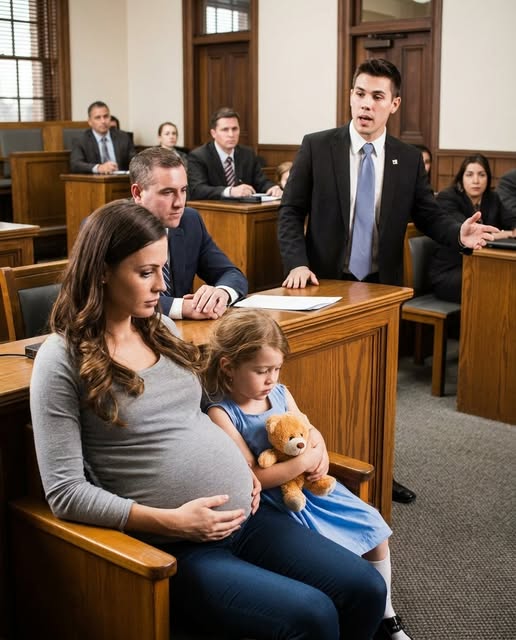
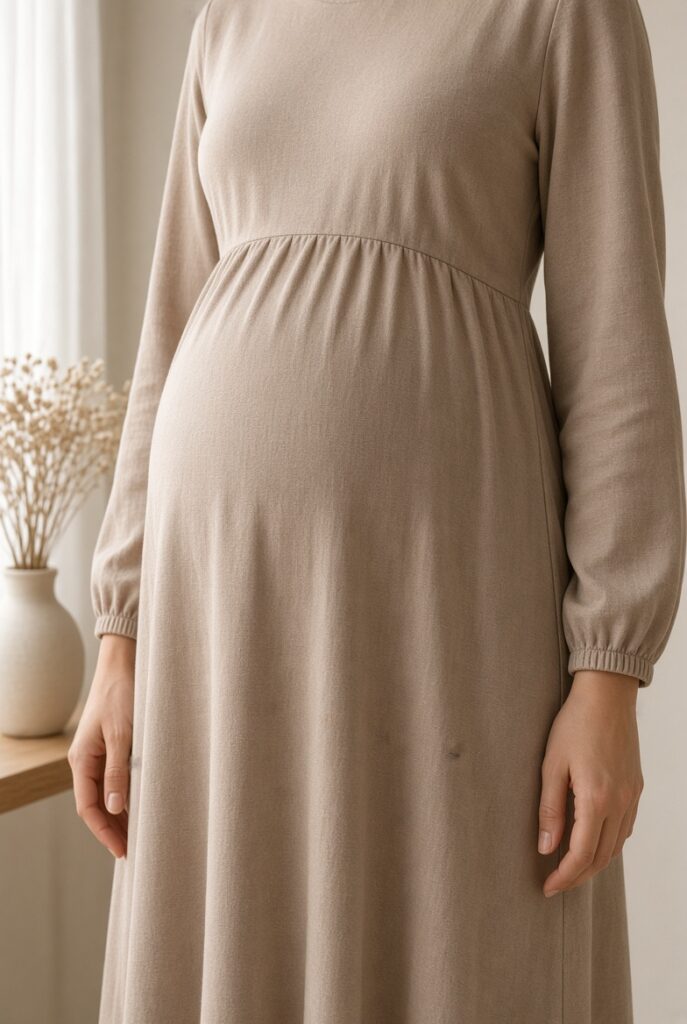
I was standing in her kitchen, arranging dinner plates beside the counter. I was three months pregnant, and my growing stomach was just beginning to show beneath my sweater.
I slowly put down the plates.
“What do you mean?” I asked.
Patricia folded a napkin and placed it beside a fork. Then she glanced at my stomach.
“With your condition, Sarah,” she replied.
I’d heard that word countless times throughout my life. Condition. People used it as though it explained everything about me.
But hearing it from the woman who was supposed to become my baby’s grandmother hurt in a way I hadn’t expected.
“Michael and I have discussed everything with our doctors,” I answered. “We’ve had genetic counseling, and we’re working with specialists. We understand the risks.”
Patricia shook her head.
“Doctors don’t know everything.”
Before I could respond, my husband, Michael, walked into the kitchen.
“Everything okay?” he asked.
Patricia immediately smiled.
“Of course, sweetheart. I was just asking Sarah how she’s feeling.”
I looked at her, wondering why she couldn’t repeat those words in front of her son.
At the time, I had no idea how far she was willing to go to take my child away from me.
Chapter 1: Growing Up Different
My name is Sarah, and I was born with achondroplasia, the most common form of dwarfism.
I’m three feet eight inches tall. My arms and legs are shorter than average, and I’ve spent most of my life learning to navigate a world that wasn’t designed with someone like me in mind.
Growing up in Westerville, Ohio, I quickly discovered that children could be remarkably cruel.
At elementary school, classmates called me names and asked whether I lived in a dollhouse. Some patted my head without permission, while others treated my height as entertainment.
In third grade, a boy once picked me up in the cafeteria while his friends laughed. Even the lunch monitor smiled before telling him to put me down.
High school wasn’t much better.
During my junior year, a popular boy named Kyle asked me to prom. He was handsome, played lacrosse, and seemed genuinely interested in me.
I was so excited that my mother took me shopping for a dress.
We chose a beautiful blue dress with tiny silver beads. I still remember how carefully the tailor adjusted it for me.
But a few days later, I discovered the truth.
Kyle had asked me as part of a bet with his friends.
When I approached him to discuss the dress, they burst out laughing.
He laughed too.
I never went to prom.
The dress remained in my closet until I left for college.
Years later, I earned an accounting degree from Ohio State and built a comfortable life working as a financial analyst at a credit union in Columbus.
I bought a condominium, made adjustments to my kitchen, and learned to live independently.
But finding someone who genuinely loved me was another challenge.
Then I met Michael.
Chapter 2: The Man Who Saw Me
I met Michael at a friend’s birthday party.
He was standing near a dartboard, holding a drink and looking slightly uncomfortable.
He was tall, with brown eyes, wire-rimmed glasses, and a little gray beginning to show at his temples.
He worked as a civil engineer.
When he asked whether I wanted to play darts, I joked that I couldn’t reach the board.
Instead of making a joke about my height, he took the dartboard down and positioned it at a comfortable level.
We played six games.
I won four.
He asked me out the following week.
During our first date, he asked about my job, my interests, and the things I enjoyed doing. He listened carefully and never treated my height as the most interesting thing about me.
Two years later, we married in a small chapel in Granville, Ohio.
For the first time, I felt completely comfortable being myself.
His mother, Patricia, was another matter.
She was a retired school secretary who lived alone in the house where Michael had grown up. She was always polite, but there was a distance between us that I couldn’t explain.
When Michael and I began discussing children, her attitude became noticeably colder.
I eventually understood why.
Chapter 3: A Baby We Planned For
Pregnancy required careful planning because of my condition.
Michael and I met with specialists before trying to conceive. We discussed the potential complications, the monitoring I would need, and the importance of having a delivery plan prepared well in advance.
A genetic counselor also explained that because I had achondroplasia and Michael did not, each child would have a 50 percent chance of inheriting the condition.
We understood that possibility.
One evening, Michael asked whether knowing the risks changed how I felt about becoming a mother.
I thought about my childhood, the teasing, the rejection, and all the times people had made me feel less deserving than everyone else.
“If our daughter has achondroplasia,” I told him, “she’ll have something I didn’t have growing up.”
“What?”
“A mother who understands exactly what she’s going through.”
Michael smiled and squeezed my hand.
When I discovered I was pregnant, I cried with happiness.
He cried too.
We began preparing the nursery, choosing furniture, and discussing names. We eventually settled on Charlotte, after my grandmother.
Michael painted the nursery pale yellow and built a small wooden step so I could comfortably reach the changing table.
For months, everything felt wonderful.
Then Patricia invited me to lunch.
Chapter 4: The $100,000 Check
I was seven months pregnant when Patricia called and asked me to visit her house.
She specifically requested that I come alone because Michael would be working that day.
I thought perhaps she wanted to improve our relationship.
I even bought her tulips.
When I arrived, she had prepared tea and sandwiches. We talked about ordinary things for several minutes.
Then she disappeared into another room.
When she returned, she was holding a white envelope.
She placed it on the table between us.
“I’ve been thinking about your situation,” she said.
I opened the envelope.
Inside was a check for $100,000.
The recipient’s name was mine.
The memo line read: For Charlotte’s future.
I looked up.
“What is this?”
Patricia folded her hands.
“When the baby is born, leave her at the hospital. I’ll arrange everything.”
For a moment, I couldn’t understand what she was saying.
“You want me to give up my daughter?”
“I’m offering you a chance to do what’s best for her,” she replied.
I pushed the check back toward her.
“Charlotte is my child. She’s not something you can buy.”
Patricia’s expression hardened.
She told me that raising a child with achondroplasia would be difficult. She questioned whether I could manage the physical demands of motherhood.
I reminded her that Michael and I had prepared carefully and had medical professionals supporting us.
She wasn’t interested.
Then she said something that made my stomach turn.
“I’ve already made arrangements. The nursery is ready. You wouldn’t have to worry about anything.”
I stood up.
“I’m leaving.”
As I walked toward the door, she called after me.
“Don’t say I didn’t warn you.”
I drove home with tears in my eyes.
That evening, I told Michael everything.
Chapter 5: A Husband’s Promise
Michael listened without interrupting.
When I told him about the check, his face changed.
“She offered you $100,000 to abandon our daughter?”
I nodded.
He reached for his phone, but I gently stopped him.
“Please don’t call her while you’re this angry.”
He sat beside me on the floor of Charlotte’s nursery and held my hands.
“She will never take our baby,” he said.
The following morning, Michael called his mother.
He told her that her behavior was unacceptable and that she would not be welcome at our home or at the hospital when Charlotte arrived.
For the remainder of my pregnancy, we had no contact with Patricia.
I concentrated on preparing for the birth.
At thirty-eight weeks and one day, I woke during the night with regular contractions.
Michael helped me into the car, and we headed to the hospital.
Because of my medical history, my doctors had already prepared a delivery plan.
The medical team assessed me and decided it was time for a cesarean delivery.
Michael stayed beside me throughout the procedure.
At 5:12 in the morning, we heard our daughter cry.
“She’s perfect,” Michael whispered.
Charlotte weighed six pounds and two ounces. She had dark hair, tiny fingers, and a beautiful little face.
When the nurse placed her against my chest, I began to cry.
I wasn’t thinking about the people who had laughed at me growing up.
I wasn’t thinking about the cruel comments or the limitations others had imagined for me.
I was thinking about my daughter.
“Hello, Charlotte,” I whispered.
Then something unexpected happened.
Less than an hour later, a nurse entered our recovery room.
“There’s someone here asking to see the baby,” she said.
It was Patricia.
Chapter 6: The Secret Nursery
Michael stepped into the hallway to speak with his mother.
I could hear their voices through the partly closed door.
“How did you know we were here?” he asked.
Patricia explained that she’d been calling the hospital and had learned that Charlotte had been born.
Then Michael asked why she had come.
She began talking about the arrangements she’d made.
She had prepared a nursery in her house. She had purchased a crib, clothes, bottles, and everything she believed a newborn would need.
She had even told her sister and several friends that she expected to raise Charlotte.
According to Patricia, I wasn’t physically capable of caring for a child like her.
I lay in my hospital bed, staring at the door.
Suddenly, the strange comments, the check, and her insistence that I should leave the baby behind made sense.
She hadn’t simply wanted me to give Charlotte up for adoption.
She intended to take my daughter home herself.
When Michael returned, his face was pale.
“Mom thought she would be raising Charlotte,” he said.
I looked at him in disbelief.
“She wanted my baby.”
Michael nodded.
I was devastated.
But there was something else we needed to discuss.
The pediatrician had arrived with the results of Charlotte’s initial examination.
Because of the genetic risk, further testing was being arranged.
He explained that her features were consistent with achondroplasia and that genetic testing could confirm the diagnosis.
Our daughter had inherited my condition.
I looked down at her sleeping face.
For a moment, I thought about everything I’d experienced growing up.
Then I remembered the promise I’d made to myself.
Charlotte would never have to question whether her parents loved her.
She would never be made to feel ashamed of her body in her own home.
And she would always know that she belonged.
Chapter 7: A Daughter We Needed to Find
A few months after Charlotte’s birth, Michael began searching for someone.
He had an older sister named Anna.
Patricia had given Anna up for adoption when she was only nine days old, decades before Michael was born.
He had grown up knowing very little about her.
Now, after everything that had happened, he wanted to understand why his mother had made that decision.
He ordered a DNA testing kit and began researching his family history.
In December, the results arrived.
There was a close family match.
A woman named Anna Reyes, living in Dayton, Ohio.
She was his half-sister.
Michael contacted her.
Anna had also taken a DNA test because she wanted to learn more about her biological family.
She had known her birth mother’s name for years but had never found the courage to make contact.
When Michael explained who he was, she agreed to meet us.
We arranged to meet at a small coffee shop in Kettering.
When Anna walked through the door, I immediately noticed her height.
She was three feet nine inches tall.
She also had achondroplasia.
She was Patricia’s daughter.
Michael stood up.
For several seconds, the two of them simply looked at each other.
Then Anna smiled.
“Hi,” she said.
Michael hugged her.
I sat quietly with Charlotte in my arms, watching a brother and sister meet for the first time.
Anna told us about her life.
She had been adopted by a loving couple who raised her with care and encouraged her independence.
She had become an occupational therapist and worked with children who had skeletal conditions.
She was married and had a son of her own.
Her childhood had not been perfect, but she had grown up knowing she was wanted.
When I handed Charlotte to her, Anna held the baby carefully.
“Hello, Charlotte,” she whispered. “I’m your aunt.”
Then she smiled.
“And I’m going to teach you how to reach everything.”
Chapter 8: Forty-Seven Years Later
Michael eventually told Patricia about the DNA match.
At first, she said very little.
Then she went to her bedroom and returned with a small box.
Inside was an old hospital bracelet.
It read: Baby Girl Halloran.
She had kept it for forty-seven years.
Anna agreed to meet her biological mother, but she made one request.
The meeting would happen at our house, with Michael and me present.
Patricia arrived on a Sunday afternoon.
When she entered the living room and saw Anna standing there, she stopped.
Neither woman spoke for a long time.
Finally, Patricia whispered:
“You held my finger. For nine days. You wouldn’t let go.”
Anna looked directly at her.
“I didn’t let go,” she replied. “You did.”
Patricia covered her face and began crying.
Anna allowed her to cry, but she didn’t immediately move toward her.
Then she spoke.
“They told you I would be a burden, didn’t they?”
Patricia nodded.
Anna explained that she had grown up with loving parents, built a career, married, and raised a family.
She had spent her life working with children who had conditions like hers.
“I wasn’t a burden, Patricia,” she said quietly. “I was just a little girl.”
Patricia looked across the room.
I was sitting in my rocking chair with Charlotte in my lap.
She was seven months old.
“May I hold her hand?” Patricia asked.
I looked at Anna.
She gave me a small nod.
“You can sit beside me,” I said. “And you can hold her hand. That’s all for today.”
Patricia slowly knelt beside my chair.
She extended one finger toward Charlotte.
Our daughter dropped her toy, reached out, and wrapped her tiny hand around Patricia’s finger.
She held on.
Patricia began crying again.
This time, Anna placed a hand on her shoulder.
Chapter 9: One Sunday at a Time
That meeting didn’t erase what had happened.
Forgiveness wasn’t immediate, and rebuilding trust took time.
But Anna decided she wanted to continue getting to know her birth mother.
I agreed to allow Patricia to become part of Charlotte’s life under clear boundaries.
She would visit on the first Sunday of every month.
She would ask before buying gifts or making plans.
And she would respect our decisions as Charlotte’s parents.
Patricia accepted those conditions.
She also told Anna that she had destroyed the original check.
Later, she made a substantial donation to a scholarship fund supporting college students with dwarfism, in Anna’s name.
Anna cried when she heard about it.
“My mother would have liked that,” she said, referring to the woman who had raised her.
Patricia quietly replied, “I hope she would.”
Today, Anna visits regularly.
She brings her husband and sometimes her son, Gabriel, who is now studying engineering.
Charlotte is growing into a curious, energetic little girl.
She loves climbing onto chairs, exploring the house, and finding new ways to reach things.
Anna enjoys teaching her the little tricks that made everyday life easier when she was growing up.
Patricia also continues to visit.
She isn’t perfect, and neither is our relationship. But she has learned to respect the boundaries we established.
One afternoon, we were eating at a restaurant when a little boy at the next table pointed toward Charlotte.
“Why is that baby so small?” he asked his mother.
Before the woman could respond, Patricia turned around.
“Because she’s exactly the size she’s supposed to be,” she said gently. “Just like you.”
The boy thought about that for a moment, then waved at Charlotte.
She waved back.
I looked at Patricia.
For once, she had said exactly the right thing.
Chapter 10: What Really Matters
People sometimes ask whether I regret allowing Patricia back into our lives.
They wonder how I could forgive someone who offered me money to give up my daughter.
The truth is that I didn’t simply forget what she had done.
Trust had to be rebuilt, and Charlotte’s safety and happiness always came first.
But Anna had made her own decision about reconnecting with her birth mother.
That choice belonged to her.
My responsibility was to protect my daughter and make sure she grew up surrounded by people who respected her.
Today, Charlotte is two years old.
She has a little wooden step stool with her name painted on it. Patricia bought it after asking our permission.
She uses it to reach the bathroom sink and the lower kitchen cabinets.
Sometimes I watch her standing on that stool, determined to do something independently, and I think about the little girl I once was.
I remember the blue prom dress.
I remember the laughter in the school cafeteria.
I remember all the people who assumed that my height determined what kind of life I could have.
And I think about the woman who once believed my daughter would be better off without me.
She was wrong.
Charlotte doesn’t need to prove that she deserves love.
She doesn’t need to meet anyone else’s expectations to be worthy of happiness.
She simply needs the opportunity to grow, learn, make mistakes, and discover the world in her own way.
Last night, I sat beside her bed while she slept.
Her little fingers were curled around the ear of her stuffed giraffe.
I gently kissed her forehead.
“You don’t have to prove anything to anyone, sweetheart,” I whispered.
She stirred and settled back into her pillow.
And I remembered the moment when she was seven months old, reaching out and holding Patricia’s finger.
For forty-seven years, Patricia had carried the memory of a baby who wouldn’t let go.
Now, perhaps, she was finally learning what it meant to hold on for the right reasons.
I looked at my sleeping daughter and felt grateful.
Someone had once offered me $100,000 to walk away from her.
But there was never enough money in the world to make me give up the greatest gift of my life.
Charlotte was wanted.
Charlotte was loved.
And she would never have to wonder about that for a single day.

Benjamin Harris is a RapidReports front page contributor and editor,proud father of four.