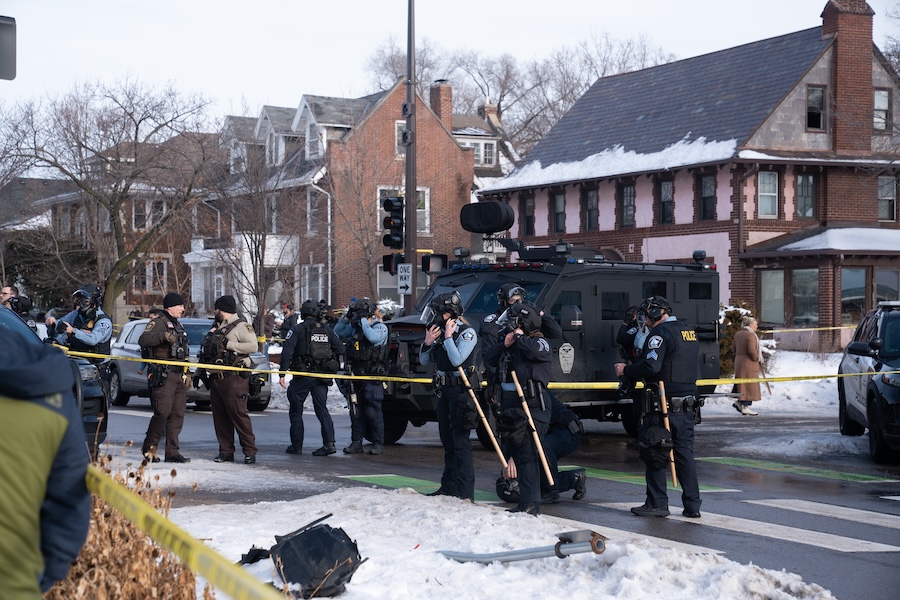
A crowd-control tool used by law enforcement drew notice Monday night during an anti-ICE protest in a Minneapolis suburb, as Minnesota State Patrol officers worked to disperse demonstrators following several days of unrest. Officers were responding to a gathering outside a hotel that protesters believed was housing federal immigration personnel.
Troopers faced protesters outside the SpringHill Suites in Maple Grove after the group declined multiple orders to leave the area. Law enforcement officials announced that a long-range acoustic device (LRAD) could be used to amplify dispersal instructions and issued a countdown before activating the system. LRADs are directional sound systems commonly used by public safety agencies to project voice commands over long distances in noisy environments.
The technology has also been the subject of debate due to concerns raised by medical and security experts. Some warn that close or prolonged exposure to high-volume sound produced by such devices may carry health risks, including hearing damage or disorientation. Analysts have described the experience as extremely intense for those positioned directly in the sound’s path.
Minnesota State Patrol officials stated that the LRAD was used only for voice amplification and that no high-frequency alert tones or sirens were deployed, despite online speculation. Authorities said the situation concluded with 26 arrests related to unlawful assembly and disorderly conduct.
The demonstration followed the fatal shooting of 37-year-old Alex Pretti during a confrontation with federal officers earlier in the weekend. The Maple Grove protest occurred amid reports of leadership changes within federal immigration enforcement in Minnesota, though officials said it was unclear whether any federal agents were staying at the hotel targeted by protesters.
LRAD systems are often described by law enforcement as non-lethal alternatives to physical crowd-control measures. Their use has gained increased public attention in recent years, particularly as discussions continue around emerging security technologies and their appropriate role in managing large public demonstrations.

Benjamin Harris is a RapidReports front page contributor and editor,proud father of four.