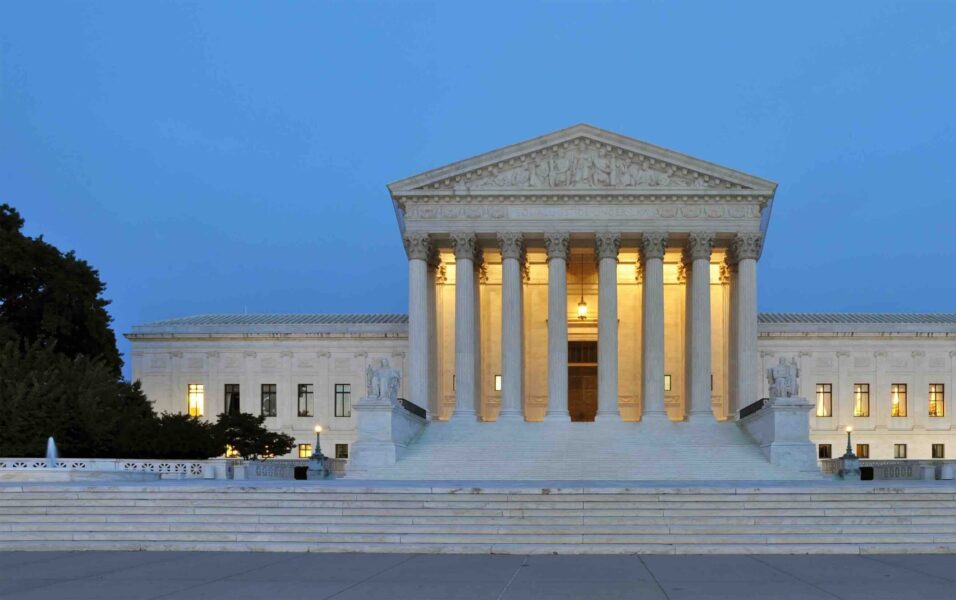
The U.S. Supreme Court on Friday struck down most of the broad tariffs imposed by President Donald Trump, ruling that his use of the International Emergency Economic Powers Act (IEEPA) to justify the measures was not authorized under the law. The decision represents a significant setback for a key component of Trump’s second-term economic agenda.
Writing for the majority, Chief Justice John Roberts stated that while the court does not claim expertise in economics or foreign affairs, it is responsible for interpreting the limits of statutory and constitutional authority. The court concluded that IEEPA, a 1970s-era law allowing presidents to regulate certain economic transactions during national emergencies, does not permit the imposition of broad-based tariffs on multiple countries.
Trump had invoked national emergency declarations beginning in February, citing concerns including fentanyl trafficking and trade imbalances, to justify tariffs on countries such as Canada, China, and Mexico, as well as broader reciprocal duties. Lower courts had allowed the tariffs to remain in place during litigation, but the Supreme Court’s ruling largely invalidates those measures. Tariffs imposed under separate statutory authorities, such as sector-specific duties on steel and aluminum, were not part of the case and remain unaffected.
The decision may carry substantial financial implications. Businesses that paid tariffs under the invalidated program could seek refunds, and several major companies — including Costco, Toyota Group affiliates, and Revlon — had already filed legal actions related to the levies. Legal analysts say the ruling could prompt additional litigation to determine how repayments would be handled and what steps follow for U.S. trade policy.