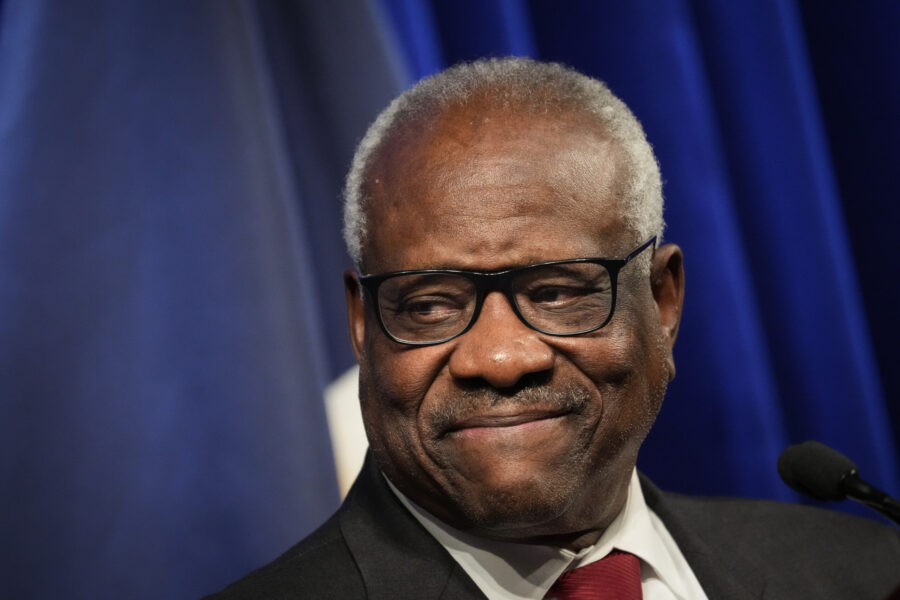
Clarence Thomas issued a strong dissent after the U.S. Supreme Court ruled 6–3 that the International Emergency Economic Powers Act (IEEPA) does not authorize a president to impose broad tariffs. The decision effectively blocks a key portion of former President Donald Trump’s trade policy. Chief Justice John Roberts authored the majority opinion, joined by Justices Sonia Sotomayor, Elena Kagan, Neil Gorsuch, Amy Coney Barrett, and Ketanji Brown Jackson.
In his dissent, Thomas argued that neither the Constitution nor the statutory language supports limiting the president’s authority in this context. He wrote that Congress had granted the executive branch the power to regulate importation, which historically has included the ability to impose duties and tariffs. Thomas maintained that past administrations had exercised similar authority and that courts had previously upheld such actions.
Thomas was joined in dissent by Justices Samuel Alito and Brett Kavanaugh. The dissenting justices contended that the majority improperly narrowed executive authority and substituted its interpretation for that of Congress. They emphasized that lawmakers have long delegated certain powers to the president, particularly in areas involving foreign commerce and national emergencies.
In a separate dissent, Kavanaugh raised concerns about the practical impact of the ruling, including potential financial implications if previously collected tariffs must be refunded. The decision represents a significant development in the ongoing debate over the scope of presidential power in trade policy and underscores divisions within the court over statutory interpretation and executive authority.