AOC Faces Scrutiny Over Remarks on Cornell Sexual Assault Allegations as Investigation Reopens
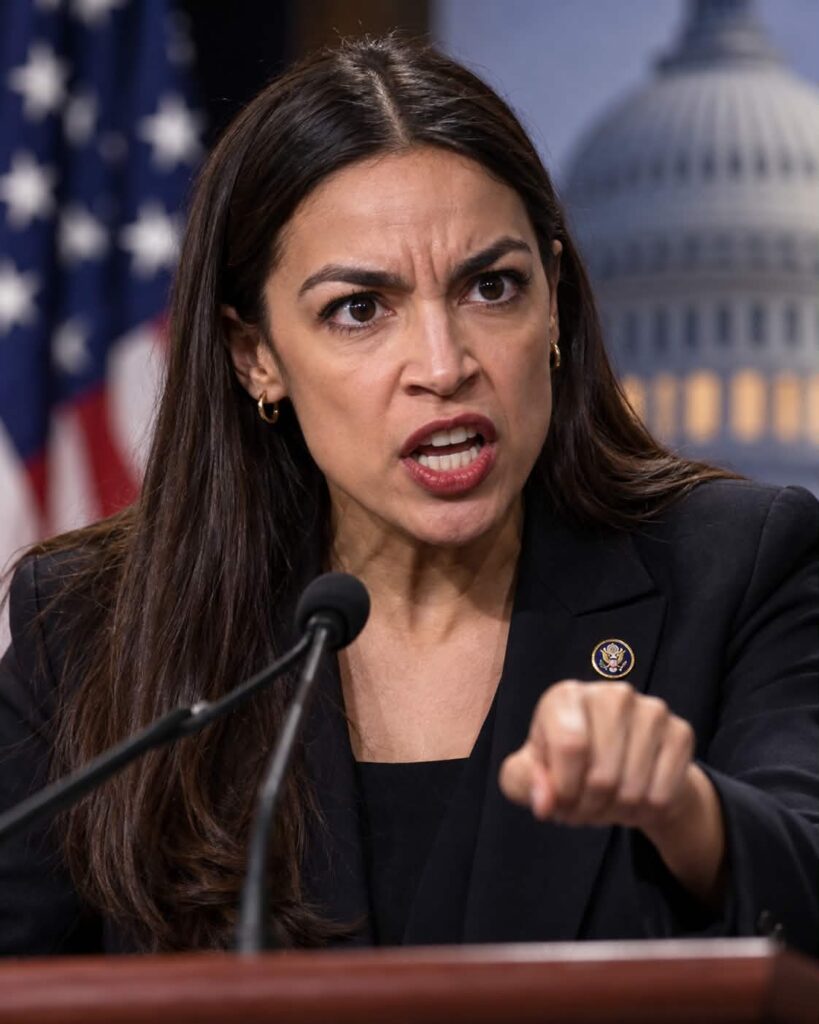
Rep. Alexandria Ocasio-Cortez is facing scrutiny over comments she made about allegations of sexual assault involving seven men associated with Cornell University, after describing the alleged events in definitive terms while the case remains under criminal investigation.
The New York Democrat addressed the case during a town hall in Ithaca on September 27, discussing a civil lawsuit filed by a former Cornell student who alleges she was drugged and sexually assaulted by seven members of the university’s Chi Phi fraternity in October 2024.
Ocasio-Cortez’s remarks have prompted debate about how public officials should discuss unresolved criminal allegations and whether statements about identifiable individuals could create potential legal exposure. However, no confirmed defamation lawsuit against the congresswoman has been identified, and whether her comments could support such a claim would depend on the precise statements, their context and applicable law.
What Ocasio-Cortez Said at the Ithaca Town Hall
During the September 27 event, Ocasio-Cortez described the allegations in forceful terms, saying that seven men had drugged and raped a 20-year-old woman after luring her into a fraternity house.
She also criticized Cornell and other elite institutions, arguing that institutional responses to sexual violence can protect accused individuals at the expense of survivors.
Her comments came as the civil lawsuit brought renewed attention to the case and intensified questions about how Cornell and local authorities handled the original report.
The Cornell Daily Sun reported on the congresswoman’s remarks and her broader criticism of what she characterized as a culture that enables sexual violence at elite universities.
What Is Known About the Cornell Case
The former student, identified in court filings as Jane Doe, filed a civil lawsuit alleging that seven members of the Chi Phi fraternity drugged and sexually assaulted her at a fraternity house in October 2024.
The allegations have not resulted in criminal convictions. The Tompkins County district attorney initially declined to bring charges after reviewing information from the university police investigation. In late September 2026, the district attorney announced that the criminal investigation would be reopened and that the case would be prepared for possible presentation to a grand jury.
The accounts of the incident and the handling of the original investigation remain disputed. The accuser’s attorney has criticized the initial inquiry, while the district attorney has cited differences between the allegations in the civil lawsuit and the account contained in the original sworn statement.
Cornell conducted its own investigation and imposed disciplinary sanctions on students involved, including expulsions and suspensions, according to published reports. University disciplinary findings, however, are separate from criminal convictions.
Could the Remarks Lead to a Defamation Claim?
The controversy has prompted speculation about whether Ocasio-Cortez could face a defamation lawsuit over her public description of the alleged assault.
Defamation law generally examines whether a statement presented as fact was false, communicated to others and caused legally recognized harm. The analysis can become more complicated when the statement concerns a public controversy or a public official’s political speech.
A potential claimant would also need to address the legal standards that apply to the particular speaker and statement. Public figures generally face a demanding standard in U.S. defamation cases, including the requirement to establish actual malice where that standard applies. That means proving that a statement was made with knowledge of its falsity or reckless disregard for whether it was false—not merely showing that it was forceful or disputed.
The exact wording and context of Ocasio-Cortez’s remarks would matter in any legal analysis. So would whether a court viewed the statements as factual assertions about particular individuals or as part of broader political commentary about sexual violence and institutional accountability.
No court has ruled that Ocasio-Cortez’s remarks were defamatory, and the possibility of litigation should not be treated as evidence that a viable claim exists.
Letitia James and Kathy Hochul Become Part of the Dispute
The case has also drawn attention to New York Attorney General Letitia James and Gov. Kathy Hochul, both Democrats.
James publicly expressed support for the woman identified as Jane Doe. Hochul subsequently appointed James as special prosecutor to oversee the reopened criminal investigation, following criticism of the original handling of the case.
The appointment has itself generated legal controversy. Lawyers for one of the accused men have sought James’s removal, arguing that her prior public statements raise questions about impartiality. James’s office has said the investigation will proceed according to the facts and the law.
The appointment and the congresswoman’s remarks raise distinct questions: one concerns the independence of the criminal investigation, while the other concerns the legal boundaries of public commentary about unresolved allegations.
A Case Still Under Investigation
The Cornell case has become a wider debate about sexual assault allegations, university accountability, prosecutorial decisions and the rights of people accused of crimes.
For the accuser, the civil lawsuit seeks accountability for what she says happened in 2024 and for the institutional response that followed. For the accused men, the absence of criminal convictions means the allegations have not been established in criminal court.
Ocasio-Cortez’s comments have added a political dimension to that debate, but the legal implications remain uncertain. Any defamation claim would have to be assessed on its specific facts and applicable legal standards, rather than on the controversy surrounding the remarks alone.
Meanwhile, the reopened investigation will determine whether prosecutors believe there is sufficient evidence to pursue criminal charges. Until that process advances, the allegations, the public statements about them and the legal questions they raise should remain clearly distinguished from findings established in court.
READ MORE:
Democratic Rep. Sheila Cherfilus-McCormick (FL-20) has formally resigned from the U.S. House of Representatives, with her resignation taking effect Tuesday at 1:30 p.m. EDT. Her departure comes amid an ongoing federal case and a congressional ethics review that has placed renewed attention on campaign finance rules, the use of federal relief funds, and accountability among elected officials. The resignation also adds to a series of recent departures from Congress involving lawmakers facing legal proceedings or ethics-related scrutiny.
As my colleague Frank Bruno reported late last month, an eight-member bipartisan subcommittee of the House Ethics Committee worked late into the night reviewing Cherfilus-McCormick’s conduct. The congresswoman faced allegations involving more than $5 million in federal disaster relief funds connected to a family business, with prosecutors alleging that a significant portion of the money was directed toward her 2022 congressional campaign. The case has drawn attention to the legal requirements governing federal assistance programs, campaign contributions, and financial disclosures by candidates seeking public office.
On Friday, the House Ethics Committee announced that, following approximately seven hours of deliberations, the subcommittee found “clear and convincing” evidence supporting 25 of the 27 allegations under review. Those findings could have moved the matter closer to a potential expulsion vote in the House of Representatives. Although the ethics proceedings represent a significant development, the committee’s conclusions should be distinguished from the separate federal criminal case, and allegations must be described in accordance with the relevant legal proceedings.
Throughout the controversy, Cherfilus-McCormick challenged the allegations and raised concerns about the treatment of her case, including claims of racial and gender bias. The dispute has highlighted broader questions about how congressional ethics investigations are conducted, how lawmakers respond to allegations of misconduct, and what standards should apply when elected officials face serious legal challenges. Her resignation now shifts attention toward the next steps in the federal case and the possible consequences for her political future.
Following the ethics subcommittee’s findings, Cherfilus-McCormick may also have faced the prospect of a difficult vote among House members if proceedings toward expulsion continued. Under House rules, expelling a member requires a two-thirds vote, making bipartisan support essential to such a decision. Rather than wait for the process to advance further, she submitted her formal resignation letter to House Speaker Mike Johnson (R-La.) ahead of a possible expulsion vote. Her departure leaves questions about the broader political implications of the case and how Congress will address other pending ethics matters.
READ MORE:
Her resignation comes amid a series of departures involving three lawmakers: Cherfilus-McCormick, former Democratic Rep. Eric Swalwell of California, and Republican Rep. Tony Gonzales of Texas. Their exits have intensified discussion about congressional oversight, political accountability, and the standards expected of elected representatives. Meanwhile, Republican Rep. Corey Mills of Florida is also facing calls for disciplinary action, potentially extending the recent period of uncertainty surrounding the House’s membership and internal proceedings.
Rep. Nancy Mace (R-SC) introduced a resolution seeking Mills’ expulsion following allegations involving domestic violence, sexual misconduct, claims concerning his military service, and the handling of federal contracts. Mills’ situation remains a separate matter, and the allegations should not be treated as established facts without appropriate findings or legal determinations. Whether the resolution receives sufficient Republican support remains uncertain. The developments nevertheless underscore the importance of transparent investigations, due process, and consistent ethical standards for public officials, regardless of party affiliation.
READ ALSO : Michigan Senate Race Tightens: New Poll Reveals Neck-and-Neck Contest
Ilhan Omar Accuses Trump Administration of Political Intimidation After Federal Agents Search Her Home
Rep. Ilhan Omar condemned President Donald Trump’s administration on Monday after federal agents searched her Washington, D.C., home as part of an ongoing criminal investigation, accusing the government of weaponizing law enforcement against political opponents.
The Minnesota Democrat responded on X after agents from Homeland Security Investigations arrived at her residence early Monday morning. The Justice Department confirmed that investigators had executed a court-authorized search warrant but did not disclose details about the investigation.
“I’m ok. Make no mistake: this is an attempt to target political enemies and weaponize federal law enforcement,” Omar wrote. She also accused Trump of directing years of attacks against her and declared, “I will not be silenced.”
The search, conducted weeks before the November 3 midterm elections, has intensified political tensions in Washington as Omar seeks reelection to the House. Federal authorities have not publicly outlined the specific allegations under investigation. (Associated Press; CBS News)
Justice Department Confirms Court-Authorized Search
Homeland Security Investigations agents arrived at Omar’s Washington-area residence at approximately 6 a.m., according to reports from Fox News and other outlets.
A Justice Department spokesperson confirmed that investigators carried out a search warrant obtained through the department, describing the operation as part of an ongoing federal criminal investigation.
Authorities have not publicly specified what evidence they sought, what materials were seized or whether any charges are being considered. The execution of a search warrant does not, by itself, establish that a crime occurred.
Reports Link Investigation to Immigration Paperwork
Fox News Digital reported that the investigation concerns alleged fraud involving immigration paperwork completed by Omar’s late father when she was a child. The Justice Department has not publicly confirmed those details or provided a full account of the allegations.
The search follows public comments by administration officials about an investigation involving Omar. In September, border czar Tom Homan acknowledged that a criminal investigation was underway.
Omar has denied wrongdoing and previously said she had not been contacted by federal authorities about an investigation. The precise scope of the inquiry remains unclear based on the information publicly released by the Justice Department. (CBS News; The Washington Post)
Omar Says Search Is Part of a Political Campaign Against Her
In her social media statement, Omar framed the search as the latest escalation in what she described as a prolonged effort by Trump to intimidate her.
“For ten years, Trump has targeted me with baseless lies and smear campaigns,” she wrote, adding that she would continue speaking out despite the search.
Omar, a prominent progressive Democrat who represents Minnesota’s 5th Congressional District, has frequently clashed with Trump and other Republican leaders. Her immigration background and political positions have repeatedly made her a target of criticism from the president and his allies.
Her allegation that the search was politically motivated has not been established as fact. Federal officials have described the operation as part of an ongoing criminal investigation but have not publicly explained its timing or provided detailed evidence supporting the reported focus of the probe.
Search Draws Scrutiny Ahead of Midterm Elections
The timing of the search has raised questions among Democrats because it occurred shortly before the midterm elections, when Omar is campaigning for another term in Congress.
Senior Democrats criticized the action and questioned whether the timing was consistent with longstanding Justice Department practices intended to avoid investigative steps that could improperly influence elections. Such concerns do not, on their own, establish that the search was politically directed.
Republicans and administration officials have previously called for scrutiny of Omar’s background, while Omar has consistently rejected allegations of immigration fraud.
The investigation’s next steps remain uncertain. The Justice Department has not publicly released further details about the evidence sought during Monday’s search or announced criminal charges in connection with the reported allegations.
For now, the search has placed Omar at the center of a new political and legal dispute just weeks before voters head to the polls, with key questions about the investigation still unanswered.
READ MORE: New Poll Shows Close Race in Florida Senate Contest
Ashley Moody and Angie Nixon Deadlocked at 45% in New Florida Senate Poll
Republican Sen. Ashley Moody and Democratic challenger Angie Nixon are virtually tied in a new Florida Senate poll, with each receiving 45% support among likely voters.
The St. Pete Polls survey, conducted September 15-17 for Florida Politics, found Moody at 45.2% and Nixon at 44.8% before rounding. Another 3% selected someone else, while 7% remained undecided.
The survey included 913 likely voters and has a margin of error of ±3.2 percentage points. The four-tenths-of-a-point difference between the candidates is therefore well within the poll’s margin of error.
A Dramatic Difference From the Previous Poll
The St. Pete Polls numbers differ significantly from another survey conducted only days earlier.
A Quantus Insights poll conducted September 8-10 found Moody at 50.1% and Nixon at 42.7% among 733 likely voters.
A Change Research survey conducted September 7-9, meanwhile, put the candidates at 47% each. Earlier University of North Florida and Emerson College surveys had also shown Moody ahead.
Those differences demonstrate why individual polls should be interpreted cautiously. Pollsters use different sampling, weighting and likely-voter methodologies, and a single survey does not establish a trend or determine the eventual result.
Nixon’s Support Among Independent Voters
One of the most striking findings in the new St. Pete Polls survey is Nixon’s advantage among voters who are not affiliated with either major party.
Nixon leads Moody 50% to 37% among independent and minor-party voters, according to the survey.
Nixon also receives 12% support from Republican voters, while Moody receives 8% among Democrats. The poll found Nixon retaining 85% of Democratic voters, compared with Moody retaining 77% of Republicans.
The survey was weighted to reflect Florida’s active voter population, with the final sample consisting of approximately 42% Republicans, 31% Democrats and 27% voters without a major-party affiliation or registered with minor parties. Republicans have a substantial voter-registration advantage statewide.
Age Differences Stand Out
The candidates’ support also varies sharply by age.
Nixon leads among voters younger than 30 by 64% to 25%, according to the poll.
Among voters ages 30 to 49, Nixon leads 54% to 35%.
Moody leads among voters ages 50 to 69, 47% to 42%, and has a larger advantage among voters 70 and older, 61% to 32%.
Subgroup findings generally have greater uncertainty than the overall result because they are based on smaller numbers of respondents.
Race and Ethnicity Show Different Patterns
The survey also found substantial differences by race and ethnicity.
Nixon leads among Black voters 74% to 14%, while Moody leads among White voters 53% to 37%.
Nixon also leads among Hispanic voters, 51% to 39%, according to the survey.
The Hispanic result is particularly notable because Hispanic voters have been an important part of Florida’s changing electoral coalition in recent presidential elections. But the Senate poll is a statewide survey of likely voters and should not be treated as evidence that any particular demographic group will vote a certain way in November.
Both Candidates Have Different Political Backgrounds
Moody currently holds Florida’s Senate seat after Gov. Ron DeSantis appointed her to replace Marco Rubio, who left the Senate after being selected to serve as secretary of state.
Before joining the Senate, Moody served as Florida attorney general and won statewide elections in 2018 and 2022.
Nixon is a Democratic member of the Florida House representing Jacksonville. She won the Democratic Senate nomination over Alex Vindman, receiving 56% of the vote.
The Democratic primary was closely watched because Vindman had substantially greater campaign spending, according to reporting on the contest.
Fundraising Remains a Major Difference
The two campaigns also entered the general election with substantially different financial resources.
Moody reported raising approximately $11.3 million through the end of July and having about $8.4 million cash on hand after the primary.
Nixon had raised less than $1 million by that point, although her campaign reported a subsequent increase in fundraising following her primary victory.
Nixon has also criticized Moody over her handling of campaign debates. Moody declined the first of three debate invitations issued earlier this month, according to Florida Politics.
Florida’s Governor’s Race Is Also Close
The same St. Pete Polls survey found a similarly narrow contest in the Florida governor’s race.
Republican Rep. Byron Donalds received 44%, compared with 43% for Democrat David Jolly.
The one-point difference also falls well inside the poll’s margin of error.
The simultaneous closeness of the two statewide contests provides a snapshot of the political environment in Florida, but the Senate and governor’s races involve different candidates, campaigns and issues.
The Survey Comes After Conflicting Polling
The latest survey stands out partly because of how sharply it differs from several previous polls.
Quantus Insights’ September 8-10 survey gave Moody a roughly seven-point advantage after rounding. The University of North Florida’s July poll showed Moody ahead by eight points, while an Emerson College survey conducted in March showed a larger Moody advantage. A Change Research survey conducted earlier this month had the Senate race tied at 47% each.
Consequently, the 45%-45% result should not be interpreted in isolation.
It is one new measurement taken during a campaign in which the candidates’ support has varied considerably across surveys.
What the Poll Actually Shows
The clearest finding from the St. Pete Polls survey is that the two candidates are currently separated by less than one percentage point among the voters surveyed.
It does not establish that either candidate has a statistically significant statewide advantage. The 3.2-point margin of error is substantially larger than the four-tenths-of-a-point difference between Moody and Nixon.
The survey also leaves 7% undecided, while another 3% selected a candidate other than Moody or Nixon.
Those voters represent an important portion of the electorate that was not committed to either major-party candidate when the survey was conducted.
Election Day Is Still Ahead
The 2026 general election is scheduled for November 3. Polling conducted in September provides information about voter preferences at that particular point in the campaign, but it does not determine the eventual result.
For now, the Florida Senate race presents a sharp contrast between recent surveys: one showed Moody with a sizable numerical advantage, another showed the candidates tied, and the newest St. Pete Polls survey again places them essentially level.
The coming weeks of campaigning, additional polling, debates and voter decision-making will provide further information about how the race develops.

Benjamin Harris is a RapidReports front page contributor and editor,proud father of four.