Alabama State Rep. Patrick Sellers Indicted on Four Federal Fraud Charges Over COVID-19 Relief Funds
Alabama state Representative Patrick Sellers has been indicted on four federal counts of wire fraud in a case involving more than $240,000 in COVID-19 relief grants and loans. Federal prosecutors allege that Sellers obtained the funding through two nonprofit organizations and a purported lawn-care business, then diverted significant portions of the money toward personal expenses, including credit card payments, mortgage costs, loan payments, household bills and college expenses for his daughters.
Sellers, 53, of Pleasant Grove, Alabama, surrendered to federal authorities on Thursday, November 19, 2026. He pleaded not guilty to all four charges during his initial appearance and arraignment in federal court.
The indictment concerns alleged conduct between July 2020 and May 2021, more than a year before Sellers first entered the Alabama Legislature. The charges therefore concern his activities during the COVID-19 pandemic and do not allege that he used his authority as a state representative to obtain the funding.
Sellers is a Democrat who represents Alabama House District 57. He was first elected in November 2022 and won reelection earlier this month. He also serves as pastor of Mount Zion Missionary Baptist Church in Birmingham.
What Federal Prosecutors Allege
According to the federal indictment, Sellers allegedly obtained more than $240,000 in pandemic-related grants and loans from the federal government, the State of Alabama and an Alabama-based nonprofit organization.
The funding programs were established to provide financial assistance to eligible organizations and businesses experiencing economic difficulties during the COVID-19 pandemic.
Prosecutors allege that Sellers sought the money through three entities: a nonprofit associated with the Alabama State Missionary Baptist Convention, Project Zion Inc. and Sellers Lawn Care.
The indictment describes Sellers Lawn Care as a fictitious business entity. Federal authorities further allege that Sellers used applications and supporting documents containing false or misleading information to obtain relief funding.
Investigators say the money was subsequently used for expenses that included personal credit card payments, mortgage obligations, personal loans, water bills and educational costs connected to his daughters.
These allegations form the basis of the four wire fraud counts. They remain accusations in a criminal case, and Sellers is presumed innocent unless prosecutors prove the charges beyond a reasonable doubt.
Allegations Involving the Alabama State Missionary Baptist Convention
One part of the indictment concerns a nonprofit connected to the Alabama State Missionary Baptist Convention, where Sellers previously worked as chief of staff to the organization’s president.
Prosecutors allege that Sellers obtained control over the nonprofit’s financial and administrative arrangements and used that position to apply for pandemic assistance without proper authorization from the organization’s leadership.
The indictment describes a $20,000 Economic Injury Disaster Loan issued through the U.S. Small Business Administration.
According to prosecutors, Sellers represented that he was authorized to apply for the loan on behalf of the nonprofit and stated that the money would be used as working capital to address financial harm caused by the pandemic.
Federal authorities allege that the organization’s president and executive board had not approved the application.
The indictment says that after the loan was deposited, more than $11,000 was used to make payments toward personal credit card balances. Approximately $1,000 was allegedly spent on Sellers’ mother’s water bill.
The organization’s president later contacted the Small Business Administration to dispute the application. According to the indictment, the president stated that he had not known about or approved the loan and that the organization’s executive board had not authorized it.
Prosecutors also allege that Sellers obtained additional assistance through the same nonprofit, including state COVID-19 relief grants and a $50,000 grant from an unnamed nonprofit organization.
The indictment describes several other transactions involving the nonprofit’s funds, including payments connected to household and vehicle expenses and educational costs for Sellers’ daughters.
The government contends that the money was intended to support the nonprofit’s pandemic-related needs rather than the personal expenses identified in the indictment.
Project Zion Inc. and Additional Relief Funding
A second nonprofit involved in the case is Project Zion Inc.
According to the indictment, Sellers allegedly applied for and received multiple forms of pandemic assistance through Project Zion, including a $44,900 Economic Injury Disaster Loan, a $20,000 Alabama Revive Plus grant and a separate $50,000 grant from an unnamed nonprofit.
Prosecutors allege that the applications contained representations about the organization’s employees and financial needs that were not accurate.
The funding was intended to help the organization address expenses associated with the economic disruption caused by COVID-19.
However, federal authorities allege that portions of the money were directed toward personal financial obligations.
The indictment identifies mortgage payments and expenses associated with one of Sellers’ daughters’ college education among the alleged uses of the funds.
The government is expected to rely on financial records, loan applications and other documents as it presents its case. The indictment sets out the prosecution’s allegations, but the evidence must still be tested through the federal court process.
The Sellers Lawn Care Paycheck Protection Program Loan
The fourth wire fraud count concerns a Paycheck Protection Program loan obtained in the name of Sellers Lawn Care.
The Paycheck Protection Program, commonly known as PPP, was established during the pandemic to help eligible businesses maintain payroll and cover certain operating expenses.
Federal prosecutors allege that Sellers applied for a $20,415 PPP loan in 2021 by representing that Sellers Lawn Care had generated $98,000 in gross income during 2020.
The application reportedly included a purported Schedule C tax document. Schedule C is the federal tax form generally used by sole proprietors to report business income and expenses.
According to the indictment, Internal Revenue Service records showed that Sellers had not filed a Schedule C for Sellers Lawn Care for the 2020 tax year.
Prosecutors allege that the lender approved the application and deposited the $20,415 loan directly into Sellers’ personal credit union account.
The indictment characterizes Sellers Lawn Care as a fictitious business entity. That allegation is part of the government’s case and has not been established through a conviction.
Federal Officials Describe the Investigation
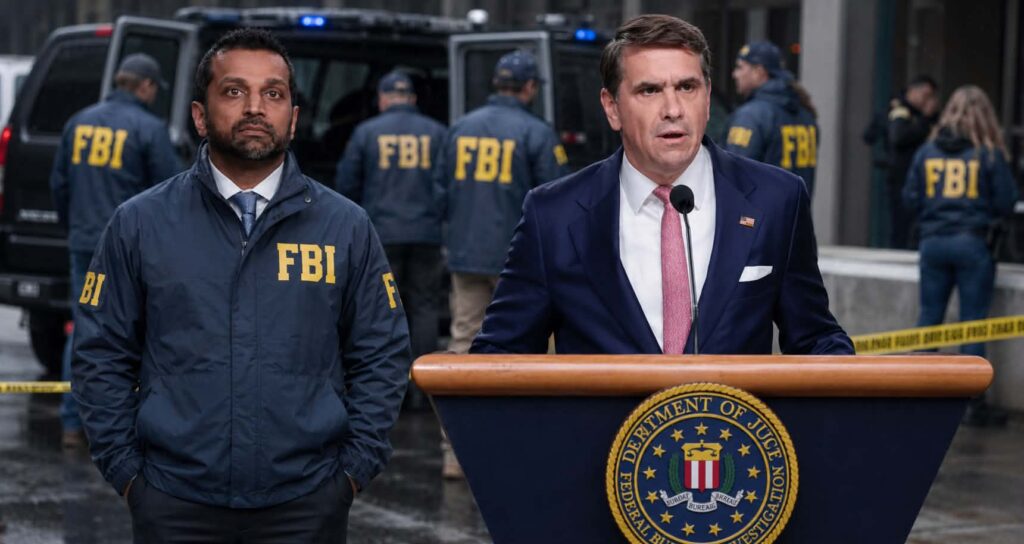
U.S. Attorney Phillip W. Williams Jr. announced the charges and discussed the indictment during a news conference in Birmingham.
Williams said the allegations made public represented only part of the evidence gathered by investigators.
“This is certainly not all the evidence. This is a very robust indictment, and certainly would be a robust trial,” Williams said.
Federal authorities have emphasized that the case concerns alleged misuse of programs created to provide financial assistance during a national emergency.
The FBI investigated the case, while Assistant U.S. Attorneys Brett A. Janich and Ryan S. Rummage are prosecuting it.
The Justice Department has said that each wire fraud count carries a maximum potential sentence of 20 years in federal prison. That is the statutory maximum for each count, not a prediction of the sentence Sellers would receive if convicted. Any sentence would depend on the outcome of the case and applicable sentencing rules.
Sellers’ Attorney Responds to the Charges
Sellers’ attorney, Matt Hart, emphasized that the indictment does not accuse his client of using or abusing his elected office to obtain the money.
“It’s notable that none of the allegations against Representative Sellers assert any use or abuse of his official position,” Hart said.
Hart also said the defense would not provide a detailed response before reviewing the government’s case and the evidence supporting the charges.
“However, the Government’s case is still emerging and we will have no comment until we’ve had the opportunity to understand the charges and the evidence,” he said.
Sellers pleaded not guilty to all four counts during his initial federal court proceedings. His plea means that the government must prove the charges in court rather than rely solely on the allegations contained in the indictment.
The Case Predates Sellers’ Election to the Alabama Legislature
The timing of the alleged conduct is an important distinction in the case.
Federal prosecutors place the alleged transactions between July 2020 and May 2021. Sellers did not begin representing House District 57 until November 2022.
He was reelected earlier in November 2026 after running unopposed, according to published reports.
The indictment does not allege that the COVID-19 funding was obtained through his legislative office or that he used his position in the Alabama House to secure the grants and loans.
Instead, the allegations focus on the nonprofit organizations and business entity identified in the federal court filing, as well as Sellers’ role in applying for and receiving the funding.
That distinction is also central to the public statement made by his attorney.
What Happens Next?
The case will proceed through the federal criminal justice system. Prosecutors will have to establish the elements of each wire fraud charge beyond a reasonable doubt, while the defense will have an opportunity to challenge the allegations and the government’s evidence.
The indictment outlines the prosecution’s account of how the money was allegedly obtained and spent. It is not a judicial finding that Sellers committed the offenses.
If convicted, Sellers could face significant federal penalties. However, the final outcome will depend on the evidence presented, any legal rulings made during the proceedings and the eventual resolution of the charges.
The case also raises questions about oversight of emergency assistance programs and the safeguards used to ensure that pandemic-related grants and loans reach eligible recipients. Those broader questions do not determine Sellers’ guilt or innocence, which must be decided through the court process.
For now, the central facts are that Sellers has been indicted on four federal wire fraud counts, has pleaded not guilty and faces allegations involving more than $240,000 in COVID-19 relief funding. His defense has disputed the government’s position by emphasizing that the charges do not concern his conduct as an elected state representative.
The case remains pending, and Sellers is presumed innocent unless and until proven guilty.

Benjamin Harris is a RapidReports front page contributor and editor,proud father of four.