Virginia Democrats Debate Drastic Measures After Supreme Court Blocks Congressional Map
Democratic lawmakers in Virginia gathered over the weekend in the aftermath of a significant setback: the Virginia Supreme Court overturned the state’s newly drawn congressional map, which had been pitched as a strategic advantage for the party heading into the 2026 midterms. The decision has sparked frustration, debate, and speculation about bold—but controversial—options for responding.
Private Meetings Highlight Party Frustration
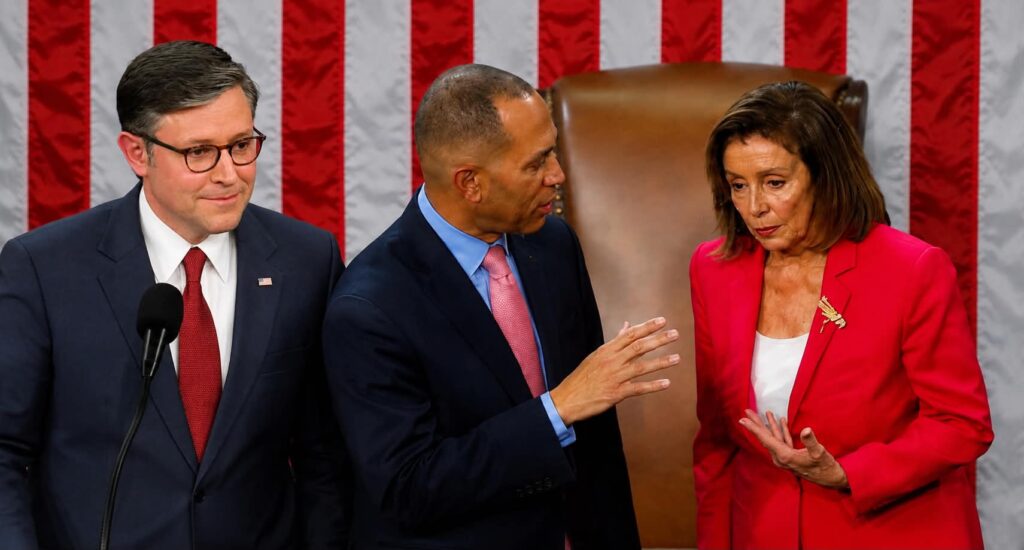
According to reporting from The New York Times, Democratic leaders, including House Minority Leader Hakeem Jeffries, held a private meeting on Saturday following the court’s ruling. Sources described the gathering as a forum where party members vented frustrations and discussed potential strategies to regain a foothold after the decision.
Journalist Reid J. Epstein reported that some participants floated what he described as an “audacious and possibly far-fetched idea” aimed at reinstating the rejected map. While the discussion highlighted the party’s desire to reverse the ruling, not all Democrats supported the proposal, and there were questions about its legality and political feasibility.
A Bold, Controversial Idea
The “most dramatic idea” reportedly involved replacing the entire state Supreme Court in hopes of restoring the Democratic-favored map. Epstein noted that it was unclear whether such a maneuver would be viable or acceptable to Virginia Governor Abigail Spanberger or members of the state legislature.
Lawmakers did not reach a consensus during the call and agreed to consult with legal counsel on how to proceed prudently. The discussion illustrates the depth of concern among Democrats about losing the potential advantage the map offered in the upcoming election cycle.
Redistricting Stakes Ahead of 2026 Midterms
The conversation comes as both parties are engaged in a high-stakes redistricting battle, with each seeking to optimize their chances for the 2026 midterm elections. The Democratic map that was struck down was projected to provide the party an advantage in 10 out of 11 congressional districts in Virginia—a significant edge that is now lost.
Other topics discussed during the call reportedly included ways to flip a few Republican-held districts under the current map, as well as “bank-shot proposals” to redraw lines despite the setback. These discussions reflect the intensity and urgency Democrats feel as they prepare for the next electoral cycle.
Supreme Court Ruling Details
The Virginia Supreme Court’s ruling was a 4-3 decision, effectively invalidating a voter-approved congressional redistricting plan. The court found procedural issues with how the map had been advanced, which Democrats argued was a legally sound process. Republicans, meanwhile, had challenged the map as unconstitutional and politically motivated.
The decision marks a notable victory for the GOP in the state and underscores the judiciary’s influential role in redistricting disputes. The ruling also demonstrates the checks and balances embedded in state election law, particularly when mid-decade redistricting efforts are pursued.
Democratic Response: Appeal to U.S. Supreme Court
In response to the state Supreme Court decision, Democratic leaders announced plans to appeal to the U.S. Supreme Court. However, observers note that the federal appeal may be a long-shot effort, as overturning a state court ruling on procedural grounds is notoriously difficult.
The appeal signals the party’s determination to pursue all possible legal avenues, even in the face of significant procedural and political obstacles. It also underscores the high stakes surrounding redistricting battles nationwide, where maps can influence the balance of power for years.
Political Implications
The ruling and subsequent discussions have national ramifications. Virginia has long been considered a swing state, and control of its congressional delegation could influence the balance of power in the U.S. House of Representatives. The invalidation of the Democratic-favored map strengthens Republican prospects in several key districts and reshapes campaign strategies for both parties.
Observers suggest that the debate over potentially replacing the state Supreme Court, even if symbolic, illustrates the level of urgency and frustration Democrats feel in trying to maintain electoral advantages under a rapidly changing political landscape.
Public Reaction and Media Coverage
The discussion among Democratic lawmakers has drawn significant media attention, both for the audacity of the ideas floated and the transparency provided by reporting. Epstein described the atmosphere as one of “desperation and fury,” reflecting the intense pressure lawmakers face to protect political gains in competitive districts.
Social media and political commentary have amplified scrutiny of the proposed measures, highlighting how high-profile legal battles over redistricting can become national news. This increased visibility puts additional pressure on lawmakers to act cautiously while navigating public opinion.
Broader Context: Redistricting and Political Strategy
Redistricting has always been a contentious aspect of U.S. politics, with each party seeking to draw favorable maps that maximize its electoral strength. Virginia’s experience mirrors similar conflicts in other states, where courts frequently intervene to ensure constitutional compliance and fairness.
The invalidated map was part of a broader strategy by Democrats to gain an electoral edge mid-cycle. The ruling underscores the importance of adhering to procedural requirements and demonstrates how legal checks can prevent perceived political overreach.
Looking Ahead: Election Preparations
With the 2026 midterms approaching, both parties are reassessing strategies in light of the court ruling. Democrats may continue exploring legal avenues while focusing on voter outreach, fundraising, and candidate recruitment under the current map. Republicans, meanwhile, can capitalize on the court decision to solidify their position in key districts.
Political analysts emphasize that while map advantages matter, campaign execution, messaging, and voter mobilization will play equally critical roles in determining outcomes. The next few months are likely to be pivotal for both parties as they navigate the combined legal, political, and strategic challenges in Virginia.
Conclusion
The fallout from the Virginia Supreme Court’s decision to overturn the congressional map highlights the complex intersection of law and politics. Democratic lawmakers’ private discussions reveal both frustration and creativity, as well as the high stakes of redistricting battles that can influence federal elections.
While the idea of replacing the state Supreme Court remains largely symbolic and controversial, it demonstrates the desperation and urgency Democrats feel in securing electoral advantages. As the party pursues an appeal to the U.S. Supreme Court and explores other options, Virginia will remain a focal point of national attention in the lead-up to the 2026 midterms.
The ruling serves as a reminder that judicial oversight plays a critical role in ensuring fairness in the democratic process, and that even politically ambitious plans must operate within constitutional boundaries.