
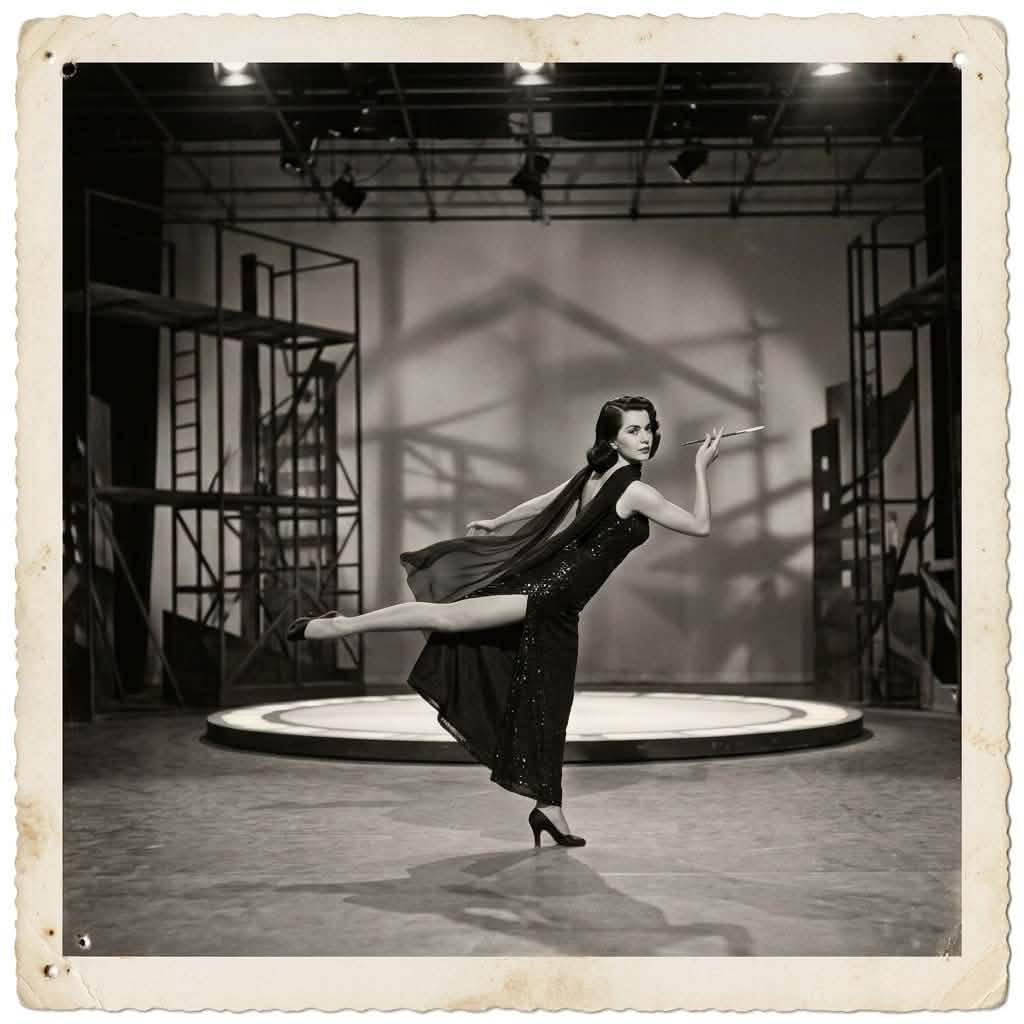
Cyd Charisse: The Hollywood Star Whose Grace and Legendary Dance Moves Captivated Generations
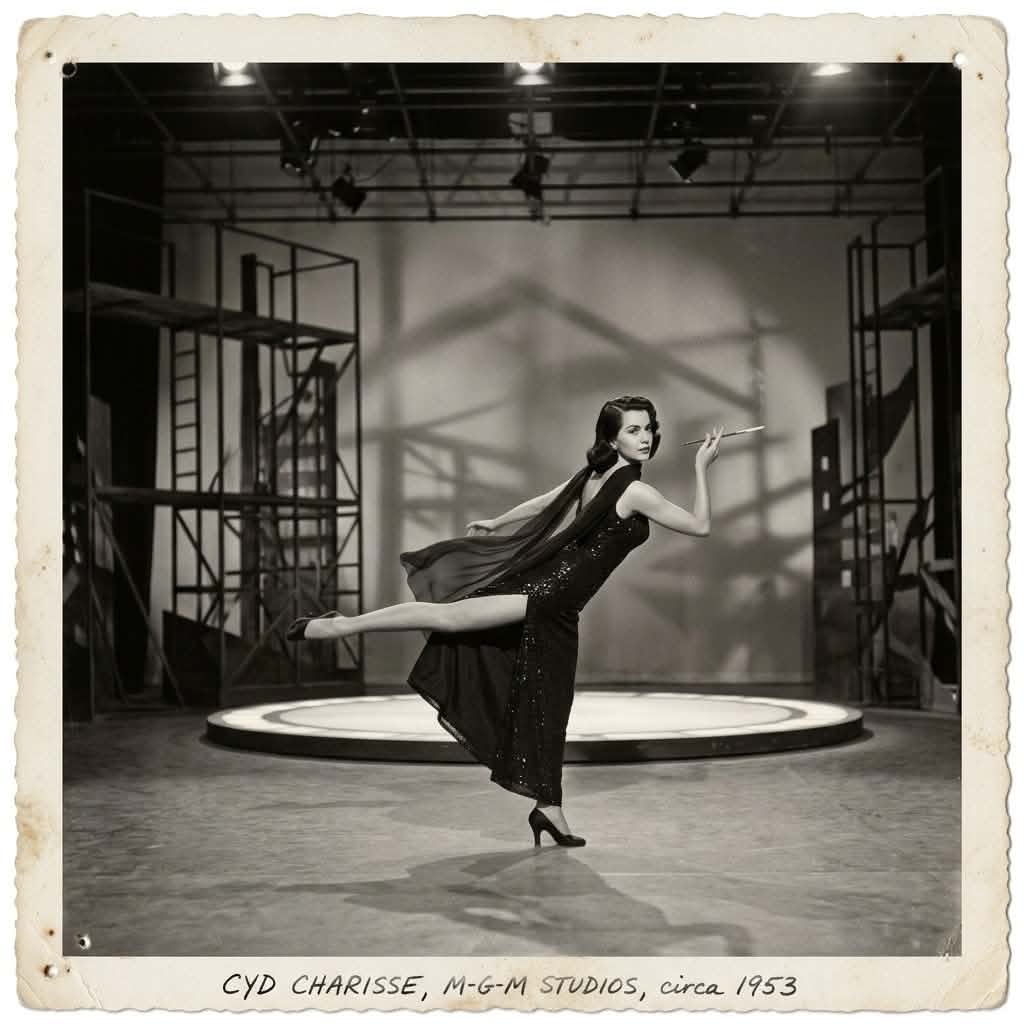
From a Sickly Child to One of Hollywood’s Most Admired Dancers
Cyd Charisse was far more than a beautiful face on the silver screen. She could act, sing, and dance with extraordinary confidence, but it was her remarkable movement and unmistakable elegance that helped make her one of the defining performers of Hollywood’s Golden Age.
With her striking presence, graceful style, and famously long legs, Charisse became an unforgettable figure in classic American cinema. She shared the screen with some of the biggest entertainers of her era, including Fred Astaire and Gene Kelly, and proved that dance could be just as powerful a storytelling tool as dialogue.
Her polished performances often made her appear almost effortlessly confident. Behind that image, however, was a woman whose childhood had been marked by serious health challenges and whose journey to Hollywood success required determination from an early age.
A Young Girl Facing Health Challenges
Cyd Charisse was born Tula Ellice Finklea on March 8, 1922, in Amarillo, Texas.
Her childhood was not the easy beginning that might have been expected for someone who would eventually become one of Hollywood’s most celebrated dancers.
As a young girl, Charisse became seriously ill with polio, leaving her physically weak and vulnerable. Her parents looked for ways to help her regain strength, and ballet became an important part of that process.
What initially served as a way to improve her physical condition eventually developed into something much greater.
Dance became a passion, a discipline, and eventually the foundation of her career.
Ballet Changed the Direction of Her Life
Charisse’s ballet training gave her more than physical strength.
It introduced her to a demanding art form that required balance, flexibility, discipline, musicality, and extraordinary control.
She worked hard to develop her abilities, and her natural talent quickly became apparent.
The young dancer eventually progressed far beyond basic lessons, training seriously and developing the skills that would later distinguish her from other performers.
Her early experiences in ballet helped shape the elegant technique that audiences would eventually see on Hollywood screens.
The contrast between her fragile childhood health and her later physical confidence is one of the most remarkable aspects of her story.
How Cyd Got Her Famous Name
Cyd Charisse was not born with the name that eventually appeared on movie posters.
Her birth name was Tula Ellice Finklea.
The nickname “Sid” reportedly came from her older brother, who had difficulty pronouncing “Sis.” The unusual nickname stayed with her as she grew older.
Later, MGM producer Arthur Freed helped transform the spelling into “Cyd,” giving the future star the distinctive professional name by which audiences would know her.
It was a small change, but “Cyd Charisse” eventually became one of the most recognizable names associated with dance in classic Hollywood.
Her Talent Took Her Beyond the Ballet Stage
Although ballet was central to Charisse’s early development, her ambitions eventually extended beyond traditional dance.
She became involved with professional ballet and performed in Europe before making her way toward the American film industry.
Her classical training proved invaluable when Hollywood began looking for performers capable of combining acting with sophisticated choreography.
Charisse possessed qualities that translated especially well to the screen.
She had an elegant posture, controlled movements, striking facial expressions, and a commanding stage presence.
Even when she was standing still, she could attract attention.
When the music began, however, her screen presence became something else entirely.
Hollywood Quickly Recognized Her Potential
The Hollywood studio system of the 1940s and 1950s placed enormous value on performers who could entertain audiences in multiple ways.
Charisse fit that model exceptionally well.
She could dance at a highly professional level while also presenting herself convincingly as a dramatic performer.
Her combination of beauty, technical skill, and confidence made her particularly suited to musical films.
As her career developed, she became associated with elaborate productions in which choreography was an essential part of the storytelling.
She was not simply placed into a scene to provide visual appeal. She was capable of carrying complex dance sequences and matching the technical demands of some of the era’s most respected performers.
Sharing the Screen With Fred Astaire
One of the most memorable chapters of Charisse’s career involved her collaborations with Fred Astaire.
Astaire was already regarded as one of the greatest dancers in film history, so appearing opposite him represented an extraordinary opportunity.
Charisse proved that she could hold her own.
Their performances demonstrated an elegant contrast between Astaire’s precise, seemingly effortless style and Charisse’s more dramatic and sophisticated presence.
Together, they created some of the most memorable dance moments of classic Hollywood cinema.
Their work remains widely appreciated by audiences interested in the history of movie musicals.
Her Partnership With Gene Kelly Was Equally Important
Charisse also worked with Gene Kelly, another legendary figure in American dance and film.
Kelly’s athletic approach to choreography differed from Astaire’s, but Charisse was able to adapt to the changing demands of each performance.
Her ability to work with different dance styles demonstrated the depth of her training.
She was not dependent on one particular partner or choreography style.
Instead, she possessed the technical foundation and performance instincts necessary to become a compelling partner for some of Hollywood’s most accomplished dancers.
More Than Her Famous Legs
Charisse became famous for her extraordinary legs, which were frequently highlighted in publicity surrounding her career.
Her physical appearance certainly contributed to her star image, but reducing her legacy to her looks overlooks the discipline behind her performances.
Dance at the level Charisse achieved requires enormous physical control.
Every movement has to be timed precisely. Balance, posture, coordination, expression, and musical interpretation all have to work together.
Her ability to make difficult choreography appear effortless was one of her greatest professional accomplishments.
The elegance audiences saw on screen was the result of years of training and preparation.
A Distinctive Hollywood Presence
Charisse had a quality that separated her from many other performers of her generation.
She was glamorous without appearing dependent on exaggerated gestures.
Her movements could be subtle, yet they carried tremendous impact.
She could communicate confidence through a glance, a change in posture, or a carefully controlled movement.
That quality made her particularly effective in sophisticated musical sequences.
Rather than simply performing choreography, she seemed to inhabit it.
Her dance numbers often became memorable because of the combination of music, costume, cinematography, and her commanding presence.
The Golden Age of Hollywood
Charisse’s greatest years coincided with a period when large-scale movie musicals were a major part of American entertainment.
Studios invested heavily in elaborate sets, costumes, orchestras, choreography, and star performers.
Audiences went to theaters not only to watch a story but also to experience spectacle.
Charisse was perfectly suited to that environment.
Her elegance and technical ability allowed her to become part of productions that showcased the scale and ambition of the studio system.
Today, many of those films are remembered as examples of an era when dance was an essential component of mainstream movie entertainment.
Her Career Was Built on Discipline
It can be easy to assume that someone with Charisse’s natural physical gifts simply became successful because of talent.
Her biography tells a more complicated story.
Her early illness meant that she had to overcome physical difficulties before she ever became a professional performer.
The ballet training that helped strengthen her body also demanded years of dedication.
She then had to adapt those skills to the very different world of film.
That progression required persistence.
Her career therefore represents not just natural ability but also the power of sustained training and determination.
An Image of Grace and Sophistication
Charisse eventually became associated with a particular type of Hollywood elegance.
Her costumes often emphasized her graceful figure, while her choreography showcased her long lines and precise movements.
Photographers and studios understood how distinctive she looked on camera.
But her visual appeal was only one element of her success.
She had the rare ability to combine physical beauty with genuine artistic credibility.
That combination helped her remain memorable long after the studio musical era began to fade.
A Legacy That Reached Beyond Her Films
Charisse’s influence can still be seen whenever classic Hollywood dance is discussed.
Her performances remain reference points for fans of musical cinema, while her collaborations with Astaire and Kelly continue to attract new audiences.
For aspiring dancers, her career also demonstrates how classical training can provide a foundation for other forms of performance.
She proved that a dancer could become a major screen personality without sacrificing technical excellence.
That achievement helped establish her as more than a supporting performer in the history of Hollywood musicals.
Remembering the Woman Behind the Glamour
The glamorous photographs tell only one part of Cyd Charisse’s story.
Behind the elegant costumes and sophisticated dance numbers was a woman who had experienced serious health difficulties as a child and worked hard to develop the physical abilities that later became central to her career.
Her journey from a sickly child in Texas to an internationally recognized Hollywood performer was anything but ordinary.
The discipline she developed through ballet remained visible throughout her professional life.
It helped shape the controlled movements, confidence, and refined presence that audiences came to associate with her name.
Why Cyd Charisse Remains Memorable
Many performers from Hollywood’s Golden Age are remembered because of a particular role, song, or movie.
Charisse is remembered for something broader.
She represented an entire style of cinematic performance.
Her combination of dance technique, glamour, confidence, and elegance made her uniquely suited to an era when musical films were among the biggest attractions in American entertainment.
Her name remains closely linked with the great dancers of classic cinema because she earned her place alongside them through performance rather than reputation alone.
Final Thoughts
Cyd Charisse’s story is ultimately one of transformation.
She began life as a child whose health presented serious challenges. Ballet was introduced partly to help strengthen her body, but the training soon revealed a remarkable natural ability.
Through years of discipline and professional development, that young girl from Texas became one of Hollywood’s most admired dancers.
Her performances alongside Fred Astaire and Gene Kelly helped establish her as a major figure in the history of movie musicals, while her distinctive elegance and physical artistry made her instantly recognizable.
Although audiences often focused on her beauty and legendary legs, her greatest achievement was the extraordinary skill that allowed her to make demanding choreography look effortless.
Cyd Charisse remains a lasting symbol of Hollywood’s Golden Age — a performer whose grace, discipline, and artistry helped create some of the era’s most memorable moments on screen.

Benjamin Harris is a RapidReports front page contributor and editor,proud father of four.