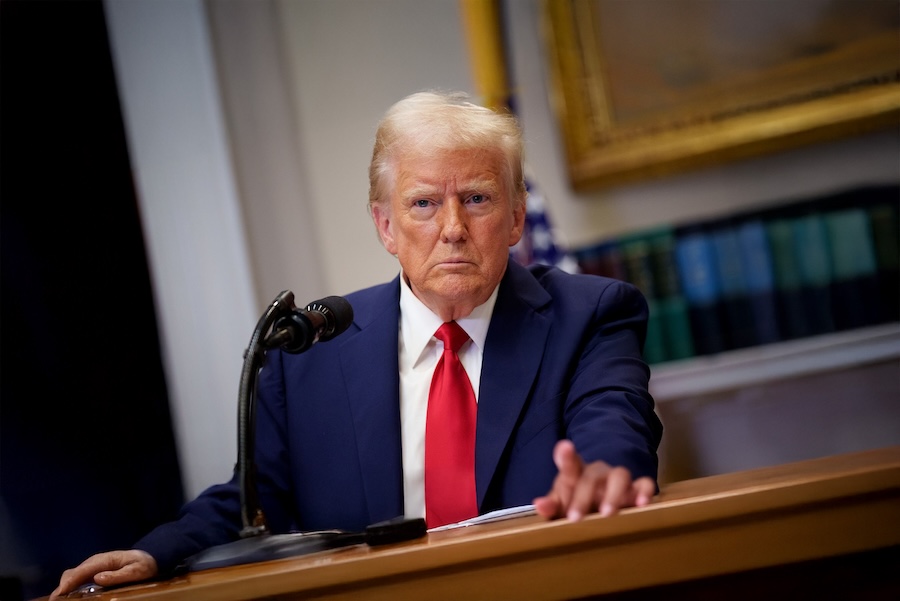
Former U.S. President Donald Trump said Sunday that Iran’s leadership may be open to discussions following major military strikes that reportedly killed Iran’s Supreme Leader Ali Khamenei. Speaking in a phone interview with The Atlantic from Mar-a-Lago, Trump said Iranian representatives appear interested in talks and that he is willing to engage in discussions. He also suggested negotiations could have happened earlier during the period of heightened tensions.
The remarks came shortly after a large U.S.–Israeli military campaign that targeted senior figures in Iran’s government and security leadership. Trump criticized Iranian officials for delaying negotiations, noting that some individuals involved in earlier diplomatic discussions were reportedly killed during the strikes. However, he did not provide details on when or how formal talks between the sides might begin.
According to reporting from Reuters, Iran’s president Masoud Pezeshkian said that a temporary three-member council has assumed certain responsibilities traditionally held by the supreme leader. The council reportedly includes the president, the country’s judiciary chief, and a representative of Iran’s Guardian Council while the government manages the current transition period.
A senior official in the U.S. administration also told The Associated Press that potential new leaders in Iran have signaled interest in possible discussions with Washington, even as military operations continue. Meanwhile, Trump said the developments could signal growing pressure on Iran’s governing system, pointing to demonstrations and celebrations reported among some Iranian communities abroad in places such as Los Angeles and New York City.
U.S. officials also acknowledged casualties during the opening phase of the campaign, known as Operation Epic Fury. The military command United States Central Command said three American service members were killed and several others seriously wounded. Despite the losses, Trump described the operation as progressing as planned while emphasizing that diplomatic options could still emerge as the situation develops.