Iran War Live: Yemeni Forces Strike Sanaa as Trump Warns Tehran of “Hard Way”
Yemen’s internationally recognized government said its forces carried out strikes against Houthi positions in Sanaa and the northern province of Saada on Sunday, adding another front to an increasingly volatile regional conflict as President Donald Trump warned Iran that it faces a choice between diplomacy and what he called “the hard way.”
The latest fighting comes as Washington and Tehran remain locked in a diplomatic standoff over the future of the war, Iran’s nuclear program, sanctions and the reopening of the Strait of Hormuz.
Trump said Saturday that he was approaching a decision on Iran but did not specify what military or diplomatic action he was considering.
“It’ll either be the easy way or the hard way.”
Trump also said Iran was “virtually giving up” plans to develop a nuclear weapon, while maintaining that Tehran would not be permitted to obtain one.
Yemeni Forces Say They Struck Sanaa and Saada
A spokesman for Yemen’s armed forces, which are aligned with the internationally recognized government and backed by Saudi Arabia, said Sunday that military operations were targeting what he described as “vital targets” in Sanaa and Saada.
The spokesman did not provide detailed information about the targets or the extent of any damage.
Houthi-run Al Masirah television had earlier reported that Sanaa was hit by airstrikes and attributed the attacks to Saudi Arabia. Saudi officials had not immediately confirmed that account.
The competing accounts highlight the complexity of the fighting in Yemen, where Saudi-backed government forces and the Iran-aligned Houthis have returned to open conflict after years of relative calm.
Saudi Arabia and Houthis Escalate Their Conflict
The renewed fighting follows a sharp deterioration in relations between Saudi Arabia and the Houthis.
The Houthis have accused Saudi Arabia and its allies of attacking areas under their control. The group has also launched attacks against Saudi territory and shipping.
On Saturday, the Houthis claimed responsibility for an attack involving ballistic missiles and drones aimed at a Saudi Aramco facility in Riyadh.
Reuters reported that a large plume of smoke and fire was seen near an Aramco facility, although Saudi authorities and Aramco had not immediately confirmed that the site had been attacked.
The Houthis said the strike was retaliation for Saudi attacks in Yemen.
The exchange represents a significant escalation in a conflict that had been largely restrained following a 2022 truce.
Trump Warns Tehran of “Easy Way or Hard Way”
The Yemen escalation comes as Trump weighs his next move toward Iran.
Speaking to reporters Saturday, Trump said Iran had been “decimated” and suggested that his administration was nearing a decision.
The president did not publicly specify what he meant by the “hard way,” but the comments came as U.S. military planners continued preparing options for possible further action.
Defense Secretary Pete Hegseth said the Pentagon was working to ensure Trump had a broad range of military options available if needed.
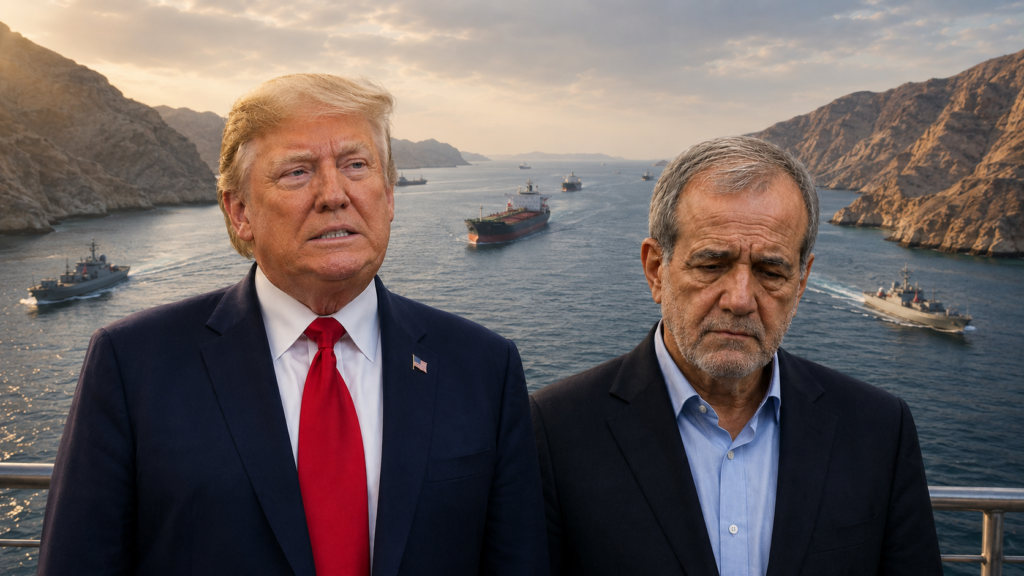
Trump’s remarks also came amid continuing attacks and disruptions involving commercial shipping in the Strait of Hormuz.
Strait of Hormuz Remains Central to the Crisis
The strategic waterway remains one of the most important pressure points in the confrontation.
Iranian officials have said the Strait of Hormuz will not reopen until Tehran’s conditions are met. Iranian Parliament Speaker Mohammad Baqer Qalibaf said Sunday that the waterway would remain closed until seven conditions outlined in a June interim agreement with Washington were fulfilled.
Foreign Minister Abbas Araghchi separately said an Iranian proposal could allow the strait to reopen within seven days if Washington accepted Tehran’s conditions. He also said Iran preferred a diplomatic solution but was prepared to respond if the United States again chose military action.
The continuing restrictions have kept pressure on global energy markets and commercial shipping.
A tanker was also struck by a projectile in the Strait of Hormuz, according to the United Kingdom Maritime Trade Operations center. The vessel’s engine room was damaged, but the crew was reportedly safe. The attacker was not immediately identified.
U.S.-Iran Diplomacy Remains Unresolved
Despite the increasingly confrontational rhetoric, diplomatic contacts between Washington and Tehran have not completely ended.
Qatar has continued to serve as an intermediary, carrying messages between the two governments as they discuss possible terms for ending hostilities.
Iran has sought sanctions relief and conditions for reopening the Strait of Hormuz, while Washington has continued pressing Tehran over its nuclear program and broader security commitments.
Reuters reported Friday that Iranian officials were preparing for a potentially stronger response if the United States resumed large-scale attacks. Iranian commanders were reportedly reviewing plans that could extend potential targets beyond U.S. assets in the Middle East.
The report also said Iranian officials had instructed allied groups in Yemen, Lebanon and Iraq to be prepared for a possible coordinated response if the conflict escalates again.
White House Weighs Its Next Move
Trump’s warning comes after senior administration officials met privately at Camp David to discuss Iran and the Saudi-Houthi conflict.
According to Axios, Vice President JD Vance chaired the meeting, which included senior national security officials. The meeting was held as negotiations between Washington and Tehran remained stalled and the administration considered its next steps.
The gathering illustrates how the conflicts involving Iran and Yemen have become increasingly interconnected.
Any renewed U.S. military campaign against Iran could potentially trigger responses from Iran-aligned groups elsewhere in the region, while continued Houthi attacks could further threaten Saudi Arabia, commercial shipping and energy infrastructure.
A Conflict With Multiple Fronts
The latest developments underscore how the broader Iran war has expanded beyond direct U.S.-Iran confrontation.
The major pressure points now include:
- Iran’s nuclear program: Washington continues to demand commitments limiting Tehran’s nuclear ambitions.
- The Strait of Hormuz: Iran has tied reopening the waterway to conditions involving the United States.
- Yemen: Saudi-backed forces are fighting the Iran-aligned Houthis around Sanaa and other areas.
- Saudi energy infrastructure: The Houthis have claimed attacks against Saudi oil facilities, including a reported strike near Riyadh.
- Commercial shipping: Vessels continue to face security incidents in and around the Strait of Hormuz.
- Diplomacy: Qatar and other intermediaries are still attempting to keep negotiations alive.
For now, there is no clear indication that either the military or diplomatic track will produce a definitive resolution.
Trump has signaled that a decision on Iran could come soon, while Tehran continues to insist that it is prepared for negotiations but will respond to further military action.
The strikes around Sanaa and the latest warnings from Washington therefore arrive at a particularly sensitive moment, with developments in Yemen, Iran and the Strait of Hormuz increasingly tied to the same regional confrontation.

Benjamin Harris is a RapidReports front page contributor and editor,proud father of four.