
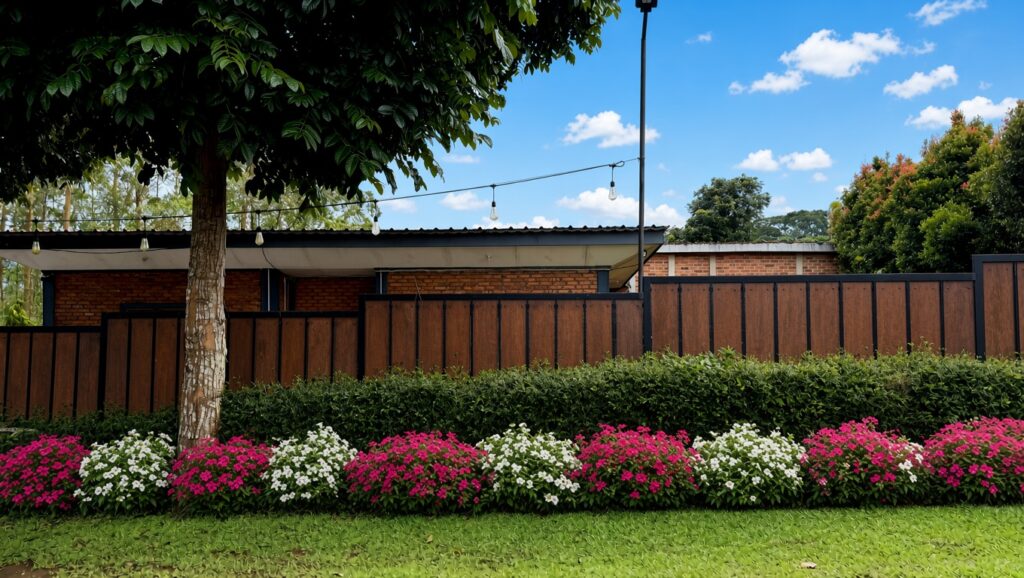
Part 1: The Neighbor Who Wanted Control
There is something special about a quiet neighborhood.
People often think quiet means empty. They imagine empty streets, silent houses, and nothing happening behind closed doors.
But that is not what a peaceful street really is.
A peaceful street has life.
It has the sound of children riding bicycles on summer evenings. It has dogs barking when the mail carrier arrives. It has lawnmowers running on Saturday mornings and neighbors waving from driveways while carrying groceries inside. It has the occasional conversation drifting through an open window.
The difference between a quiet street and a noisy one is not the absence of people.
It is the understanding that everyone is living their own life.
You respect their space.
They respect yours.
You understand that owning a home does not mean you own the choices of the people living beside you.
For almost five years, that was the kind of street I lived on.
My name is Daniel Reyes.
I am forty-three years old, and I have spent most of my adult life working as a senior project manager for a civil engineering company. My job has taught me something important:
Details matter.
A small mistake in a blueprint can become a massive problem years later. A shortcut taken today can become an expensive repair tomorrow.
That mindset followed me home.
When I bought my house, it was not perfect.
Actually, far from it.
The previous owner had taken good care of the property, but time had left its marks. The roof needed attention. The backyard deck had become unsafe. The kitchen looked like it had not been updated since another decade.
But I saw potential.
I have always believed a house is more than walls and a roof.
A house is a place where your life happens.
It is where you drink coffee before work, where you celebrate birthdays, where you come home after a difficult day and finally allow yourself to breathe.
So I started rebuilding it slowly.
The first major project was the roof.
During my second winter in the house, I noticed water damage near one corner after a heavy storm. The inspection before I bought the property had missed the problem, but that did not matter.
I fixed it.
The following year, I rebuilt the deck.
The old one had looked fine from a distance, but after years of weather damage, I no longer trusted it. A deck should not be something you worry about when friends are standing on it.
The kitchen renovation came after that.
Six weeks of dust, noise, and eating more takeout than I care to admit.
It was exhausting.
It was expensive.
And when it was finished, I stood in that kitchen one evening with a cup of coffee and felt proud.
Not because it looked better.
Because I had built something.
That is the kind of person I am.
I do not look for shortcuts.
I do not ignore problems and hope they disappear.
If something needs to be fixed, I fix it.
If something has rules, I learn them.
Because in my experience, understanding the rules before you begin is always easier than defending yourself after someone claims you broke them.
Maybe that is why what happened with my new neighbor bothered me so much.
It was not just the complaint.
It was the assumption behind it.
Before Claudia Fenn moved in, I had what most people would consider a normal relationship with my neighbors.
Not best friends.
Not people who spent every weekend together.
Just good neighbors.
The kind of people who made the street feel like home.
I waved when I saw people outside.
I collected packages when someone was away.
During one winter storm, I shoveled the sidewalks in front of three houses because I was already outside and it seemed like the decent thing to do.
My dogs, Biscuit and Pepper, were probably my most recognizable feature in the neighborhood.
Biscuit was a huge golden retriever mix who believed every person he met was a potential best friend.
Pepper was smaller, faster, and much more suspicious of squirrels than any animal his size should be.
They were part of the reason I loved my home.
Coming back after a long day and seeing two excited dogs waiting at the door has a way of making everything else feel less important.
For five years, my life followed a comfortable rhythm.
Work.
Home.
Projects.
Dogs.
Quiet evenings.
Then Claudia arrived.
And within one week, everything changed.
But before I explain what happened with Claudia, I need to tell you about the fence.
Because the fence became the center of everything.
The fence was not new.
It had been there long before I bought the house.
A cedar fence ran along the left side of my property, separating my backyard from the home next door.
It was sturdy.
Simple.
Well-built.
The kind of fence that did not attract attention because it was doing exactly what a fence is supposed to do.
Provide privacy.
Mark a boundary.
Stay standing.
The previous owner of my house, Roger Bellamy, had installed it back in 2003.
Roger was the kind of homeowner who saved every document.
Every receipt.
Every permit.
Every inspection report.
When I bought the house, he handed me a thick folder filled with paperwork.
At the time, I remember thinking it was almost excessive.
But I appreciated it.
The fence permit was inside that folder.
Approved by the city.
Inspected.
Signed off.
Completely legal.
After five years of living there, I had forgotten about that paperwork because there had never been a reason to think about it.
The fence had simply existed.
My previous neighbors, Tom and Evelyn Henderson, never mentioned it.
They were wonderful people.
Tom was the type of neighbor who would help you before you even asked.
Once, when my car battery died in my driveway on a freezing morning, he appeared with jumper cables before I could even call anyone.
Evelyn brought me homemade soup when I was sick with the flu.
Not because she expected anything.
Just because that was who she was.
When they moved away to be closer to their daughter in Colorado, I honestly felt their absence.
Their house went on the market.
A few weeks later, someone new bought it.
That someone was Claudia.
She moved in on a Friday.
By Tuesday, she was standing at my front door.
At the time, I had no idea that simple conversation would eventually lead to a city inspection, an official complaint, and a moment that would change the way we both saw each other.
She knocked at exactly 7:30 in the evening.
I opened the door.
She smiled politely.
“Hi. I’m Claudia. I just moved in next door.”
She seemed friendly enough.
I smiled back.
“Daniel. Nice to meet you.”
For a moment, everything felt normal.
Then she looked past me toward the side of my house.
“I wanted to mention something,” she said.
Something about the way she said it made me pay attention.
Not a question.
Not a conversation starter.
A correction waiting to happen.
“I noticed your trash cans are visible from my living room window.”
I looked confused.
“My trash cans?”
“Yes,” she said. “I know it sounds small, but I really care about how the neighborhood looks. It would be nicer if they weren’t visible.”
I glanced toward the side of my house.
The trash cans were stored in the same recessed area they had been stored in for years.
They were barely visible.
But I nodded.
“Okay. I’ll take a look.”
She smiled.
But it was the kind of smile people give when they expect a specific answer and did not receive it.
“I appreciate that,” she said.
Then she left.
The entire conversation lasted less than two minutes.
And honestly?
I thought nothing of it.
The next morning, I moved the trash cans.
Not because I believed I had done anything wrong.
Not because she had the authority to tell me what to do.
I moved them because it was easy.
A few inches.
No problem.
I figured maybe she was just adjusting to a new home.
Maybe she was trying to make the neighborhood feel familiar.
I gave her the benefit of the doubt.
That was my first mistake.
Three days later, she came back.
This time, it was about the wind chimes.
The bamboo wind chimes hanging on my porch were a gift from my sister Marta.
She brought them back from Bali years earlier.
They were not loud.
They were not metallic.
They made a soft wooden sound when the wind moved through them.
I loved them.
They reminded me of family.
Of travel.
Of slowing down.
But Claudia had a different opinion.
She stood on my porch and explained that the sound traveled toward her bedroom window.
She said she was trying to create a peaceful environment.
Again, I listened.
Again, I stayed polite.
“I’ll look into it,” I said.
She left.
I stood there for a while afterward.
Thinking.
Was she right?
Could they actually bother someone?
Maybe.
Possibly.
But something about the pattern bothered me.
The trash cans.
Now the wind chimes.
Two things that had existed peacefully for years suddenly became problems within days of her arrival.
Still, I told myself not to judge too quickly.
New neighbors need time.
People come from different backgrounds.
Different experiences.
Maybe she was simply trying to feel comfortable.
Then Saturday morning came.
And she knocked again.
This time, she pointed toward the fence.
“I think your fence might be too tall.”
I looked at it.
The same fence I had seen every morning for five years.
The same fence that had survived storms, winters, and seasons.
“The fence?”
“Yes,” she said. “I think it violates the neighborhood rules.”
I stared at her.
“It was here before I bought the house.”
“That doesn’t necessarily mean it’s legal.”
Her tone was not angry.
That almost made it worse.
It was the confidence of someone who believed she had already reached the correct conclusion.
“I’ll check into it,” I said.
She nodded.
Then she walked away.
I stood in my driveway watching her leave.
Three complaints.
Six days.
And suddenly, I realized something.
This was no longer about trash cans.
It was no longer about wind chimes.
And it was not really about the fence.
It was about control.
I just did not know yet how far Claudia was willing to take it.
Until Monday morning.
That was when I found the orange notice clipped to my mailbox.
A city inspection request.
A formal complaint.
Against my fence.
And that was the moment I realized my quiet neighborhood was not going to be quiet anymore.
The Complaint That Changed Everything
When I saw the orange notice attached to my mailbox, I did not immediately feel angry.
That surprised me.
I expected anger.
I expected frustration.
I expected the kind of emotion that makes your hands tighten and your thoughts become sharp.
Instead, what I felt was something colder.
A sense of disbelief.
Because there is a big difference between a neighbor knocking on your door and saying, “Hey, I have a concern.”
That is communication.
That is normal.
That is what neighbors are supposed to do.
But calling the city is different.
Calling the city means you have decided the conversation is over.
It means you have chosen an official process instead of a personal one.
It says:
“I no longer trust you to do the right thing.”
And that was the part that bothered me.
Not the inspection.
Not the paperwork.
The assumption.
Claudia had lived beside me for less than two weeks.
She did not know me.
She did not know that I had spent years improving my home.
She did not know that I was the kind of person who kept every receipt, every permit, every document.
She saw a fence.
She made a conclusion.
And then she acted on it.
I stood in my driveway holding the notice, reading the same sentence several times.
Property inspection requested regarding possible fence height violation.
The inspection was scheduled for Thursday.
I had nine days.
Nine days to prove something that had never been a problem before.
I walked inside, placed the notice on the kitchen counter, and made myself a coffee.
Then I called the one person who might know the history of the house better than I did.
Roger Bellamy.
The previous owner.
He answered on the second ring.
“Daniel! How’s everything going?”
His voice sounded exactly as I remembered it.
Calm.
Friendly.
The voice of someone who had spent twelve years taking care of the house before handing it over to me.
“Roger, I need to ask you something about the fence.”
There was a pause.
Not a worried pause.
A thinking pause.
“The cedar fence?”
“Yes.”
“What happened?”
I explained.
The new neighbor.
The complaint.
The inspection.
For a moment, he said nothing.
Then he laughed softly.
“Daniel, that fence is probably the most documented fence in the neighborhood.”
I smiled despite myself.
“That sounds like something you would say.”
“I’m serious,” he said. “I remember installing it. It was 2003. I checked the city requirements before I built it because I didn’t want problems later.”
“That’s what I was hoping.”
“I pulled the permit myself. The inspector came out when it was finished.”
I walked toward the filing cabinet in my office.
“I think I have the paperwork.”
“You should. I gave you everything at closing.”
Roger was right.
The folder was exactly where I had left it.
A thick collection of documents from the previous homeowner.
Roof repairs.
Electrical updates.
Plumbing records.
Renovation permits.
And there it was.
The fence permit.
April 2003.
Approved.
Signed.
Complete.
I sat at my desk looking at the paperwork.
Everything was there.
The city approval.
The inspection confirmation.
The measurements.
Six feet exactly.
Not five feet eleven inches.
Not six feet two inches.
Exactly six feet.
The legal limit.
I took photos of every page.
Then I printed copies.
One set for the inspection.
One set for my records.
Because that is the kind of person I am.
I do not walk into situations hoping things work out.
I prepare.
The following evening, I walked the entire fence line with a measuring tape.
Front corner.
Middle section.
Back corner.
Every panel.
Seventy-two inches.
Every single one.
The fence was exactly what it had always been.
Legal.
Approved.
Documented.
I stood there in the fading evening light, looking at it.
And I thought about something.
The fence was not the problem.
The fence had never been the problem.
The problem was that someone had looked at something unfamiliar and decided it must be wrong.
The next morning, I was leaving for work when Claudia called from her driveway.
She was holding a coffee cup.
Watching me.
“Daniel.”
I turned.
“Good morning.”
She looked toward the fence.
“Rules are rules.”
I knew immediately what she meant.
“Excuse me?”
“I just hope you understand that things have consequences.”
There was a confidence in her voice.
The confidence of someone who believed the outcome was already decided.
Maybe she imagined the inspector arriving.
Maybe she imagined me being forced to remove the fence.
Maybe she imagined some kind of victory.
I could have argued.
I could have told her about the permit.
I could have explained everything right there.
But something stopped me.
Not because I was afraid.
Because I realized something important.
She needed to see the truth herself.
So I simply said:
“Have a good day, Claudia.”
Then I got into my car and left.
The drive to work was harder than I expected.
Not because I was worried about the inspection.
I knew the truth.
The paperwork proved it.
But there is something unsettling about being accused of something you did not do.
It makes you replay everything.
You wonder:
Did I miss something?
Did I overlook a rule?
Did I make a mistake?
Even when you know you are right, being challenged forces you to defend yourself.
And that was what bothered me.
The fence was not the issue.
The issue was that a stranger had moved next door and immediately treated me like someone who needed to be corrected.
Thursday arrived quickly.
The morning was cold.
The kind of November morning where the air feels sharp when you breathe.
I made coffee.
Put on my jacket.
And waited.
The inspector arrived at 8:55.
His name was Gerald Hooper.
He introduced himself professionally, shook my hand, and looked over the documents I had prepared.
He did not react.
No surprise.
No judgment.
Just a professional doing his job.
“I’ll take some measurements,” he said.
“Of course.”
Gerald walked toward the fence.
And Claudia appeared almost immediately.
I had expected curiosity.
I had not expected how prepared she would be.
She was standing near her property line with her coffee, watching every movement.
She looked like someone waiting for a result.
A result she already believed she knew.
Gerald started measuring.
One section.
Then another.
Then another.
He wrote notes.
Checked numbers.
Moved carefully from panel to panel.
The entire process took about fifteen minutes.
During that time, Claudia asked the same question twice.
“Is it over the limit?”
Gerald did not look up.
“I need to complete my measurements first.”
A few minutes later:
“Are you sure? Because it looks taller than allowed.”
Again:
“I need to complete my measurements first.”
His tone never changed.
Calm.
Professional.
Patient.
I stood there silently drinking my coffee.
Watching.
Waiting.
Finally, Gerald closed his notebook.
He looked at the fence.
Then the permit.
Then the measurements.
And finally, he turned toward us.
“Everything is compliant.”
Claudia blinked.
“What?”
“The fence meets city requirements. It is exactly six feet. The permit is valid. The inspection records are complete.”
The confidence disappeared from her face.
Not all at once.
Slowly.
Like someone watching a plan collapse in real time.
“That can’t be right,” she said.
Gerald remained calm.
“I measured every section. The documentation matches the structure.”
Silence.
A long silence.
For the first time since she moved in, Claudia did not have something to say.
And then something happened that neither of us expected.
Gerald looked past me.
Toward her yard.
His expression changed slightly.
Not dramatically.
Just enough for me to notice.
A professional noticing something.
“There is one other thing,” he said.
Claudia looked at him.
“What?”
“I would like to take a quick look at your property.”
Her face changed.
Just for a second.
Confusion.
Concern.
Uncertainty.
“My property?”
“Yes. Just a quick inspection.”
The same woman who had been standing there confidently minutes earlier suddenly looked uncomfortable.
And that was when I realized:
The inspection was not over.
It was only beginning.
Because while Claudia had been looking at my fence…
The inspector had noticed something else.
Something on her side of the property line.
Something that was about to change the entire situation.
The Moment Everything Changed
For a few seconds, nobody moved.
The entire situation had shifted so quickly that even I needed a moment to understand what was happening.
A few minutes earlier, Claudia had been standing beside her driveway with the confidence of someone waiting for confirmation.
She had expected the inspector to point at my fence and say:
“You were right.”
She had expected a violation.
A correction.
A problem that belonged to me.
Instead, the opposite had happened.
The fence she had complained about was completely legal.
The paperwork was real.
The measurements were exact.
The city had no issue with my property.
And now the inspector wanted to look at hers.
I watched her expression carefully.
It was not anger.
Not yet.
It was something more complicated.
The expression of someone who had built an entire story in their mind and had just discovered the ending was not going to match.
“Why do you need to inspect my yard?” Claudia asked.
Gerald Hooper remained calm.
The same calm he had shown throughout the entire inspection.
“While I was measuring the fence line, I noticed another structure that may need review.”
The confidence in Claudia’s face faded slightly.
“What structure?”
Gerald looked toward the back corner of her property.
“The arbor.”
I followed his gaze.
And immediately understood what he had noticed.
The arbor was beautiful.
Even I had noticed it when Claudia first moved in.
It stood near the back fence, covered with old wooden beams and a decorative lattice roof. It looked like something from a garden magazine.
The kind of feature that made a backyard feel special.
The wood had aged naturally, giving it character.
Vines climbed through the frame.
During spring and summer, I imagined it probably looked incredible.
Whoever built it had done quality work.
But there was something else.
Something I had never paid attention to.
Height.
From where we stood, the top of the structure clearly extended above the fence line.
Gerald walked toward it.
Claudia followed slowly.
Not confidently anymore.
Slowly.
The way someone walks when they are hoping they misunderstood something.
I followed behind them.
Not because I wanted to see her get in trouble.
I want to make that clear.
There was no satisfaction in watching someone face a problem.
The truth was, I actually felt uncomfortable.
Because I knew exactly what it felt like to stand there waiting for someone else to judge whether you had done something wrong.
Gerald pulled out his measuring tape.
The same way he had measured my fence.
Carefully.
Professionally.
No emotion.
No excitement.
Just facts.
He measured the height.
Then the distance from the property line.
Then the extension of the lattice roof.
He took notes.
Several notes.
More notes than he had taken with my fence.
That detail did not escape Claudia.
“What does that mean?” she asked.
Gerald continued writing.
“I’m just documenting what I find.”
She looked nervous.
“But is there a problem?”
Gerald paused.
Then he answered honestly.
“Yes.”
The word landed heavily.
Claudia stared at him.
“What?”
“The arbor exceeds the permitted height limit.”
The yard became completely silent.
Even the street noise seemed to disappear.
Gerald continued.
“The maximum allowed height for this type of structure is seventy-two inches. This measures approximately eighty-three inches at the highest point.”
Claudia looked at the arbor.
Then back at Gerald.
“That’s impossible.”
“It’s what the measurement shows.”
She shook her head.
“No. It was already here when I bought the house.”
Gerald nodded.
“That may be true.”
“Then why is it my problem?”
His answer was simple.
“Because the current property owner is responsible for bringing the structure into compliance.”
I watched the realization reach her face.
The same realization I had felt when I saw the orange notice on my mailbox.
The moment when you understand that something you believed was someone else’s problem has suddenly become yours.
Gerald continued.
“There is also another issue.”
Claudia looked at him.
“What issue?”
“The top portion of the structure extends beyond the property line.”
Her face changed again.
The arbor.
The thing she had probably loved about the house when she bought it.
The thing she had probably imagined enjoying for years.
Was now the exact kind of problem she had assumed my fence was.
Gerald explained everything professionally.
The structure could possibly be modified.
The city would allow a retroactive permit application.
But changes would likely be required.
Lowering the height.
Adjusting the overhang.
Making sure it complied with regulations.
He was not rude.
He was not judgmental.
He was simply delivering the same information he would give anyone.
When he finished, he closed his notebook.
“I’ll send the formal notice within the week. You’ll have time to work through the process.”
Then he looked at both of us.
“The permit office can help guide you through the options.”
And just like that, he left.
His truck disappeared down the street.
And Claudia and I were standing there alone.
Two neighbors.
Two different sides of the same situation.
She looked at the arbor.
Not angry.
Not blaming.
Just quiet.
“I’m sorry about the fence,” she finally said.
The words surprised me.
Because they were not defensive.
They were not followed by an excuse.
Just an apology.
I looked at her.
“You don’t have to apologize for asking a question.”
She looked down.
“But I didn’t just ask.”
That was true.
She knew it.
“I reported it.”
“Yes.”
She took a breath.
“I thought it was illegal.”
“I know.”
“And I thought…” She stopped.
She looked embarrassed.
“I thought you were the kind of person who just ignored rules.”
That sentence was more revealing than she probably intended.
Because it explained everything.
The trash cans.
The wind chimes.
The fence.
She had not been responding to me.
She had been responding to a story she created about me.
“I’m not sure what made you think that,” I said.
She was quiet.
Then she admitted:
“I guess I assumed.”
I nodded.
“That happens.”
She looked toward my fence.
“It really is legal?”
“Yes.”
“When did you get it approved?”
“I didn’t.”
She looked confused.
“The previous owner did. The permit is from 2003.”
“Before you owned the house?”
“Before I even knew the house existed.”
She looked at the fence again.
Almost differently this time.
Not as a violation.
As something ordinary.
Something she had misunderstood.
“I should have asked.”
“Yes.”
The answer was simple.
Not cruel.
Not angry.
Just honest.
She nodded.
“I think I was looking for problems.”
That admission surprised me.
“What do you mean?”
She leaned against the edge of the arbor.
“I moved here from a neighborhood where everyone fought.”
Her voice became quieter.
“There were constant arguments. Property lines. Noise. Parking. Construction. Everyone was watching everyone else.”
I listened.
“And after a while,” she continued, “you start expecting problems before they happen.”
I understood that more than I wanted to admit.
Fear has a way of becoming a habit.
“If someone builds something, you assume it will affect you.”
“If someone changes something, you assume they are taking advantage.”
“You start protecting yourself before anyone has even done anything.”
She looked embarrassed.
“I think I brought that mindset here.”
I looked at the arbor.
The irony was obvious.
She had moved into a peaceful neighborhood carrying the expectation of conflict.
And because she expected conflict…
She created one.
“I’m sorry,” she said again.
This time, I believed her.
Not because she suddenly became a different person.
But because she was finally seeing the situation clearly.
“I appreciate that,” I said.
For a moment, neither of us spoke.
Then I looked at the arbor.
“Honestly, it’s a nice structure.”
She looked surprised.
“You think so?”
“Yes.”
She smiled slightly.
“I was worried you would be happy about this.”
I shook my head.
“No.”
“Why?”
Because the truth was simple.
A neighbor’s problem does not make your life better.
A neighbor’s mistake does not make you successful.
A neighborhood works when people are willing to live beside each other.
“I don’t want you to lose it,” I said.
Her expression softened.
“You don’t?”
“No. It looks like someone built it with care.”
She looked at the arbor.
“My husband built it.”
That was the first personal thing she had ever shared with me.
I turned toward her.
“He did?”
She nodded.
“He passed away two years ago.”
The sentence changed the entire feeling of the conversation.
Suddenly, the arbor was no longer just wood and measurements.
It was a memory.
A piece of someone’s life.
“He loved gardening,” she said. “He built this for me because he knew I always wanted a place to sit outside.”
I looked at the structure again.
And suddenly I saw it differently.
Not as a violation.
Not as a problem.
As something meaningful.
“I hope you can keep it,” I said.
She looked at me.
“I do too.”
The following week, Claudia received the official notice from the city.
I saw her standing by her mailbox reading it.
And I recognized the expression.
Because I had worn the same one.
The realization.
The worry.
The uncertainty.
But something was different.
She did not look angry.
She looked tired.
Later that afternoon, there was a knock on my door.
I opened it.
Claudia was standing there.
No coffee cup.
No complaint.
No carefully prepared argument.
Just Claudia.
“I need your help,” she said.
And for the first time since she moved in…
She was not asking me to fix something she thought I had done wrong.
She was asking me how to fix something that had become her problem.
I stepped aside.
“Come in.”
And that small moment would become the beginning of a completely different relationship between us.
The Fence That Brought Two Neighbors Together
When Claudia stepped into my kitchen that afternoon, something about her felt different.
Not completely different.
People do not transform overnight.
Years of habits, fears, and experiences do not disappear because of one conversation in a backyard.
But something had changed.
The woman who had first knocked on my door had carried herself like someone preparing for a disagreement.
Her shoulders were tense.
Her words were carefully chosen.
Every conversation felt like she was building a case.
But now?
Now she looked uncertain.
Almost uncomfortable.
Like she was standing in a place where she was not used to being.
Asking for help.
“I need your advice about the permit process,” she said.
I nodded toward the kitchen table.
“Have a seat.”
She sat down slowly.
For a moment, neither of us spoke.
I think we both understood how strange the situation was.
A few weeks earlier, she had reported my fence to the city.
Now she was sitting in my kitchen asking me how to deal with her own inspection notice.
Life has a strange way of putting people exactly where they need to be.
I opened my laptop and pulled up the city’s permit information.
“The first thing you need to understand,” I said, “is that this does not automatically mean you have to remove everything.”
She looked relieved.
“Really?”
“Really. The city usually wants structures brought into compliance. If something can be modified safely, that is often the first option.”
She nodded.
“So the arbor might be okay?”
“It might. It depends on what changes are required.”
I explained what I knew.
The height requirement.
The property line issue.
The possibility of modifying the top section.
She asked questions.
Good questions.
Not the kind of questions designed to prove she was right.
The kind of questions people ask when they genuinely want to understand.
What documents would she need?
How long would the process take?
Would the city require the entire structure to come down?
What would happen if the previous owner had built it?
I answered what I could.
When I did not know something, I told her.
That was something I had learned in my career.
A wrong answer given confidently is often worse than admitting you need more information.
After nearly an hour, she closed her phone.
“I owe you an apology.”
I looked at her.
This time, I did not immediately answer.
I wanted her to finish.
“I judged you before I knew you.”
The honesty surprised me.
She continued.
“When I moved here, I convinced myself I was just being careful. I told myself I was protecting my home.”
She looked down at the table.
“But I think I was looking for proof that people were going to disappoint me.”
That was a much deeper statement than I expected.
“And did you find it?” I asked.
She gave a small, embarrassed smile.
“No.”
A quiet laugh escaped her.
“Actually, I found the opposite.”
The kitchen became quiet.
Outside, Biscuit was lying on the back porch, enjoying the afternoon sun.
Pepper was watching birds through the window with the seriousness of someone conducting an important investigation.
“They are good dogs,” Claudia said.
I smiled.
“They are.”
“I was afraid of them at first.”
“You never mentioned that.”
“I know.”
She laughed softly.
“I was too busy complaining about the fence.”
That was the first time I heard her laugh without tension.
It sounded natural.
Human.
“I thought Biscuit was going to knock me over.”
“He probably would.”
She smiled.
“He seems friendly.”
“He thinks everyone is his friend.”
“That sounds nice.”
“It is.”
She looked around the kitchen.
At the photos on the shelves.
The family pictures.
The small details that made the house feel lived in.
Then her eyes stopped at the framed picture of my sister Marta and me.
“Is that your sister?”
“Yes.”
“The one who brought the wind chimes?”
I smiled.
“Yes.”
She looked embarrassed.
“I owe your sister an apology too.”
I laughed.
“I don’t think she knows.”
“She should.”
“I’ll tell her someone almost started a neighborhood conflict because of her gift.”
That made her laugh again.
And that moment mattered.
Because laughter is usually the first sign that two people have stopped seeing each other as opponents.
Over the next few weeks, things slowly changed.
Not dramatically.
Not like a movie where two enemies suddenly become best friends.
Real life is quieter than that.
It happens through small moments.
A wave across the driveway.
A short conversation while checking the mail.
A simple “How are you doing?” that actually means something.
Claudia began working through the permit process.
She hired a contractor who understood city requirements.
The arbor did not have to be destroyed.
That was the good news.
The structure itself was solid.
Beautiful, actually.
It only needed adjustments.
The top section had to be lowered.
The overhang had to be moved away from the property line.
The changes were not easy.
But they were possible.
And Claudia was determined.
One afternoon, I saw her standing outside watching the contractor work.
She looked completely different from the woman who had first arrived.
She was no longer searching for problems.
She was solving them.
A few months later, the arbor was finished.
The changes were subtle.
Most people would never notice.
It still looked like the same structure.
The same place.
The same memory of her husband.
Only now it was officially approved.
Documented.
Correct.
Just like my fence.
Spring arrived.
And something unexpected happened.
The clematis came back.
At first, it was just a few small green leaves.
Then more.
Then vines.
Then flowers.
Claudia told me she was worried the plant would not survive after being cut back.
I told her what my grandfather used to say:
“Some things look dead right before they grow again.”
She smiled.
“I like that.”
“It’s true.”
And it was.
Not just about plants.
About people too.
By April, the neighborhood felt normal again.
Actually, better than normal.
Because something had changed.
Not just between Claudia and me.
Between everyone.
People started talking more.
Small conversations became common.
The kind of everyday interactions that make a street feel like a community.
One Saturday morning, I was sitting on my deck with coffee when Claudia called from her yard.
“Daniel?”
I looked over.
“Yeah?”
She was standing near the arbor.
“The clematis is blooming.”
I smiled.
“I told you it would.”
She looked at it for a moment.
Then she said:
“I’m glad I didn’t have to remove it.”
I nodded.
“I am too.”
There was a pause.
Then she said:
“You know, when I first saw your fence, I thought it was a problem.”
I laughed.
“I remember.”
“I was so sure.”
“I remember that too.”
She smiled.
“I was wrong.”
The interesting thing about apologies is that the most meaningful ones are not dramatic.
They are not always tears and speeches.
Sometimes they are simple.
A person admitting:
“I was wrong.”
And meaning it.
A few weeks later, Claudia brought something over.
A plate.
At first, I thought maybe it was another document or some update about the arbor.
It was not.
Cookies.
Homemade chocolate chip cookies.
“I made too many,” she said.
I looked at the plate.
“You made too many?”
She smiled.
“Okay. Maybe I made exactly enough.”
I laughed.
Biscuit immediately appeared beside me.
Of course he did.
The smell had reached him before I had even seen the cookies.
“He remembers people who bring food,” I said.
“That is probably the healthiest friendship he has.”
“He has a lot of friendships.”
“I believe that.”
She reached down and scratched Biscuit behind the ears.
He leaned against her.
The same dog who had once made her nervous.
Now completely comfortable.
“I should have introduced myself differently,” she said quietly.
I looked at her.
“What do you mean?”
“When I moved in, I thought being a good neighbor meant making sure everyone followed the rules.”
She looked around the yard.
“But I think I forgot something.”
“What?”
“That being a good neighbor also means assuming people are trying to do the right thing.”
That stayed with me.
Because she was right.
Rules matter.
Permits matter.
Boundaries matter.
But so do people.
A neighborhood is not built only with fences and property lines.
It is built with trust.
Months later, the city sent me the final paperwork closing the complaint against my fence.
No violation.
Case closed.
I filed it away with the original permit from 2003.
The fence had stood for more than twenty years.
Through storms.
Through seasons.
Through different owners.
Through different lives.
And the entire time, it had been exactly what it was supposed to be.
A fence.
Nothing more.
Nothing less.
Looking back, I sometimes think about how close Claudia and I came to becoming permanent enemies over something neither of us truly understood.
She saw a fence and assumed the worst.
I saw a complaint and assumed the worst.
Both of us were wrong.
The fence was never the real issue.
The real issue was what we carried with us.
Her fear from a difficult past.
My frustration at being judged unfairly.
Two people protecting themselves.
Two people forgetting the person on the other side was just another human being.
The funny thing is, the inspection that was supposed to create conflict ended up doing the opposite.
It forced us to slow down.
To talk.
To understand.
And sometimes, that is what people need.
Not another argument.
Not another accusation.
Just one honest conversation.
A few months after everything happened, I was sitting outside when the wind moved through the yard.
My bamboo wind chimes made their soft wooden sound.
The same sound Claudia once complained about.
This time, nobody said anything.
Nobody complained.
Nobody called the city.
The sound simply existed.
The way it always had.
The fence stood beside it.
Six feet tall.
Exactly as it had been since 2003.
And on the other side of that fence was not an enemy.
Just a neighbor.
A neighbor who had once knocked on my door with a complaint…
And later returned with cookies.

Benjamin Harris is a RapidReports front page contributor and editor,proud father of four.