Three Oil Tankers Hit by Unidentified Projectiles in Strait of Hormuz
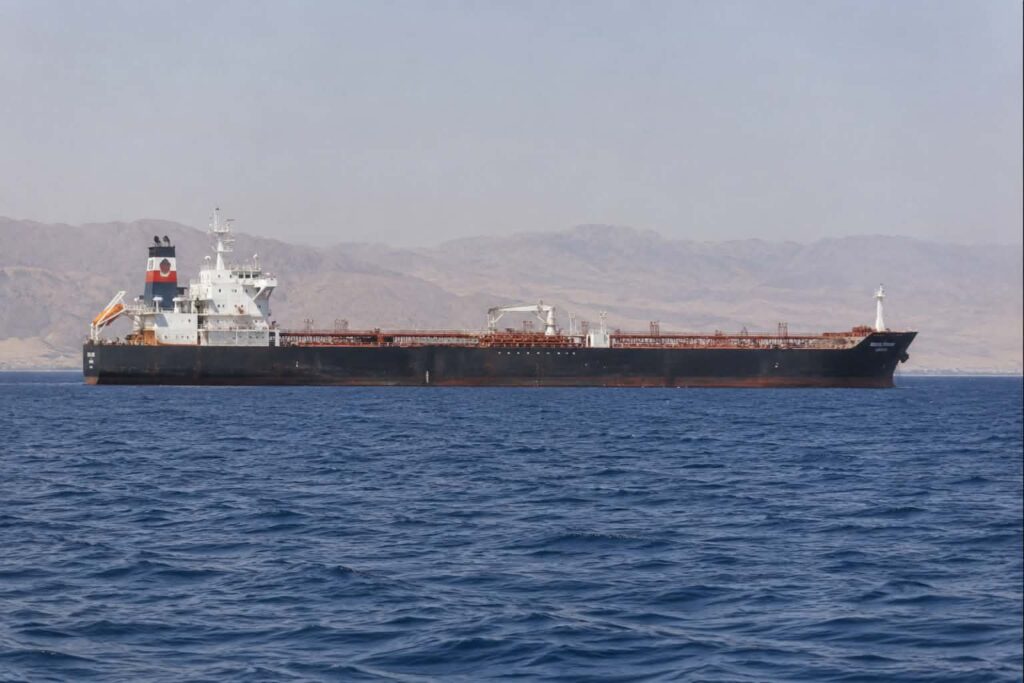
Three oil tankers were struck by unidentified projectiles while transiting the Strait of Hormuz, adding to growing concerns about the safety of commercial shipping through one of the world’s most important energy routes.
The three Liberian-flagged vessels — Al Ruwais, Mersin Prosperity and Sinbad — were hit on Tuesday, according to maritime intelligence service Marisks. The nature and source of the projectiles have not been established, and there was no immediate attribution for the incidents.
The reported strikes came as shipping companies have adopted increasingly cautious measures while operating in and around the strategic waterway, including turning off Automatic Identification System, or AIS, transponders.
No major damage or casualties were initially reported.
Three Tankers Were Hit While Crossing Hormuz
The vessels involved represent different segments of the oil shipping industry.
The Al Ruwais is an oil-products tanker. Kpler data showed that it had conducted a ship-to-ship transfer near Sohar, Oman, in late September, where it discharged its diesel cargo.
The Mersin Prosperity is a very large crude carrier. It conducted a ship-to-ship transfer near Sohar in mid-September involving approximately 2 million barrels of Iraqi Basrah crude, according to Kpler data cited by Reuters.
The Sinbad, an Aframax-sized tanker, had loaded refined petroleum products at Saudi Arabia’s Jubail industrial port earlier in September.
The vessels’ recent movements illustrate the importance of the Strait of Hormuz to both crude oil and refined-fuel shipments.
AIS Transponders Were Turned Off
Marisks reported that the three tankers were traveling through the strait with their AIS transponders switched off.
AIS is routinely used by commercial vessels to transmit information such as a ship’s identity, location, course and speed. Turning the system off makes a vessel more difficult to track through publicly available maritime data.
The decision to operate without AIS reflects the heightened security concerns surrounding the waterway, although the available reporting does not establish that the ships were targeted because their transponders were disabled.
The incidents instead underscore the increasingly difficult environment facing commercial operators attempting to move cargo through the strait.
No Attacker Has Been Identified
One of the most important unanswered questions is who launched the projectiles.
Neither Marisks nor Reuters identified a perpetrator, and the available evidence does not establish who fired the weapons.
That distinction is significant given the broader military tensions surrounding the Strait of Hormuz. The waterway has become a focal point in the continuing conflict involving Iran and the United States, but the latest tanker incidents should not be attributed to a particular government or armed group without supporting evidence.
Iran’s Persian Gulf Strait Authority later said the three vessels were on its list of ships considered non-compliant with its transit requirements. That statement is an Iranian claim about the vessels’ status and does not establish responsibility for the attacks.
Ship Managers Decline to Comment
ADNOC Logistics & Services, which manages the Al Ruwais and Mersin Prosperity, declined to comment on the reported incidents, according to Reuters.
Anglo-Eastern Tanker Management, which manages the Sinbad, did not immediately respond to a request for comment.
The lack of immediate statements from the companies leaves several details about the incidents unresolved, including the extent of any damage and the circumstances surrounding each vessel’s transit.
Hormuz Remains Critical to Global Energy Markets
The Strait of Hormuz connects the Persian Gulf with the Gulf of Oman and is a major route for international oil and gas shipments.
That makes any disruption involving commercial vessels potentially significant for energy markets, particularly when inventories are already under pressure and geopolitical tensions are elevated.
Recent Reuters reporting shows that energy shipments have continued through the strait despite the security risks. September LNG shipments reached their highest monthly level since the beginning of the U.S.-Israeli war on Iran in February, although some vessels have also used “dark” transits with AIS disabled.
The continued movement of tankers demonstrates that the waterway remains active even as operators face greater security and insurance risks.
Security Risks Are Increasing for Commercial Shipping
The latest incidents follow other reports of tanker attacks and security incidents in the strait, contributing to concerns among shipowners, crews, insurers and energy traders.
For shipping companies, the challenge is balancing the commercial importance of the route against the possibility of damage, delays or additional costs.
Operators can alter routes, delay voyages or use additional security measures, but alternatives to Hormuz can be considerably more expensive and time-consuming.
The economic consequences can therefore extend beyond the vessels directly involved in an incident.
Oil Markets Are Watching the Situation Closely
The tanker strikes come at a particularly sensitive moment for oil markets.
Crude prices have recently responded sharply to developments involving the Middle East, shipping through Hormuz and expectations for future energy supplies. On October 1, Brent crude settled at $102.31 per barrel after rising more than 4%, while U.S. West Texas Intermediate settled at $92.87.
At the same time, governments are considering emergency measures to ease fuel shortages and stabilize supplies.
Any sustained reduction in tanker traffic through Hormuz could therefore put additional pressure on global energy markets. Conversely, continued shipping activity could help limit some of the supply disruptions that traders have been anticipating.
What Happens Next
The immediate focus will be on determining who or what caused the projectile strikes and whether additional commercial vessels face similar threats.
For now, the available evidence establishes that three Liberian-flagged tankers were struck while transiting the Strait of Hormuz, but it does not establish who attacked them.
With commercial traffic continuing through the waterway and governments closely monitoring energy supplies, further incidents could have consequences for shipping costs, insurance rates and oil markets.
For the crews and shipping companies operating in the region, however, the immediate issue is more direct: navigating one of the world’s most important maritime corridors has become increasingly difficult as security risks continue to evolve.

Benjamin Harris is a RapidReports front page contributor and editor,proud father of four.