UK Warns of Severe Threat in Strait of Hormuz as Tanker Attacks Continue
The United Kingdom has issued a stark warning to commercial shipping operating through the Strait of Hormuz, saying the threat of hostile action remains severe as military activity and attacks on vessels continue across the strategic waterway.
The United Kingdom Maritime Trade Operations Centre, or UKMTO, said Friday that the overall maritime security environment in the region “remains elevated” because no diplomatic resolution has been reached.
For the Strait of Hormuz specifically, UKMTO classified the threat as severe, assessing that hostile action was “highly likely.” The agency also warned of continued navigation interference and the potential for maritime mines.
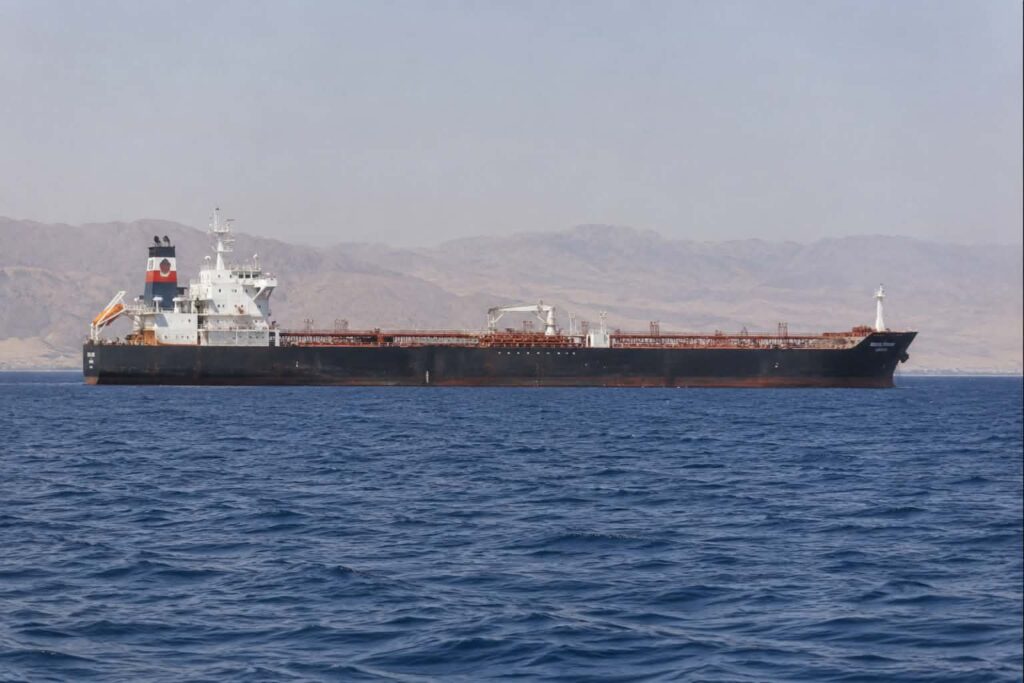
The assessment comes after a series of reported attacks on commercial vessels and follows several incidents in which tankers were struck by unidentified projectiles while navigating the strait.
UKMTO Issues Severe Warning for Hormuz
UKMTO’s latest assessment separates the risks across several waterways.
The Strait of Hormuz was classified as severe, with UKMTO citing the possibility of hostile action, continued interference with navigation and potential mining activity.
The Gulf of Oman was assessed as moderate, with electronic interference and enforcement activity identified as continuing concerns.
The Arabian Gulf was also classified as moderate, with navigation interference and what UKMTO described as residual kinetic risk remaining present.
The warnings provide an indication of how maritime authorities are assessing the security environment for commercial operators moving through waters surrounding the Persian Gulf.
Southern Omani Route Faces Particular Risk
UKMTO said commercial vessels using the southern portion of the Strait of Hormuz continue to face particularly serious risks.
According to the agency, 31 of 48 projectile-strike incidents reported to UKMTO since July 6 occurred along the southern Omani route.
UKMTO also cautioned that the reported figure may not represent the full number of incidents because some projectile strikes may not have been reported to the organization.
That caveat is significant because the number of attacks known to maritime authorities depends partly on whether vessel operators, security officers or other sources report incidents.
Tankers Have Been Struck by Unknown Projectiles
Recent UKMTO incident reports document multiple attacks involving commercial vessels.
On September 30, UKMTO listed several incidents involving tankers struck by unknown projectiles while transiting the Strait of Hormuz. Authorities were investigating the incidents, and vessels were advised to proceed with caution.
Earlier in September, other vessels were also reported hit by unidentified projectiles.
One September 18 incident involved a tanker that caught fire after being struck. UKMTO said the fire was extinguished and that all crew members were safe. Another incident reported on September 23 involved a cargo vessel that was struck, caught fire and became adrift; UKMTO reported two casualties in that case.
The agency’s reports generally describe the projectiles as unknown and say authorities are investigating.
That means the available maritime-security reporting does not, by itself, establish responsibility for each incident.
Shipping Continues Despite the Security Risks
Despite the attacks and warnings, commercial energy traffic has not stopped completely.
Reuters reported that 19 liquefied natural gas cargoes passed through the Strait of Hormuz during September, according to S&P Global Energy data. Thirteen of those cargoes originated in Qatar and six in the United Arab Emirates.
The September total represented the highest monthly number of LNG cargoes passing through the strait since the U.S.-Israeli war with Iran began in February, according to the data cited by Reuters.
Kpler’s tracking showed an even higher total of 21 LNG cargoes, highlighting the differences that can arise between maritime-tracking datasets.
The continued movement of LNG carriers shows that the waterway remains operational even under heightened security conditions.
Some Ships Are Using “Dark” Transits
The security environment has also changed how some vessels navigate the region.
Reuters reported that several QatarEnergy-linked LNG carriers have used “dark” transits, during which AIS transponders are switched off or otherwise stop transmitting publicly visible location information. Some vessels later reappeared after clearing the strait.
AIS is an important tracking system for commercial shipping, but disabling it can make a vessel more difficult to monitor.
The practice has appeared alongside broader efforts by shipping operators to reduce their visibility while passing through areas considered dangerous.
It does not, however, establish that a vessel operating with AIS disabled is necessarily targeted or that disabling the system caused any particular attack.
Hormuz Remains Critical to Global Energy Supplies
The Strait of Hormuz is one of the world’s most important energy chokepoints.
The waterway connects the Persian Gulf with the Gulf of Oman and provides a major maritime route for crude oil, petroleum products and liquefied natural gas exported from Gulf producers.
Before the current conflict, roughly one-fifth of global crude oil and LNG transportation passed through the strait, according to Reuters.
That makes security incidents there important far beyond the vessels directly involved.
Any sustained reduction in traffic could affect oil and gas supplies, shipping costs, insurance premiums and energy prices.
Oil Exports Have Recovered but Remain Below Prewar Levels
Energy shipments through the region have shown signs of recovery despite the continuing security problems.
Reuters reported that Middle Eastern crude exports reached approximately 16.33 million barrels per day in September, the highest monthly level since the conflict began in February. However, the figure remained about 3.2 million barrels per day below the prewar level.
Exports through the Strait of Hormuz were estimated at about 9.72 million barrels per day in September.
The data indicate that commercial energy flows are continuing, but they have not returned fully to their previous levels.
Security Risks Could Keep Energy Markets Volatile
The latest UKMTO warning comes as governments and energy companies are already dealing with elevated fuel prices and supply disruptions.
The security situation around Hormuz has become an important factor for oil traders because any major interruption to tanker traffic could remove significant volumes of crude and petroleum products from international markets.
At the same time, the continued movement of tankers and LNG carriers demonstrates that the strait has not been completely shut to commercial traffic.
That combination — continued shipping alongside repeated attacks — leaves the market particularly sensitive to new security incidents.
No Diplomatic Resolution Has Been Reached
UKMTO attributed the continuing elevated threat environment to the absence of a diplomatic resolution.
Its warning does not predict that the Strait of Hormuz will close or that a specific future attack will occur. Instead, it represents a maritime-security assessment of the risks currently facing commercial vessels.
For shipping companies, the practical consequences are already significant: operators must weigh the importance of maintaining energy deliveries against the possibility of projectile attacks, electronic interference, navigation disruptions and other hazards.
What Happens Next
The immediate question for commercial shipping is whether the recent pattern of incidents continues and whether authorities can establish responsibility for the attacks.
For energy markets, the key issue is whether vessels can continue moving through the Strait of Hormuz at sufficient volumes to maintain global supplies.
For now, the latest UKMTO assessment makes clear that authorities continue to regard the waterway as a high-risk operating environment.
Yet commercial traffic is still moving. The 19 LNG cargoes recorded in September show that energy shipments continue despite the security threats, while the repeated tanker incidents demonstrate the risks facing crews and operators attempting to navigate one of the world’s most important maritime corridors.

Benjamin Harris is a RapidReports front page contributor and editor,proud father of four.