Blog

  • WATCH: Dozens of Leftists Once Again Storm the Capitol, All Get Arrested

    WATCH: Dozens of Leftists Once Again Storm the Capitol, All Get Arrested

    On April 20, 2026, dozens of left-wing veterans and military family members were arrested by U.S. Capitol Police after protesting against the ongoing war effort in Iran. The protestors stormed the Capitol and occupied the Cannon House Office Building in Washington, D.C. Law enforcement reported that 66 individuals were arrested during the demonstration.

    The protest was organized by various veteran groups, including About Face, the Center on Conscience and War (CCW), Veterans For Peace, Common Defense, and several others. According to the U.S. Capitol Police, the protesters legally entered the Cannon House Office Building after going through security screening but began to protest inside, which led to their arrests.

    The Capitol Police statement clarified that demonstrations are not allowed inside Congressional buildings. When the protesters refused to leave, the officers arrested them for violating D.C. Code § 22–1307, which pertains to crowding, obstructing, or incommoding. The group of demonstrators occupied the Cannon rotunda during the protest.

    As part of their demonstration, the protesters held red tulips in honor of Iranians who were killed during U.S. airstrikes on Iran. They also displayed banners with the slogan “End the War on Iran.” Additionally, a flag folding ceremony was performed to symbolize the 13 U.S. troops who had died in the conflict at that time.

    In a statement released after the arrests, the CCW explained that the protesters were demanding that Speaker of the House Mike Johnson meet with them. They hoped Johnson would accept the folded flag and pledge to stop funding the war that began on February 28, 2026. Mike Prysner, the CCW Executive Director and a veteran of the Iraq War, was among those arrested.

    Prysner addressed the situation before his arrest, stating that the war in Iran was “already deeply unpopular” and that it was a “crisis for the Trump administration.” He recalled his experiences in Iraq, where the war took the lives of thousands of Americans and millions of Iraqis. He expressed regret over his own involvement and urged service members to reconsider their participation in the ongoing conflict.

    Prysner emphasized that all service members have the legal right to be conscientious objectors, and he offered support for those who wished to avoid deployment. He highlighted that professional counselors are available to assist with such claims, ensuring that those who oppose the war can be legally exempted.

    The protest comes at a tense moment, with a two-week ceasefire between the U.S., Israel, and Iran set to expire on April 22, 2026. President Donald Trump has publicly rejected the idea of extending the ceasefire agreement, instead demanding that Iran negotiate a deal that would prevent the country from developing nuclear weapons.

    Trump also issued strong warnings to Iran, stating that if an agreement is not reached, the entire country would face devastating consequences. Talks between U.S. and Iranian officials are scheduled for April 22 in Islamabad, although Iranian regime officials have not confirmed their participation in the talks.

    As the situation continues to escalate, the protest in Washington reflects growing frustration among military families and veterans who oppose the war and its ongoing costs. The demonstration highlighted their call for an immediate end to the conflict and a reconsideration of U.S. foreign policy in the region.

    The arrest of protesters in the Capitol further underscores the contentious nature of the debate surrounding the war. While many Americans continue to support the U.S. government’s stance, others, including veterans, are calling for a rethinking of military involvement in the Middle East.

    This protest is part of a broader movement of opposition to the war, particularly among those who have served in previous conflicts. Their message is clear: they believe it’s time to end the war and focus on rebuilding both the U.S. and the countries affected by these prolonged military engagements.

    The push for an end to the war comes as many question the effectiveness of continued military presence in the region. Critics argue that the U.S. government has overstayed its welcome in the Middle East and that diplomatic efforts should take precedence over further military action.

    With the ceasefire set to end soon, the pressure on both U.S. and Iranian leadership to find a diplomatic resolution grows. As talks approach, the uncertainty surrounding the outcome leaves the fate of the region hanging in the balance.

    For the protesters, this issue is deeply personal, as many have lost loved ones or witnessed the toll that these conflicts have taken on American military personnel. Their demands for peace reflect their hope for a future where diplomacy and negotiation replace the threat of further military conflict.

    As the situation continues to unfold, it remains to be seen whether these calls for peace will be heard or if the military efforts in Iran will persist. The coming days and weeks will be critical in determining the direction of U.S. foreign policy in the region.

    The protest also highlights the growing divide within the American public, with veterans and military families taking a stand against the war. Their actions speak to a larger debate about the U.S. role in the world and the costs of its military engagements.
  • NEW: Iranians Storm Strait Of Hormuz ‘Armed To The Teeth’

    NEW: Iranians Storm Strait Of Hormuz ‘Armed To The Teeth’

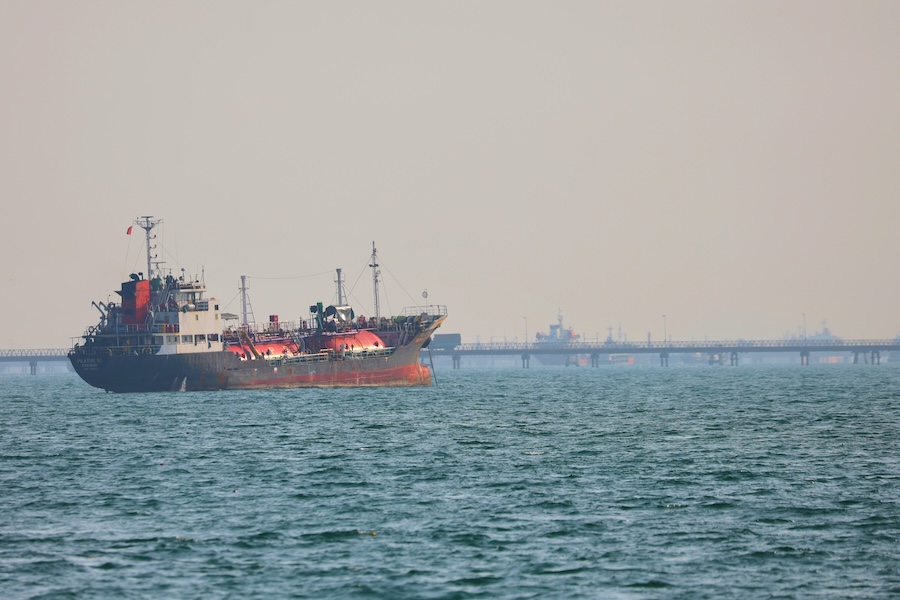
    Iranian forces have escalated tensions in the Strait of Hormuz by moving two seized container ships deeper into their control. The vessels, identified as the MSC Francesca and the Epaminondas, were taken toward the Iranian port of Bandar Abbas, according to maritime sources on Thursday.

    The Iranian Revolutionary Guard claimed that the ships were operating without proper authorization and had tampered with their navigation systems. These claims, however, have not been independently verified, adding to the uncertainty surrounding the situation.

    A relative of one of the sailors on the seized ships described the scene, saying that around 20 armed Iranians stormed the vessel. The sailors were reportedly under Iranian control, with their movements restricted. Despite the tense situation, the relative noted that the Iranians were treating the crew members well.

    Both vessels are managed by Mediterranean Shipping Company (MSC) and carried a combined crew of approximately 40 people. According to reports, the ships are now anchored about nine nautical miles from the Iranian coast.

    Filip Radulovic, Montenegro’s maritime affairs minister, confirmed that the vessels are in Iranian custody but assured that negotiations between MSC and Iran are ongoing. He also emphasized that the sailors are fine and remain in communication with their families.

    The seizures took place after both ships reported taking fire near the Strait of Hormuz on Wednesday, which has become a hotspot for rising instability. This narrow waterway is crucial for global oil shipments, making the situation even more concerning for international trade.

    The incident adds to the growing volatility in the region, coming just days after U.S. forces intercepted an Iranian-flagged cargo ship, the Touska, in the Gulf of Oman. The ship was approaching Iranian waters when it was stopped by American forces.

    The Touska remains in U.S. custody, with American forces inspecting its cargo. According to maritime security sources, the cargo is believed to be “dual-use,” meaning it could be utilized for either civilian or military purposes, raising further concerns about potential military applications.

    Meanwhile, the U.S. military continues its blockade of Iranian ports, part of a broader effort to restrict Tehran’s shipping network. U.S. Central Command reported on Thursday that American forces have redirected 33 vessels since the blockade began, signaling an escalation in U.S. efforts to control the maritime route.

    This military pressure aims to further disrupt Iran’s shipping activities as part of the ongoing standoff between the U.S. and Iran. The situation is creating heightened tensions in the region, as both sides intensify their maritime actions.

    The Strait of Hormuz, through which a significant portion of the world’s oil supply passes, remains a critical point of international contention. As the U.S. and Iran continue to clash, the region’s stability is increasingly at risk.

    The ongoing maritime incidents are part of a broader geopolitical struggle involving the U.S., Iran, and other regional powers. With tensions escalating, the situation in the Strait of Hormuz could have significant implications for global oil prices and security.

    As Iran maintains its hold on the seized vessels, the international community is closely monitoring the developments. The tension in the region highlights the broader geopolitical struggles taking place in the Middle East.

    The potential for further escalation in the Strait of Hormuz remains high, with both the U.S. and Iran continuing to assert their influence over critical shipping routes. As both sides take more aggressive measures, the possibility of a larger confrontation cannot be ruled out.

    With military actions intensifying, the fate of the seized ships and their crews remains uncertain. The international community continues to watch closely as negotiations and military strategies unfold in this crucial maritime region.

  • Bus Crash Near Pentagon Injures Dozens: Report

    Bus Crash Near Pentagon Injures Dozens: Report

    On Friday morning, a bus crash near the Pentagon resulted in 23 people being injured, including 10 personnel from the Department of War. The Pentagon Force Protection Agency confirmed the incident in a statement.

    The collision occurred at approximately 7:20 a.m. and involved an Omni Ride bus and a Fairfax Connector transit bus. The crash took place on the Metro Access Road, a busy area during the morning commute.

    Emergency responders arrived quickly at the scene. Eighteen of the injured passengers were transported to nearby hospitals for further medical treatment and evaluation.

    Five passengers were treated at the scene and were later released. Fortunately, none of the injuries were reported as life-threatening.

    Despite the severity of the crash, first responders were able to clear the area efficiently, minimizing the disruption to traffic and other activities around the Pentagon.

    In a separate political development, Fox News Correspondent Peter Doocy raised an important question with President Donald Trump regarding recent events involving Iran.

    Doocy asked if President Trump was surprised by the lack of a briefing on Iran’s missile strikes against several Gulf states. The strikes targeted Qatar, Saudi Arabia, the UAE, Bahrain, and Kuwait.

    Trump’s response shed light on Iran’s long-term strategy to destabilize the Middle East. He emphasized that Iran had been pursuing nuclear weapons for years as part of their broader ambitions.

    The President further explained that after the U.S. dismantled Iran’s nuclear weapons program, the regime shifted its focus to developing missile technology. This shift marked a significant change in the dynamics of regional security.

    Trump argued that had he not withdrawn the U.S. from the Iran nuclear deal, the situation in the Middle East would have worsened significantly. In his view, Iran’s nuclear ambitions posed an existential threat to Israel and the broader region.

    He added that the U.S. had effectively neutralized much of Iran’s missile infrastructure, drones, and key military assets. According to Trump, this intervention drastically weakened Iran’s capacity for retaliation.

    The President also discussed the U.S. actions against Iran’s naval capabilities. He pointed to the destruction of specialized boats Iran used to lay mines in strategic waterways.

    Trump stated that Iran had 22 such boats, and all of them had now been neutralized. This was part of the broader effort to reduce Iran’s military capabilities in the region.

    In addition, Trump highlighted the dismantling of Iran’s missile systems and the neutralization of several layers of their military leadership. He emphasized that these steps were crucial to maintaining U.S. and regional security.

    Trump framed these actions as not just necessary, but as effective in curbing Iran’s ability to cause further harm. He underscored that the U.S. response was decisive and had protected both American interests and allies in the region.

    Despite the ongoing threats from Iran, Trump expressed confidence that the steps taken by the U.S. had significantly diminished Iran’s military capacity. This, he argued, would prevent further destabilization of the region.

    In his remarks, Trump made it clear that his administration’s actions had made a major impact on the balance of power in the Middle East. He also stressed that the U.S. would continue to act to safeguard its interests and maintain regional stability.

    This approach to the crisis with Iran highlights the broader strategy of the Trump administration in dealing with global threats. The President’s actions and rhetoric reflect his commitment to weakening adversarial powers and maintaining security.

  • FIREWORKS IN DC — Senate Votes on Save Act Voter ID – It’s Official Now

    FIREWORKS IN DC — Senate Votes on Save Act Voter ID – It’s Official Now

    The Republican-led effort to add key provisions from the SAVE America Act to a bill funding the Department of Homeland Security (DHS) was rejected early Thursday morning in the Senate. The proposal sought to implement election integrity measures such as voter ID requirements, restrictions on early voting, and tighter timelines for ballot counting. However, it failed by a narrow margin, with the final vote tally standing at 48 in favor and 50 against. This result highlights the divide within the GOP, as several prominent Republican senators, including Thom Tillis, Lisa Murkowski, Susan Collins, and Mitch McConnell, joined Democrats in opposing the measure.

    The vote took place during a session known as the “vote-a-rama,” where senators are able to propose votes on a wide array of amendments to budget-related legislation. This procedural framework allows lawmakers to debate and vote on various amendments that might not necessarily align with the main bill. Despite strenuous efforts by Senate Majority Leader John Thune and Senator John Kennedy to push the SAVE America Act forward, the proposal ultimately failed to gather the necessary support within the Republican Party itself. Kennedy had even hoped to bypass certain Senate rules related to the reconciliation process, but this strategy failed to gain traction among his colleagues.

    Key provisions within the SAVE America Act included measures that would require voter ID for all federal elections, limit voting to a single day—Election Day—and mandate that all ballots be counted within 36 hours of the election. In addition, the bill proposed a $10 billion cap on the implementation costs of these changes. The Senate Rules Committee, which would have been tasked with drafting the proposed legislation, is chaired by Mitch McConnell. While McConnell is a proponent of broader election integrity measures, he opposed the specific version of the bill being proposed, further complicating its passage.

    Despite the setback in the Senate, former President Donald Trump has consistently advocated for the passage of the SAVE America Act. He even declared that he would not sign any other bills until the act was passed in its entirety. Trump’s stance has kept the SAVE America Act at the forefront of the political debate, though recent weeks have seen growing attention being diverted toward other major issues. These include the GOP’s ongoing efforts to reconcile their budget plans, the reauthorization of the nation’s controversial surveillance powers, and the escalating conflict with Iran.

    The failure of the SAVE America Act amendment underscores the challenges faced by Republican leadership in unifying their party on major issues. While some senators, including Collins, have supported the broader aspects of the SAVE America Act, they have been hesitant to endorse specific versions of the bill. This division reflects the broader rift within the GOP over the path forward for election reform, with moderates and more conservative members taking differing stances.

    As the political environment continues to evolve, attention has shifted to other legislative priorities. The debate over the SAVE America Act and election integrity measures may resurface in future sessions, but for now, the focus is on other pressing matters facing the nation. Despite the setback for Trump and his allies in the Senate, the broader conversation around election reform is far from over.

    President Trump has also maintained his strong stance on the situation with Iran, further complicating the political landscape. Despite international and domestic criticism, Trump has shown no signs of backing down in his approach to dealing with Iran. In fact, GOP leaders, including Senate Minority Leader Mitch McConnell, have voiced their support for Trump’s actions in the region.

    McConnell’s backing of Trump’s stance on Iran highlights a division within the Senate GOP. While some Republicans are eager to challenge Trump’s position on election integrity and domestic policy, others remain steadfast in supporting his foreign policy decisions. This dynamic will likely influence the trajectory of the GOP as they navigate their legislative priorities in the months to come.

    Even amid domestic disputes, such as the failure of the SAVE America Act, the GOP continues to rally around Trump’s leadership on foreign policy issues. The party’s mixed views on domestic reforms, however, suggest that internal conflicts may play a significant role in shaping the Republican agenda moving forward.

    Meanwhile, concerns over the future of election security remain at the forefront of political discourse. With the failure of the SAVE America Act, many are left wondering what the next steps will be in terms of achieving meaningful election reforms. While the bill may have stalled in the Senate, the broader conversation surrounding voter ID laws, ballot counting procedures, and election day restrictions is far from settled.

    The implications of this defeat for Trump’s political influence are yet to be fully understood. While his leadership on foreign policy issues has garnered consistent support from GOP leaders, his stance on domestic matters, such as election integrity, has sparked divisions within his party. It remains to be seen how these internal rifts will affect his ability to push through legislative priorities in the future.

    As the GOP continues to grapple with internal divisions, the broader political landscape remains in flux. The outcome of the recent vote on the SAVE America Act is just one chapter in an ongoing saga of legislative battles, political maneuvering, and shifting allegiances within the Senate. The coming months will likely bring more developments, particularly as the nation heads toward the next round of elections.

    The fate of election reform in the United States will likely depend on how Republicans choose to navigate these divisions. While some may continue to push for more stringent election measures, others may seek a more moderate approach, aiming to balance integrity with accessibility. Whatever the outcome, the debate over the future of the nation’s electoral system is far from over.

    Ultimately, the failure of the SAVE America Act amendment serves as a reminder of the challenges inherent in pushing controversial legislation through a divided Congress. While the proposal may have failed for now, the broader fight for election integrity is likely to continue in the future. Whether the GOP can unite around a comprehensive reform package or whether they will remain fractured on this issue remains to be seen.

    In the coming weeks and months, it will be important to watch how the Republican Party addresses these divisions and whether they can find common ground on key issues. With election integrity continuing to be a top priority for many in the GOP, the pressure will mount to craft a solution that can gain broad support across the party. Only time will tell how this issue will evolve, and what role it will play in the political discourse leading up to the next election cycle.

  • BREAKING: Democrat Congressman Passes Away

    BREAKING: Democrat Congressman Passes Away

    U.S. Rep. David Scott, a longtime Georgia Democrat who served more than two decades in Congress, has died at the age of 80, according to a family confirmation on Wednesday. His passing creates a vacancy in one of metro Atlanta’s most reliably Democratic districts and is expected to prompt a competitive special election.

    Scott represented Georgia’s 13th Congressional District since 2003, covering parts of Clayton, DeKalb, Gwinnett, Henry, Newton, and Rockdale counties. The district has consistently favored Democratic candidates, and while a special election will determine his successor, political observers expect the seat to remain in Democratic hands.

    Born in South Carolina, Scott began his political career working on Andrew Young’s congressional campaign in 1972. He soon launched his own bid for office, winning a seat in the Georgia House of Representatives, where he served from 1975 to 1982.

    During his time in the state House, Scott worked on legislation related to public safety and community welfare. His efforts included measures aimed at improving firearm safety and promoting responsible ownership, as well as initiatives focused on protecting children and families.

    He also contributed to the creation of PeachCare, a state program designed to expand access to health insurance for children, reflecting a broader focus on healthcare access during his early legislative career.

    Scott later served in the Georgia Senate from 1983 to 2002, where he was involved in passing a range of legislation. His work addressed areas such as public health, environmental protections, and education policy, including initiatives related to school instruction and healthcare rights.

    Elected to Congress in 2002, Scott went on to hold key leadership roles, including chair of the House Agriculture Committee. He also served on the Financial Services Committee and participated in international policy discussions through the NATO Parliamentary Assembly.

    His passing leaves a temporary vacancy on the House Agriculture Committee and marks the loss of a senior member of Georgia’s congressional delegation. A successor will be chosen through a special election process in the coming months.

    The upcoming race is expected to draw significant interest within the Democratic Party, with local leaders and state officials likely to compete in what is considered a safe district for the party.

    Scott earned his undergraduate degree with honors from Florida A&M University in 1967. He later completed an MBA with honors at the Wharton School of Finance at the University of Pennsylvania.

    He is survived by his wife, Alfredia, and his daughters, Dayna and Marcy, who continue his legacy of public service and community involvement.

  • Supreme Court Delivers Immigration Ruling…! – It Will Change America FOREVER

    Supreme Court Delivers Immigration Ruling…! – It Will Change America FOREVER

    The Supreme Court of the United States has allowed the administration of Donald Trump to proceed with ending temporary legal protections for hundreds of thousands of migrants from Venezuela, Cuba, Haiti, and Nicaragua. The decision supports the administration’s broader immigration enforcement agenda while legal challenges continue in lower courts.

    The justices issued an unsigned order pausing a ruling from Indira Talwani, who had blocked the policy change. Her earlier decision prevented the administration from ending a humanitarian “parole” program that had granted temporary status to approximately 532,000 migrants under Joe Biden. With the Supreme Court’s intervention, those protections may now be withdrawn while the case moves forward.

    Two justices, Sonia Sotomayor and Ketanji Brown Jackson, dissented from the order. As is typical with emergency rulings, the majority did not provide a detailed explanation for its decision.

    Immigration parole is a temporary legal mechanism that allows individuals to enter and remain in the United States for humanitarian or public-interest reasons. The Biden administration had used this authority as part of its strategy to manage migration at the southern border. The Trump administration, however, has moved to scale back or eliminate such programs.

    Following an executive order issued at the start of his term, federal agencies, including the Department of Homeland Security, began efforts to terminate these protections. Officials have argued that ending parole programs would make it easier to place migrants into expedited removal proceedings.

    The case is one of several emergency appeals the administration has brought before the Supreme Court as it seeks to implement changes to immigration policy. These filings often challenge lower court rulings that temporarily block federal actions.

    In a related matter, the administration has also asked the Court to allow it to end temporary protected status for migrants from Syria. That request challenges a separate ruling by a New York judge that paused efforts to revoke those protections.

    Temporary protected status, or TPS, is granted to individuals from countries experiencing armed conflict or humanitarian crises. According to court filings, thousands of Syrians currently rely on this status to live and work legally in the United States.

    Advocacy groups, including the International Refugee Assistance Project, have warned that removing such protections could leave many individuals vulnerable to deportation and unable to maintain employment.

    The policy debate reflects broader disagreements over immigration enforcement and humanitarian considerations. Immigration attorneys and advocacy organizations argue that conditions in some countries remain unstable, while administration officials maintain that the government has authority to revise or end protections.

    Additional legal challenges are ongoing in multiple jurisdictions. In one separate case, a federal judge in Washington blocked efforts to remove protections for a large group of Haitian migrants, highlighting the complexity of the issue.

    Overall, the Supreme Court’s recent action underscores the significant role of its emergency docket in shaping policy disputes. As litigation continues, further rulings are expected to determine the long-term outcome of these immigration measures.

  • US Nuclear Chief ESCORTED OUT of Building — What He Did is Terrifying

    US Nuclear Chief ESCORTED OUT of Building — What He Did is Terrifying

    A senior U.S. military official responsible for nuclear oversight has been placed on administrative leave following the release of undercover footage that allegedly shows him discussing sensitive topics in a public setting. Andrew Hugg, identified as the Army’s Chief of Chemical Nuclear Surety, was reportedly removed from his duties after the video surfaced.

    The footage was released by a media group associated with James O’Keefe and has circulated widely online. It reportedly captures conversations touching on military-related subjects, prompting concerns about how such discussions were handled outside secure environments.

    According to reports, the video includes references to issues involving chemical agents, military operations, and international conflicts. Some of the remarks have raised questions about whether sensitive information may have been discussed inappropriately.

    The United States Army confirmed that an internal review is underway. Officials stated that the matter is being taken seriously and is subject to ongoing investigation.

    An Army spokesperson indicated that Hugg was placed on administrative leave as a precautionary step. The decision allows investigators to review the situation without interference while maintaining standard procedures.

    The development quickly drew attention given Hugg’s role overseeing nuclear and chemical safety programs. Positions of this nature typically involve strict protocols regarding information security and communication.

    Publicly available information previously indicated that Hugg had extensive experience in nuclear operations and safety oversight. His background included technical expertise in areas related to national defense.

    Reports also noted that his professional online profiles were removed following the release of the footage. This has contributed to increased public scrutiny surrounding the situation.

    The case has emerged alongside broader concerns about national security and the protection of sensitive information. Officials have not yet released detailed findings from the investigation.

    Separately, federal authorities recently announced charges against two individuals accused of acting on behalf of a foreign government. The case highlights ongoing efforts to address potential intelligence threats.

    The Department of Justice stated that the suspects allegedly attempted to gather information related to U.S. military personnel and facilities. Law enforcement agencies worked together to carry out the arrests.

    Officials, including leadership from the Federal Bureau of Investigation, emphasized their continued focus on protecting national security. They noted that investigations and counterintelligence efforts remain active as authorities monitor potential risks.

  • Top Trump Aide to Leave White House To Run Midterm Push

    Top Trump Aide to Leave White House To Run Midterm Push

    James Blair is reportedly weighing a temporary departure from his current role in the White House. The move would allow him to focus more directly on political strategy ahead of the 2026 midterm elections.

    The possibility of this transition was confirmed by Susie Wiles, who described Blair as an essential figure within the administration. She emphasized his value both in governance and in shaping political operations.

    Wiles noted that Blair has been a trusted adviser within Donald Trump’s inner circle for years. His experience and influence have made him a key player in major strategic decisions.

    According to Wiles, discussions about Blair’s role are focused on maximizing his impact. Leadership is evaluating how best to deploy his skills during a critical political period.

    She framed the potential shift as a practical and strategic decision. With midterm elections approaching, experienced operatives are seen as vital to campaign success.

    Blair’s background includes significant involvement in political campaigns and policy efforts. His work has spanned both electoral strategy and legislative coordination.

    Earlier in his career, Blair worked closely with Ron DeSantis, gaining experience in state-level political operations. He later transitioned into national campaign roles.

    During Trump’s campaigns, Blair served as a key strategist. He played a role in organizing outreach efforts and shaping messaging.

    He has also been credited with contributing to major legislative initiatives. His involvement extended beyond politics into policy development and advocacy.

    The timing of this potential move comes as Republicans face a complex political environment. While support within the party remains strong, national opinion appears more divided.

    Recent developments, including foreign policy issues, have influenced public perception. Analysts suggest these factors could affect voter sentiment heading into the midterms.

    Overall, Blair’s possible shift underscores the importance of strategy in upcoming elections. Both parties are expected to prioritize organization and leadership as they prepare for a competitive 2026 cycle.

  • Newsom Admin Was Aware Of $2B Calif. Budget Mistake For Months: Report

    Newsom Admin Was Aware Of $2B Calif. Budget Mistake For Months: Report

    California officials are facing scrutiny after reports that a roughly $2 billion budget discrepancy went unpublicized for months. The issue emerged within the administration of Gavin Newsom and involves calculations tied to the California Public Employees’ Retirement System. While the error could reduce the size of a previously projected deficit, analysts caution that the state’s broader fiscal outlook remains challenging.

    CONTINUE READING

  • Newsom Admin Was Aware Of $2B Calif. Budget Mistake For Months: Report

    According to findings from the Legislative Analyst’s Office, the discrepancy stemmed from a double-counting of certain retirement contribution rates, estimated at about $1.6 billion. An additional miscalculation related to projected future contributions added roughly $450 million more. Together, these figures total close to $2 billion. State analysts noted that identifying and correcting such issues is part of their oversight role in reviewing budget proposals.

    The timeline of the disclosure has raised questions, as legislative leaders were reportedly informed of the issue months before it became public. During that period, officials continued to warn about budget shortfalls. The governor’s administration, however, has disputed the characterization of the situation as an “error,” instead describing it as a revision in how pension-related payments are estimated.

    Even with the adjustment, California’s long-term fiscal outlook remains a concern. Earlier projections indicated a relatively modest short-term deficit, but analysts warn of ongoing annual gaps that could range from $20 billion to $35 billion in the coming years. These projections highlight structural challenges in balancing revenues and expenditures over time.

    Separately, Newsom has drawn attention for his potential political future. In recent interviews, he acknowledged he is considering a presidential run in 2028, though he has not made a final decision. As he approaches the end of his term due to term limits, his policy decisions and fiscal management continue to be closely watched by both state and national observers.