Blog

  • An 80-Year-Old Man With Almost Nothing Left Gave His Last $20 to a Hungry Biker Outside a Quiet Diner — Until That Small, Quiet Choice Brought an Entire Community to His Door

    An 80-Year-Old Man With Almost Nothing Left Gave His Last $20 to a Hungry Biker Outside a Quiet Diner — Until That Small, Quiet Choice Brought an Entire Community to His Door

    The Last Twenty Dollars on Willow Street

    Late November in Millhaven, Ohio brought a quiet kind of cold that settled into everything—sidewalk cracks, old buildings, and tired bones. On Willow Street, where time had worn things down gently but persistently, Walter Hensley sat outside a small diner, his gloved hand resting over the inside pocket of his coat.

    Inside was a single twenty-dollar bill.

    It was all he had until his next pension check.

    At eighty years old, Walter understood what that meant—careful meals, stretching supplies, and making do without complaint. He had faced harder seasons in life. Loss, long nights of uncertainty, and the slow realization that life does not always turn out the way we hope.

    Still, the twenty dollars felt important.

    As he sat thinking about whether to spend it now or wait, he noticed a man standing near the diner window. Tall, broad-shouldered, dressed in worn leather, the man looked tough at first glance. But Walter saw something else.

    He saw hesitation. Fatigue. Hunger.

    Walter recognized it immediately.

    He stood slowly, crossed the sidewalk, and approached.

    “Can I help you, sir?” the man asked.

    Walter pulled out the folded bill.

    “Maybe,” he said gently. “You look like you could use this.”

    The man hesitated. “I can’t take that.”

    Walter gave a small smile. “Sometimes we all need a little help.”

    After a moment, the man accepted.

    Walter returned to his bench, aware that the coming days might be more difficult—but also certain he had done something right.

    Inside the diner, the man—Reed—ordered a simple meal. But when the food arrived, he found himself thinking about the older man outside. Instead of eating, he packed the meal and went back out.

    Walter was gone.

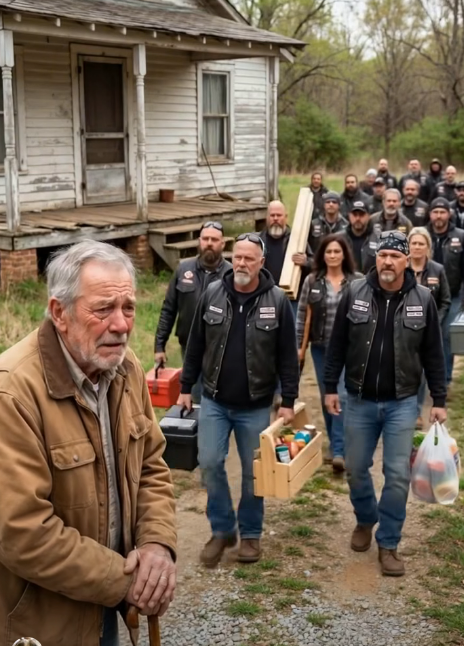
    After asking around, Reed eventually found where he lived. What started as returning a meal turned into something more. He brought groceries. Then a few basic supplies. Then, with help from a few friends, small repairs that made the apartment warmer and more comfortable.

    Walter was surprised, but he welcomed them in.

    “You didn’t have to do all this,” he said.

    Reed shook his head. “I wanted to.”

    They shared a simple meal together, and for the first time in a while, Walter felt something he hadn’t expected—company.

    Over the next few days, Reed returned. Sometimes with food, sometimes just to check in. Their conversations grew longer, easier. What began as a small act of kindness turned into a steady friendship.

    Eventually, others joined in—friends of Reed who helped fix things, bring supplies, and spend time talking. No fuss, no attention—just quiet support.

    Walter’s apartment didn’t become fancy. But it became warmer. Livelier. More secure.

    And more importantly, it no longer felt lonely.

    Word spread through the neighborhood. People began looking out for each other a little more. The diner organized a weekly meal program. Neighbors checked in more often. Small acts added up.

    Walter became part of it all, greeting people, sharing stories, reminding others to take what they needed.

    Months later, Walter sat again outside the diner. Reed joined him, handing over a cup of coffee.

    They sat quietly for a while.

    Then Walter pulled out another twenty-dollar bill and tucked it near the window.

    “For whoever needs it next,” he said.

    Reed shook his head with a small smile. “You’re not going to stop, are you?”

    Walter smiled back. “Not likely.”

    Sometimes the smallest acts of kindness travel the farthest. A simple gesture—offered at the right moment—can ripple outward, touching lives in ways we never expect.

    And often, it’s not about how much we give, but that we choose to care at all.
  • Trump Reveals Woke Media, Leaker Put American Lives at Risk During Iran Rescue Operation

    Trump Reveals Woke Media, Leaker Put American Lives at Risk During Iran Rescue Operation

    Officials in the administration of Donald Trump say an investigation is underway into how sensitive operational details about a recent military incident were reportedly leaked to the press. The matter centers on claims that information regarding a downed American airman during a mission referred to as Operation Epic Fury was disclosed publicly while recovery efforts were still ongoing.

    According to statements attributed to White House officials and comments made by President Trump during a press briefing, the leak allegedly revealed that a second service member was still unaccounted for. Administration officials argue that the disclosure may have increased operational risks by alerting hostile forces in the region and complicating ongoing search-and-rescue efforts.

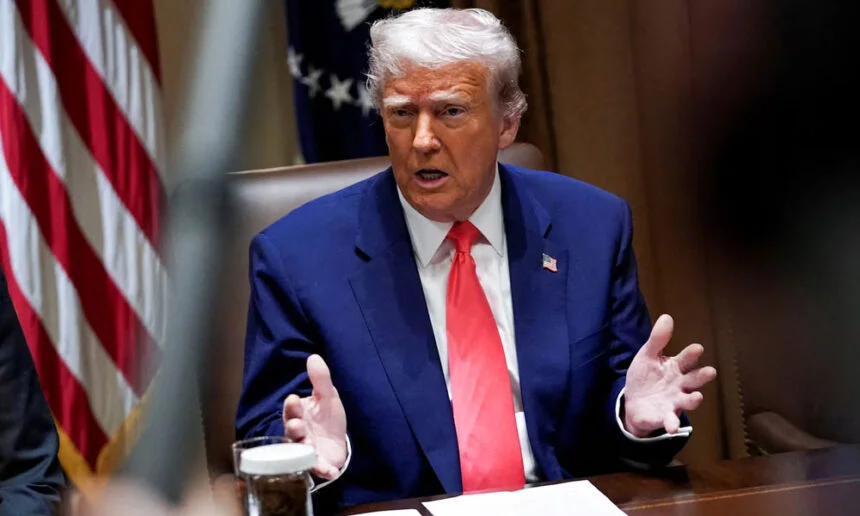
    During the briefing, Trump said the administration is working to identify the source of the leak and described the situation as a serious national security concern. He emphasized that releasing certain details during active operations can potentially endanger personnel in the field and interfere with mission objectives. Officials also indicated that communications with media outlets may be reviewed as part of the investigation process.

    The report has not been independently verified, and details surrounding the operation, including the status of the personnel involved, remain limited. Government officials have not publicly released additional specifics as the investigation continues.

  • Republicans Score Major Victory in Longtime Blue District in Really Good Midterm News

    Republicans Score Major Victory in Longtime Blue District in Really Good Midterm News

    Early preliminary results from an Anchorage Assembly race in Anchorage, Alaska suggest that Republican candidate Dave Donley is leading Democratic candidate Janice Park in the Midtown District 4 seat. The contest remains close, and election officials note that thousands of ballots are still outstanding, meaning the outcome could change as counting continues.

    The district has drawn attention because it is considered politically competitive and includes areas that have leaned Democratic in recent statewide and national elections, including support for former Vice President Kamala Harris in 2024 based on precinct-level analysis. Even so, Alaska as a whole has often produced mixed results, with competitive races across local and state offices.

    According to preliminary tallies, Donley holds a narrow advantage over Park, with additional candidates trailing behind. Election officials emphasize that the results are not final, as mail-in ballots and other late-arriving votes are still being processed and counted. Turnout levels also remain relatively low so far, based on early reporting.

    The race is being closely watched by local political observers as one of several indicators of voter sentiment ahead of future elections in Alaska. Analysts note that final certification of results will depend on the completion of the full count and any required review procedures under state and local election rules.

  • Democrats Get More Bad News as Longtime Blue City Mayor Resigns in Midst of Being a National Disgrace

    Democrats Get More Bad News as Longtime Blue City Mayor Resigns in Midst of Being a National Disgrace

    Muriel Bowser, mayor of Washington, D.C., announced that she will not seek re-election for a fourth term. The decision follows a recent shooting incident in the city involving National Guard members, which has drawn public attention and renewed discussion around public safety and leadership in the capital.

    In a statement shared on the social media platform X, Bowser reflected on her time in office, calling it “the honor of my life.” She highlighted achievements during her tenure, including economic development projects, education improvements, and efforts to guide the city through the impacts of the COVID-19 pandemic. She emphasized her commitment to serving residents and expressed gratitude for the opportunity to lead her hometown.

    Her statement also outlined major initiatives completed during her administration, such as infrastructure investments and community development projects. Bowser pointed to progress in employment levels, fiscal stability, and healthcare access, including the construction of new medical facilities and significant investment in underserved areas of the city.

    Bowser also referenced her approach to governance during periods of federal involvement in city affairs, including interactions with Donald Trump. She described her administration’s efforts to maintain local autonomy while working through challenges. First elected in 2014, Bowser noted that she had been considering this decision for some time, including discussions with her family prior to her father’s passing.

  • Trump Exposes and Moves to Primary Notorious RINO, Throw Him Out of Office

    Trump Exposes and Moves to Primary Notorious RINO, Throw Him Out of Office

    Donald Trump sharply criticized Thomas Massie in a recent statement, accusing him of failing to support key policy priorities and urging voters to consider new leadership in Kentucky’s 4th Congressional District. He argued that past electoral victories in the state reflect strong backing for his policy agenda and suggested that current representation does not fully align with those goals.

    In the same statement, Trump expressed support for Ed Gallrein, highlighting his military service and business background. He described Gallrein as someone who could focus on economic growth, national security, and support for agriculture and energy sectors, presenting him as a potential alternative in a future primary race.

    Massie, who has identified as a Tea Party–aligned conservative, has at times differed with Trump on fiscal policy and government spending. He has voiced concerns about large-scale legislation and its potential impact on the national debt, emphasizing a more limited-government approach. These differences have contributed to ongoing tensions between the two figures.

    The disagreement also extends to foreign policy and congressional authority. Massie has argued for a stronger role for Congress in decisions involving military action, while Trump has promoted a broader executive approach. These contrasting perspectives have fueled debate within the party and may influence upcoming election dynamics in Kentucky.

  • President Trump Goes Nuclear on a Fox News RINO and Demands Another FNC Personality Be Yanked Off the Air in Powerful Clapback

    President Trump Goes Nuclear on a Fox News RINO and Demands Another FNC Personality Be Yanked Off the Air in Powerful Clapback

    Donald Trump sharply criticized certain Fox News personalities in a series of public remarks, expressing frustration over how his policies and positions have been discussed on the network. His comments were directed at contributors and hosts he believes have not fairly represented his views or challenged opposing perspectives during interviews.

    Among those mentioned were Jessica Tarlov and Shannon Bream. Trump criticized Tarlov’s commentary and called for changes to her role on the network, while also taking issue with Bream’s handling of a recent interview.

    He argued that hosts should more actively challenge claims made by guests, particularly when discussing administration policies or national security matters.

    The criticism followed an interview Bream conducted with Jake Auchincloss, who shared concerns about a recent military operation and broader foreign policy strategy. Trump disagreed with those assessments and suggested that such viewpoints should be more directly addressed during on-air discussions to provide balance for viewers.

    Trump also reiterated his positions on policy initiatives and international relations, emphasizing what he described as successes in negotiations and governance. His remarks highlight ongoing tensions between political figures and media outlets over coverage, commentary, and the framing of key national issues.

  • After My Wife Said “I Told Everyone We Opened Our Marriage, So I Will Sleep With My Boss For A Start.” I Went To Bed Without A Word. The Next Morning, She Woke Up To The Smell Of Pancakes And Saw The Table Filled With All Kinds Of Treats. She Said, “Good, You Finally Understood.” But When She Saw Who Was Sitting At The Table, Her Expression Changed Instantly…

    After My Wife Said “I Told Everyone We Opened Our Marriage, So I Will Sleep With My Boss For A Start.” I Went To Bed Without A Word. The Next Morning, She Woke Up To The Smell Of Pancakes And Saw The Table Filled With All Kinds Of Treats. She Said, “Good, You Finally Understood.” But When She Saw Who Was Sitting At The Table, Her Expression Changed Instantly…

    Mark Ellison believed quiet men survived marriage by being useful.

    Fix what breaks. Show up on time. Don’t raise your voice. Be steady when everything else isn’t.

    For eight years, that had been enough.

    Until the afternoon it wasn’t.

    The air was thick that Saturday in July, the kind that made shirts cling and tempers sit just beneath the surface. Mark stood near the grill in his father’s backyard in suburban Columbus, flipping burgers while relatives laughed under string lights.

    It was supposed to be a simple celebration. His father’s retirement. Thirty people. Paper plates. Familiar faces.

    Safe.

    Vanessa stood up from her chair, wine glass in hand, smiling like she was about to give a toast.

    “I’ve been honest with myself,” she said.

    The yard quieted—not completely, just enough for her voice to carry.

    “Mark and I have grown apart. We’ve decided to open the marriage.”

    Mark felt the words before he understood them.

    “And I’m starting with Ethan Cross.”

    Silence fell, heavy and immediate.

    Even the cicadas seemed to stop.

    Ethan Cross.

    Her boss.

    Mark’s father slowly set his plate down like it had suddenly become too heavy to hold.

    “Say that again,” he said, voice low.

    Vanessa didn’t hesitate. “Ethan understands me. He’s confident. Driven. Passionate.” She glanced at Mark. “Mark is a good man, but he’s… safe.”

    Safe.

    The word landed like a verdict.

    Harold stepped forward despite the stiffness in his knee, shoulders squared by decades of hard work.

    “You are standing in my yard,” he said, each word measured, “telling my son this in front of his family. That’s not honesty.”

    Vanessa’s smile tightened. “You wouldn’t understand modern relationships.”

    “No,” Harold said. “I understand respect.”

    Mark didn’t shout.

    That surprised even him.

    Instead, something inside him went very still.

    He looked at Vanessa—the woman he had defended, supported, trusted—and for the first time, he didn’t recognize her.

    “Pack a bag,” he said quietly.

    She blinked. “What?”

    “Tonight.”

    A short laugh escaped her. “Don’t be dramatic.”

    “You made your choice in front of everyone,” he said. “Now I’m making mine.”

    She left in a rush of anger and perfume.

    The party dissolved after that.

    Chairs scraped. Goodbyes came too quickly. Conversations were avoided instead of finished.

    By nightfall, it was just Mark and his father in the dim backyard, stacking chairs in silence.

    At 6:10 the next morning, the silence broke.

    Mark stood in the kitchen, staring at the nearly empty bank account on his phone.

    $18,400 gone.

    Most of it from his late mother’s inheritance.

    On the counter, a note:

    You never fight for anything. Let’s see if you fight for this.

    He didn’t yell.

    Didn’t slam anything.

    Didn’t call her.

    He read it twice, folded it once, and set it down.

    Then he made three calls.

    His bank.
    An attorney.
    And his oldest friend.

    By Monday, everything had changed.

    Not loudly.

    Not publicly.

    But decisively.

    He hired a lawyer known for precision, not drama.

    He documented where the money came from—every transfer, every record tied back to his mother.

    And when people asked what happened, he didn’t argue.

    He told the truth.

    Once.

    Clearly.

    Then moved on.

    The turning point came quietly.

    An old tablet, left behind.

    Still syncing.

    Messages. Receipts. Travel confirmations.

    At first, it felt like noise—fragments of a life already broken.

    Then patterns emerged.

    Trips that didn’t line up.

    Expenses that didn’t make sense.

    Details that, when placed side by side, told a story no one had intended to be seen clearly.

    Mark didn’t react emotionally.

    He organized.

    Carefully. Methodically.

    Dates. Locations. Documents.

    He handed everything to his attorney.

    No accusations.

    No threats.

    Just information.

    What followed wasn’t explosive.

    It was controlled.

    Measured.

    And impossible to ignore.

    Within days, conversations began happening in rooms Mark would never enter.

    Reviews. Questions. Internal discussions.

    The kind that start quietly… and don’t stay that way.

    Vanessa called.

    Her voice wasn’t confident anymore.

    “What did you do?”

    Mark sat at his kitchen table, looking out at the same quiet street.

    “I told the truth,” he said.

    The weeks that followed reshaped everything.

    Careers shifted.

    Reputations changed.

    Decisions were made at levels far above where Mark stood.

    He didn’t celebrate.

    He didn’t comment.

    He just kept moving forward.

    A month later, Vanessa stood at his door.

    Not polished.

    Not certain.

    “I made a mistake,” she said.

    Mark listened.

    Really listened.

    Then he answered just as calmly as he had that night in the backyard.

    “The money goes back,” he said. “And we move forward—separately.”

    The divorce finalized quietly.

    No spectacle.

    No final argument.

    Just signatures.

    By October, the backyard looked different.

    Same space.

    Different feeling.

    Lights strung overhead. Laughter that didn’t feel forced. Conversations that didn’t stop when someone walked up.

    His father by the grill. His friends around the table.

    No tension.

    No performance.

    Just peace.

    Standing there, Mark realized something he hadn’t understood before:

    Being steady was never the problem.

    Being patient wasn’t weakness.

    But silence—when it protects the wrong things—can cost you everything.

    He wasn’t the man who stood quietly at the grill anymore.

    And he didn’t need to prove it to anyone.

    Not anymore.

  • ”You’re Just The IT Guy, You Don’t Matter, The CEO Laughed As He Cut My Benefits. He Didn’t Know…

    ”You’re Just The IT Guy, You Don’t Matter, The CEO Laughed As He Cut My Benefits. He Didn’t Know…

    You’re just the IT guy. You don’t matter.

    He didn’t shout it. He didn’t have to.
    It was in the way he looked at me… the way he slid the paperwork across the table like it was routine… like I was replaceable.

    After nine years, that’s what I had become.

    A line item.

    A cost to reduce.


    Hey Reddit—this is one of the hardest stories I’ve ever tried to put into words.

    Not because of what happened… but because of how close I came to saying nothing, signing the papers, and walking away from something I spent years building.

    My name’s Joel. I’m 37.
    And six months ago, I learned exactly what my work—and my silence—were worth.


    I gave almost a decade to that company.

    Started young, fresh out of school, buried in student debt and just grateful for a job. Back then, the company was small. Scrappy. Messy. But it felt human. People knew each other. Leadership felt accessible.

    And the systems?

    They were a nightmare.

    Outdated. Unstable. Constantly breaking at the worst possible times. Entire teams would stop working because something crashed. Data would disappear. Everyone just… accepted it.

    I didn’t.

    At first, I just fixed things. That was my job. Late nights, early mornings, whatever it took to keep everything running.

    But over time, frustration turned into something else.

    Obsession.

    I started building something new—quietly, on my own time. Nights. Weekends. Holidays. I poured money into it, energy into it, pieces of my life into it.

    It cost me more than I expected.

    Sleep. Relationships. Balance.

    There were nights I sat alone in front of glowing monitors, wondering if any of it would matter.

    But I kept going.

    Because I believed it could be better.


    When it finally worked… really worked… I remember just staring at the screen in silence.

    It was faster. Cleaner. Reliable. Everything the old system wasn’t.

    When I showed it to leadership, they saw it too.

    For a moment, I felt seen.

    We reached an agreement: the company could use it, and I would retain ownership. It felt fair. Respectful. Like a partnership.

    And for a while, it was.

    The company grew. Fast.

    Things stabilized. Opportunities expanded. People stopped worrying about whether the system would fail and started focusing on actually doing their jobs.

    I was proud of that.

    Quietly proud.


    Then leadership changed.

    New vision. New priorities.

    And suddenly, the tone shifted.

    Meetings felt colder. Conversations shorter. Decisions… faster.

    Until one morning, I was called into a room.

    No buildup. No warning.

    Just a folder.


    Inside was my future—reduced.

    Salary cut. Benefits scaled back. Terms changed.

    All presented like it was standard procedure.

    Like it didn’t matter who I was or what I’d built.

    I remember reading it twice, hoping I misunderstood something.

    I hadn’t.

    When I tried to explain my role, the importance of the system, the years behind it… it didn’t land.

    Or maybe it just didn’t matter.

    What stayed with me wasn’t the numbers.

    It was the feeling.

    That everything I’d done… all those nights, all that effort… had been quietly minimized into something replaceable.


    I signed the papers.

    Not because I agreed.

    But because I needed time to think.


    That night, I sat across from a friend who understood contracts better than I did.

    We went through the agreement line by line.

    And there it was.

    A clause I hadn’t thought about in years.

    A protection.

    Simple. Clear. Binding.

    If the terms changed… the license could too.


    I didn’t feel powerful when I realized that.

    I felt… conflicted.

    Because this wasn’t just about me.

    There were hundreds of people tied to that system. People who had nothing to do with the decision.

    Walking away—or acting—would affect all of them.

    I sat with that for a long time.

    Long enough to question myself more than once.


    In the end, I chose to act.

    Not out of anger.

    But because the agreement mattered.

    Because the work mattered.

    Because if I didn’t stand up for it now, I never would.


    What followed was… intense.

    Conversations escalated. Meetings multiplied. Pressure came from every direction.

    For a few days, everything felt uncertain—like standing in the middle of a storm you didn’t expect to create.

    But eventually, the right people started listening.

    Really listening.


    We went back to the table.

    This time, it wasn’t rushed. It wasn’t dismissive.

    It was serious.

    Careful.

    Respectful.


    We reached a new agreement.

    One that reflected the value of the system.
    One that protected the work going forward.
    One that acknowledged what had been overlooked.

    There were changes in leadership after that.

    Not because of me alone—but because of everything the situation revealed.


    I still think about that moment in the conference room sometimes.

    How easy it would have been to stay quiet.

    To accept less.

    To walk away without saying a word.


    But here’s what I learned:

    Your work has value—even when others don’t see it right away.
    Agreements matter—especially the ones you think you’ll never need.
    And sometimes, the hardest thing isn’t fighting back…

    It’s deciding that you’re worth standing up for in the first place.


    If you made it this far—thanks for reading.

    I’m still processing it all.

    But I’m sleeping a little better these days.

  • FBI Memos: Former Director Wray Ignored Warnings of Potential J6 Violence

    FBI Memos: Former Director Wray Ignored Warnings of Potential J6 Violence

    Recently released documents from the Federal Bureau of Investigation indicate that officials were assessing the risk of political unrest tied to the 2020 election months before the January 6 Capitol attack. The materials, provided to Congress by Kash Patel, outline internal planning efforts focused on how a disputed election outcome could lead to instability or violence.

    According to the documents, an internal exercise conducted by the FBI’s Boston Field Office examined potential scenarios involving contested election results. Analysts concluded that threats could rise as Election Day approached, including risks targeting political figures, campaign events, and government institutions. The assessment also noted the possibility of foreign influence efforts by countries such as China, Iran, and Russia, particularly through online activity aimed at amplifying tensions.

    The records further describe preventative strategies considered by the bureau, including increased use of confidential sources and closer monitoring of groups viewed as potential threats. Officials also discussed whether enforcing lower-level offenses more consistently could help deter more serious acts. These measures were framed as part of broader efforts to reduce the likelihood of escalation during a politically sensitive period.

    Additional disclosures about law enforcement presence on January 6 have contributed to ongoing public discussion. Reports indicate that personnel, including plainclothes agents and informants, were present among the crowd, a practice officials say is typical for large events.

    However, distinctions between different types of personnel and prior findings by the Department of Justice Office of Inspector General have prompted further debate. Lawmakers such as Barry Loudermilk have questioned whether earlier intelligence assessments were fully acted upon, underscoring continued scrutiny of how authorities prepared for and responded to the events.

  • President Trump Annpunces Amazing New Plan about IRAN

    President Trump Annpunces Amazing New Plan about IRAN

    Donald Trump announced on Sunday that the United States Navy would begin steps toward restricting ship traffic through the Strait of Hormuz, following the breakdown of high-level negotiations involving Iran. The decision signals a significant rise in tensions after talks in Pakistan did not result in an agreement on key issues, particularly nuclear policy.

    In public remarks, Trump stated that while some progress had been made during discussions, the most critical issue—nuclear development—remained unresolved. He indicated that the naval action was intended as a response to concerns about maritime security in the region, including reports of potential hazards affecting commercial shipping routes. He also suggested that restrictions could be lifted if conditions improve and safe passage is ensured for all vessels.

    Trump further emphasized that the United States would take measures to discourage financial or logistical support for actions it considers unlawful in the waterway. He also noted that efforts would be made to address reported threats to navigation, including removing potential dangers in the strait. His statements framed the situation as part of a broader effort to maintain stability and uphold international maritime norms.

    The Strait of Hormuz is a critical global shipping route, historically accounting for a large share of the world’s oil transportation. Disruptions in the area have already led to a sharp decline in traffic. The announcement followed confirmation from JD Vance that negotiations between the United States and Iran had concluded without a final agreement, despite extended discussions in Islamabad.