House Passes Bill to Make Trump’s National Fraud Enforcement Division Permanent With Broad Democratic Support
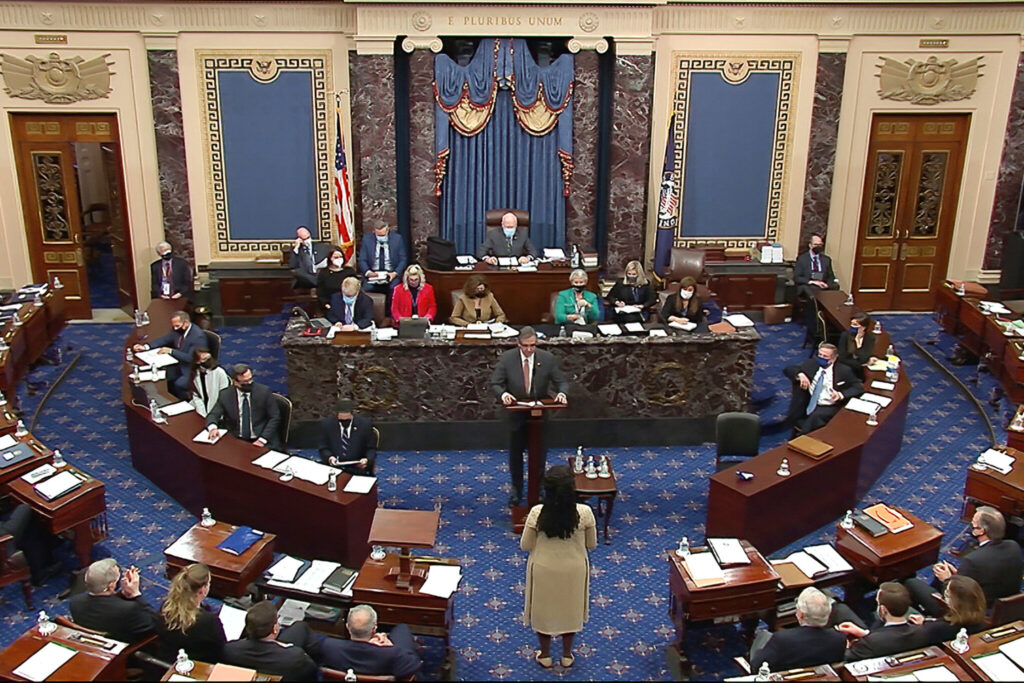
The House of Representatives has voted overwhelmingly to establish the Trump administration’s National Fraud Enforcement Division as a permanent component of the Justice Department, with nearly two-thirds of House Democrats joining Republicans in support.
The National Fraud Enforcement Division Act of 2026, sponsored by Rep. Brad Finstad, R-Minn., passed the House on September 16 by a 352-72 vote. All 213 Republicans who voted supported the measure, while 139 Democrats voted yes and 72 voted no. Three Democrats and six Republicans did not vote.
The vote represents a significant level of bipartisan support for permanently codifying a Justice Department division that was created by the Trump administration earlier this year.
However, the legislation still must clear the Senate and receive the president’s signature before it can become law.
What the Bill Would Do
H.R. 9576 would establish the National Fraud Enforcement Division within the Department of Justice in federal law.
Under the legislation, the division would be led by an Assistant Attorney General for National Fraud Enforcement, appointed by the president and confirmed by the Senate.
Its responsibilities would include investigating, prosecuting and addressing fraud involving the federal government, federally funded programs and U.S. citizens. The division would also coordinate investigations involving multiple federal agencies and judicial districts and advise U.S. attorneys’ offices on fraud enforcement.
The legislation would also apply federal restrictions concerning political activity to the division.
The Division Already Exists
Although Wednesday’s vote would give the division a statutory foundation, the National Fraud Enforcement Division is already operating inside the Justice Department.
The department formally established the division through an organizational rule that took effect August 24, 2026. The Justice Department described the division as part of a broader effort to investigate and prosecute fraud involving taxpayer money and federally funded programs.
The administration initially created the division through executive action earlier in the year.
That distinction is important: the House bill would not create the concept of federal fraud enforcement from scratch. Instead, it would establish the current division permanently in federal law.
Why Democrats Supported the Measure
The 139 Democratic votes demonstrate that opposition to the bill was not uniform within the Democratic caucus.
Rep. Jamie Raskin, D-Md., was among the Democrats who supported the legislation. According to remarks reported by Fox News, Raskin argued that the Justice Department already has extensive fraud-enforcement capabilities but nevertheless said the legislation itself was acceptable.
Raskin also used the House debate to criticize other actions by the Trump administration, including presidential pardons and commutations involving white-collar offenders.
His position illustrates the distinction some Democrats made between supporting a permanent federal fraud-enforcement structure and endorsing the administration’s broader record or political arguments surrounding it.
Republicans Frame the Vote Around Government Fraud
Republican lawmakers have emphasized fraud involving taxpayer-funded programs as a central reason for making the division permanent.
House Republicans said the legislation would give the Justice Department a permanent institutional structure for investigating fraud involving federal programs and taxpayer money. Rep. Finstad, the bill’s sponsor, said the measure would formalize the division that the Trump administration had already established.
Republicans have also pointed to investigations involving alleged fraud in federally funded programs, including cases in Minnesota and elsewhere.
Those allegations and investigations have become politically contentious, with Republicans emphasizing government accountability and Democratic lawmakers disputing some of the broader political characterizations surrounding individual cases.
Minnesota Fraud Cases Have Become Part of the Debate
The National Fraud Enforcement Division has attracted particular political attention because of its involvement in the Trump administration’s response to fraud allegations in Minnesota.
The administration has highlighted alleged misuse of government funds in Minnesota and other states as examples of why a stronger federal fraud-enforcement effort is necessary.
Democratic officials, meanwhile, have argued that some Republican descriptions of the Minnesota situation are politically motivated or exaggerate the scale of the problem.
The House vote itself does not resolve those disputes. It concerns the structure and authority of the Justice Department’s fraud-enforcement operations.
The Department Has Already Budgeted for the Division
The Justice Department’s fiscal 2027 budget materials show that the National Fraud Enforcement Division is already being built as a federal component.
The department requested approximately $30 million for the division for fiscal 2027, with 140 authorized positions, including 100 attorneys. The Justice Department said the division had no separate enacted staffing level in fiscal 2026 because it was newly established.
Making the division statutory would therefore provide a more permanent congressional foundation for an organization that is already being staffed and developed.
The Bill Still Has a Long Way to Go
Despite the overwhelming House vote, the legislation is not yet law.
H.R. 9576 now moves to the Senate, where lawmakers would have to approve the measure before it could reach the president.
The House action therefore establishes an important legislative milestone but does not itself make the National Fraud Enforcement Division permanent.
If the Senate approves the legislation in the same form and the president signs it, the division would have a statutory basis rather than relying solely on executive-branch organizational authority.
What the Vote Shows
The House vote demonstrates broad congressional support for maintaining a dedicated Justice Department operation focused on federal fraud.
The most notable feature of the vote is the bipartisan breakdown: 213 Republicans and 139 Democrats voted for the legislation, while all 72 votes against it came from Democrats.
That does not mean Democrats uniformly support the Trump administration’s approach to fraud enforcement. The House debate showed disagreements over how the division should operate and how the administration has used fraud investigations politically.
The immediate legislative question is whether the Senate will take up the bill and, if so, whether it will approve the House-passed version.
For now, the House has voted to put the National Fraud Enforcement Division into federal statute, but the program’s permanent legal status will depend on the next stages of the congressional process.

Benjamin Harris is a RapidReports front page contributor and editor,proud father of four.