A Woman Deliberately Smashed a Shopping Cart Into My Car—But the Security Cameras Caught Everything
“Did you do that to my car?” I asked, pointing at the shopping cart wedged against my driver’s door.
The afternoon sun glinted off a long scrape in the paint. Beneath the door handle, a deep dent distorted the metal. My stomach tightened as I took in the damage.
A few yards away, the blonde woman who had shouted at me outside Walmart less than an hour earlier stood beside a white SUV, watching me with an unmistakable smile.
She shrugged and suggested I shouldn’t park where shopping carts could hit my vehicle.
I looked back at the cart. Its front wheels were twisted sideways, and one wheel was pressed against my tire. It didn’t look as though it had simply drifted into my door in a gentle breeze.
When I raised my phone to photograph her license plate, her smile disappeared.
“Don’t take pictures of my car,” she snapped, stepping in front of the SUV.
I moved to one side, captured the plate, and told her I was calling store security.
My name is Amanda. I’m thirty-four, married, and the mother of two children. That Saturday had started as an ordinary family errand. My husband, Nate, was home with our youngest, who had a fever, and we were running low on nearly everything.
I needed milk, cereal, laundry detergent, chicken, and enough groceries to get us through the coming week. I expected to spend an hour at most at Walmart before heading home.
The parking lot was busy, but a long row of shopping carts stood beside the entrance. I reached for one without giving it much thought.
A woman behind me immediately shouted that I had taken her cart.
I turned around, certain I’d misunderstood.
She appeared to be in her mid-fifties, with blonde hair, large sunglasses perched on her head, and a bright red sweater. At least twenty other carts were available.
“I’m sorry,” I said. “Were you reaching for this one?”
She rolled her eyes and called me a selfish brat, loud enough to draw the attention of several nearby shoppers.
I couldn’t remember the last time anyone had called me a brat. I was a grown woman with two children, and being scolded over an ordinary shopping cart felt ridiculous.
“There are plenty of carts here,” I pointed out. “You can take the next one.”
That only made her angrier. She accused me of telling her what to do while an employee near the entrance watched uncertainly.
I could have argued, but I had groceries to buy and a sick child waiting at home. I pushed the cart inside and got on with my day.
For the first ten minutes, I remained irritated. Then I began comparing cereal prices, checking whether we needed eggs, and wondering why peanut butter seemed more expensive every time I bought it.
By checkout, the confrontation had faded into the background. I paid for my groceries, loaded the bags into the cart, and headed back to the parking lot.
That was when I saw the damage.
At first, I assumed someone had abandoned a cart between parking spaces. Then I noticed the metal frame pressed hard against my driver’s door, leaving a deep gouge through the paint and a dent beneath the handle.
I stopped walking, gripping the cart handle as I tried to make sense of what I was seeing.
My car was essential to our family’s daily life. I used it for school pickups, medical appointments, work, and countless errands. A damaged door meant repair costs, insurance paperwork, and potentially days without reliable transportation.
My hands began to shake.
Then I looked across the lane and recognized the woman from the entrance.
She was standing beside her SUV, watching me. When our eyes met, she laughed.
I couldn’t know for certain what had happened simply because she was nearby, but her reaction made the earlier argument feel far more troubling.
I left my groceries beside the cart return and walked toward her.
“Did you push that cart into my car?”
She avoided giving me a direct answer.
“Shopping carts hit cars all the time,” she said.
“That’s true,” I replied. “But most people don’t stand around laughing afterward.”
Her expression hardened.
“You have no proof.”
“I intend to find out what happened.”
I began documenting the damage. She objected to my photographing her license plate, but I kept my distance and called Walmart.
A manager asked me not to move the vehicle or cart until staff could examine the scene.
Within minutes, two employees arrived: Chris, the manager, and Tasha, who worked in loss prevention.
Chris inspected the door and asked whether I had seen anyone push the cart into it.
I told him I hadn’t witnessed the impact. I explained the argument at the entrance and pointed out the woman standing near her SUV.
She immediately raised her voice.
“I wasn’t laughing at her! This whole thing is ridiculous.”
Tasha asked everyone to remain calm while the incident was documented.
I sent Nate a photograph of the damage. He called immediately to make sure I was all right. I explained that store security was helping and asked him to stay home with the children.
When Chris offered to contact the police, I agreed.
The woman complained loudly but remained at the store, apparently confident that no one could prove what had happened.
Then Tasha asked me to accompany her inside while she reviewed the parking-lot cameras.
The security office was small and dim, with monitors displaying different sections of the store and surrounding parking areas. Tasha warned me that not every parking space was visible and that the footage might not tell the entire story.
I braced myself for disappointment. I imagined paying a deductible, arranging repairs, and watching the person responsible walk away.
Then Tasha located a recording from the entrance.
On the screen, I watched myself push a cart into the store while the woman remained near the row of trolleys, staring in my direction.
Tasha switched to another camera covering the parking lot.
The footage showed that the woman, whose name we learned was Brenda, had parked two rows from my vehicle.
About thirty-five minutes after I entered the store, Brenda emerged with her purchases. She loaded her bags into the white SUV and began moving the empty cart away.
The nearest cart return was only a short distance from her parking space.
But she didn’t take the cart there.
Instead, she pushed it into the driving lane and paused, looking toward my vehicle.
Then she positioned herself behind the handle and shoved.
The cart rolled directly into my driver’s door.
I winced as the metal frame struck the panel.
Brenda approached the cart, took hold of it, and pushed it into the same door a second time. The impact appeared even stronger.
I drew a sharp breath.
For several seconds, nobody in the office spoke.
Brenda immediately claimed she had been moving the cart out of the lane and that it had escaped her control.
Tasha replayed the recording. The footage showed Brenda positioning the cart before each impact.
When asked why she had handled it that way, Brenda grew louder.
“This whole thing started because she stole the cart I wanted!”
I stared at her in disbelief.
There had been dozens of carts at the entrance. I had even apologized when she said I’d taken one she was approaching. The idea that she might have carried that anger into the parking lot and deliberately damaged my car was difficult to comprehend.
Yet the recording gave investigators a much clearer picture of what had happened.
Tasha preserved the relevant footage, and Chris completed the store’s incident documentation. Two police officers arrived shortly afterward.
I gave a statement describing the argument, the damage, and what we had watched on the monitors.
Brenda continued insisting that it was merely a shopping cart, as though the object used to cause the damage somehow made the act harmless.
The officers explained that the important questions were whether the damage had been intentional, what the evidence established, and how local property-damage laws applied.
They photographed the vehicle, recorded witness information, and obtained the relevant security evidence.
An officer asked whether I wanted to make a formal report and cooperate with any proceedings that followed.
I hesitated.
A few hours earlier, I had been comparing cereal prices and trying to get home to a sick child. Now I was discussing a potential property-damage case because of a dispute that should never have lasted more than a few seconds.
I didn’t want a dramatic confrontation or months of arguments with a stranger. But I also couldn’t ignore the damage and absorb the costs simply because Brenda had decided her anger justified what she’d done.
“I want the incident properly documented,” I said.
As the officers continued taking statements, Brenda approached me and offered to pay for the scratch herself.
I pointed out that the damage included a substantial dent and that a qualified repair shop would need to inspect the door before anyone could determine the cost.
She dismissed it as minor and urged me to settle privately.
The officer nearby suggested that we avoid negotiating while the investigation was underway.
I agreed.
What had begun with an argument over an ordinary shopping cart had become a documented property-damage incident. For the first time that afternoon, Brenda seemed to understand that her actions might have consequences beyond an argument.
Before leaving, I photographed the damage from several angles, including the affected door panel, the cart’s position, and the surrounding parking spaces.
Tasha provided the incident reference information and confirmed that the security footage would be preserved for appropriate investigative and insurance purposes.
I contacted my auto insurer from the parking lot. The claims representative advised me to keep my photographs, the police report number, and any correspondence from the store. I was also told to arrange an inspection and obtain a repair estimate.
I was relieved that I had documented everything before the cart was moved.
Brenda continued insisting that she had intended no harm, but I left further discussion to the police.
Once the officers finished their initial investigation, I loaded the groceries into my car and drove home.
Nate met me at the door, anxious after seeing the photograph I had sent. He went outside to inspect the damage while I checked on our youngest and put the refrigerated groceries away.
Only then did I begin to appreciate how exhausted I was.
Over the next few days, I dealt with the practical consequences. The repair shop estimated the cost at slightly more than $2,800. The dent was in a difficult area near the door handle, and the paint damage extended along the panel.
The repair required metalwork, refinishing, and blending the paint into the adjacent section to achieve a consistent finish.
My insurance policy covered the repair subject to the deductible, and the insurer began the process of seeking recovery from the party considered responsible. That process is commonly known as subrogation.
I quickly learned that having clear evidence didn’t eliminate the administrative work. There were still forms to complete, photographs to submit, appointments to schedule, and questions to answer about the vehicle’s condition before and after the incident.
The body shop needed several days to finish the work, forcing me to reorganize school pickups, errands, and medical appointments around Nate’s availability.
That disruption angered me almost as much as the dent itself.
The money mattered, of course. But I resented the way a stranger’s impulsive behavior had taken time and energy away from my family.
A few weeks later, I received an update about the police report and the related property-damage proceedings. The matter moved through ordinary channels rather than unfolding into some dramatic courtroom showdown.
The available footage helped document what had happened, while any formal consequences depended on the evidence, the applicable law, and the decisions of the authorities involved.
I didn’t need a judge to deliver an extraordinary speech or Brenda to be publicly humiliated. I wanted the damage repaired, the evidence taken seriously, and the financial burden addressed fairly.
Eventually, my car came back from the shop with the door repaired and the paint restored. I inspected the work carefully, paid the amount required under my policy, and filed the documents with my other insurance records.
It felt good to have my car back.
Still, I caught myself checking the doors more carefully whenever I parked in a busy lot.
Not long afterward, I returned to the same Walmart. I considered shopping somewhere else because I didn’t want to revisit the memory, but the store was convenient, and I had never experienced a problem there before.
Near the entrance, I saw Tasha standing by the cart area.
She recognized me and asked whether the car had been repaired.
I thanked her for her help and told her the process was finally nearing completion.
She shrugged modestly.
“Reviewing incidents is part of my job,” she said, although she admitted she had never encountered quite that situation before.
We laughed briefly, and the tension I had felt walking into the parking lot began to ease.
I reached for a cart just as an older man standing beside me politely asked whether I was taking that one.
For half a second, I froze.
Then I told him I was, but that he could have it if he wanted.
He smiled and said there were plenty available before taking another cart.
We went into the store without another word.
As I walked toward the produce section, I thought about how simple that exchange had been. Two strangers reached for the same row of carts, acknowledged each other, and continued with their day.
It was exactly what should have happened the first time.
People who heard my story often told me Brenda had received what she deserved. I understood why they felt that way, especially after seeing the recording of her pushing the cart into my car twice.
But I never thought of the incident as some mysterious force delivering punishment.
Brenda had become angry over something minor, made a series of deliberate choices, and damaged another person’s property in a parking lot equipped with security cameras. What followed came from those choices.
I didn’t have to outshout her, threaten her, or find a way to get even. The evidence helped establish what had happened, and the people responsible for investigating it could respond.
That distinction mattered because, for a while, I had wondered whether I had somehow caused the trouble by taking the cart in the first place.
I replayed our conversation outside the entrance, asking myself whether I should have apologized more thoroughly or simply handed her the cart to avoid upsetting her.
Perhaps giving it to her would have ended the argument. But I couldn’t have known that refusing to surrender one of many available carts would lead her to damage my vehicle.
Her response wasn’t a reasonable consequence of our disagreement. It was a separate decision she made after I had already walked away.
The experience also taught me that staying calm doesn’t mean accepting mistreatment.
At the entrance, walking away was sensible because there was nothing worth fighting about. After discovering the damage, staying calm meant taking photographs, contacting the store, involving law enforcement, and allowing the evidence to establish what happened.
I wasn’t trying to win an argument. I was protecting my property and making sure the incident was documented.
For several weeks, I felt a small jolt of anxiety whenever I saw an abandoned cart beside a parked car. I became more careful about where I parked and checked my vehicle before driving away.
But I didn’t want one unpleasant encounter to change the way I treated everyone else.
Most people I meet in grocery stores are busy, distracted, and simply trying to finish their errands before heading home. They hold doors, make room in narrow aisles, apologize when they reach for the same item, and move on with their day.
The older man at the cart return had reminded me of that.
One Saturday morning, several weeks after the repair, I drove back to Walmart with Nate and the children. Our youngest was healthy again, and we were shopping for ingredients to make pancakes the next morning.
The children argued cheerfully about cereal while Nate checked the grocery list on his phone.
Near the entrance, our oldest reached for a cart and asked whether I wanted that one or the one beside it.
I laughed.
“Either is fine.”
He chose the cart with the smoother wheels, and we went inside.
There was no special lesson to announce and no reason to tell the children the entire story again. We had milk to buy, flour to find, and a weekend to enjoy.
As we moved through the store, I noticed a woman patiently waiting while another customer returned a cart to the row. They exchanged smiles and continued shopping.
I thought about how much trouble can begin when someone decides a minor inconvenience is a personal insult—and how little effort it usually takes to avoid that mistake.
Then my son called me over to settle a debate about which pancake syrup to buy, and I went to help him choose.
EXPLORE MORE :
MIDTERM UPDATES :
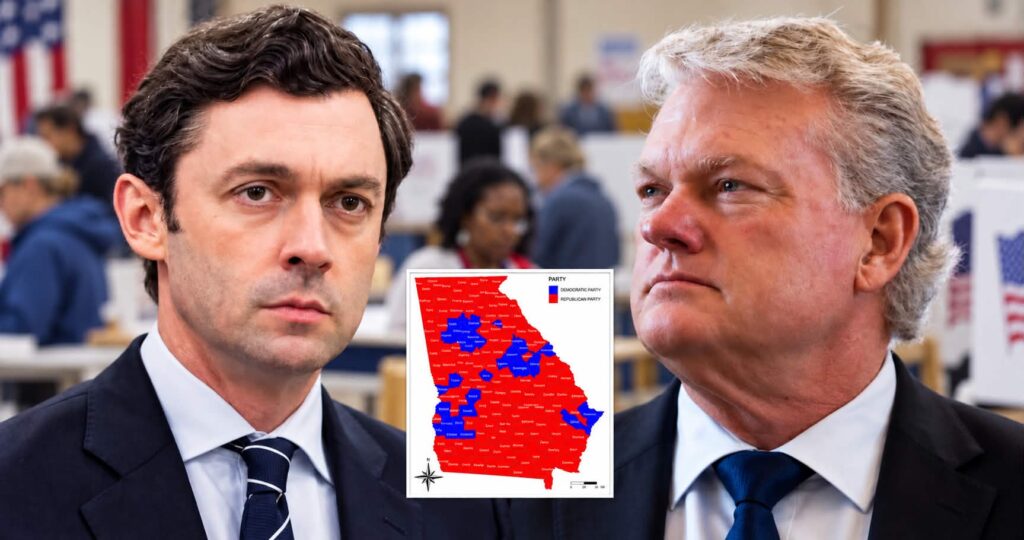
Georgia Sets First-Day Early Voting Record as Closely Watched Midterm Races Approach
Georgia voters cast a record number of in-person ballots on the first day of early voting for the 2026 midterm elections, signaling a strong start to the state’s three-week voting period as competitive races for the U.S. Senate and governor draw national attention.
Georgia Secretary of State Brad Raffensperger reported that 188,667 voters cast in-person ballots on Tuesday, October 13. That was 53,705 more than the 134,962 in-person votes recorded on the first day of early voting in 2022, an increase of approximately 40%. In 2018, the comparable first-day total was 70,849.
The figures establish a new first-day early-voting record for a Georgia midterm election, according to the Secretary of State’s Office.
Raffensperger Highlights Election Administration
Raffensperger, a Republican, attributed the record turnout to voters’ confidence in the state’s election system and the work of local election officials.
“This record-breaking turnout proves that voters have confidence in the integrity of our elections,” Raffensperger said in a statement. He also praised the 159 county election officials responsible for administering elections across Georgia.
The state reported an additional 10,267 accepted absentee ballots, showing that voting activity extended beyond in-person polling locations.
The early figures measure ballots cast, however, and do not establish which candidates or political parties will benefit from the increased participation. The political preferences of voters are not determined by turnout totals alone.
Senate Race Puts Georgia in the National Spotlight
Georgia’s U.S. Senate contest is among the closely watched races that could help determine control of the chamber.
Democratic Sen. Jon Ossoff is seeking another term and faces Republican U.S. Rep. Mike Collins. Republicans are seeking to expand their Senate position, while Democrats are working to retain seats and compete for control of the chamber.
Recent polling has shown Ossoff ahead in some surveys, although polling is a snapshot of voter preferences at a particular time and does not determine the final result. The November 3 election will decide the contest.
Georgia’s political importance was also underscored by the 2024 presidential election, when Donald Trump carried the state by roughly two percentage points. That result illustrates how closely contested statewide elections in Georgia can be, but presidential results do not necessarily predict the outcome of a midterm race.
Governor’s Contest Adds to the Stakes
The governor’s race is another major contest on Georgia’s November ballot.
Republican businessman Rick Jackson is facing Democratic former Atlanta Mayor Keisha Lance Bottoms in the race to succeed Gov. Brian Kemp, who is not seeking another term.
The candidates are competing for a statewide electorate that will also choose other state officials and decide proposed constitutional amendments. The campaign has drawn national attention as both parties seek to make their case to Georgia voters.
Early Voting Continues Through October 30
Georgia’s early-voting period runs from October 13 through October 30, ahead of Election Day on Tuesday, November 3. Voters can use an early-voting location within their county, with specific locations and hours varying by jurisdiction.
The record opening day marks a notable start to the voting period, but turnout totals will continue to change as more ballots are cast. The eventual political impact will depend on the choices voters make and the final results across the state’s races.
For now, the clearest conclusion from the first-day figures is that Georgia’s 2026 midterm election has begun with substantially more in-person early voting than at the start of either of the previous two midterm cycles.
MIDTERM UPDATES:
Democratic Rep. Sheila Cherfilus-McCormick (FL-20) has formally resigned from the U.S. House of Representatives, with her resignation taking effect Tuesday at 1:30 p.m. EDT. Her departure comes amid an ongoing federal case and a congressional ethics review that has placed renewed attention on campaign finance rules, the use of federal relief funds, and accountability among elected officials. The resignation also adds to a series of recent departures from Congress involving lawmakers facing legal proceedings or ethics-related scrutiny.
As my colleague Frank Bruno reported late last month, an eight-member bipartisan subcommittee of the House Ethics Committee worked late into the night reviewing Cherfilus-McCormick’s conduct. The congresswoman faced allegations involving more than $5 million in federal disaster relief funds connected to a family business, with prosecutors alleging that a significant portion of the money was directed toward her 2022 congressional campaign. The case has drawn attention to the legal requirements governing federal assistance programs, campaign contributions, and financial disclosures by candidates seeking public office.
On Friday, the House Ethics Committee announced that, following approximately seven hours of deliberations, the subcommittee found “clear and convincing” evidence supporting 25 of the 27 allegations under review. Those findings could have moved the matter closer to a potential expulsion vote in the House of Representatives. Although the ethics proceedings represent a significant development, the committee’s conclusions should be distinguished from the separate federal criminal case, and allegations must be described in accordance with the relevant legal proceedings.
Throughout the controversy, Cherfilus-McCormick challenged the allegations and raised concerns about the treatment of her case, including claims of racial and gender bias. The dispute has highlighted broader questions about how congressional ethics investigations are conducted, how lawmakers respond to allegations of misconduct, and what standards should apply when elected officials face serious legal challenges. Her resignation now shifts attention toward the next steps in the federal case and the possible consequences for her political future.
Following the ethics subcommittee’s findings, Cherfilus-McCormick may also have faced the prospect of a difficult vote among House members if proceedings toward expulsion continued. Under House rules, expelling a member requires a two-thirds vote, making bipartisan support essential to such a decision. Rather than wait for the process to advance further, she submitted her formal resignation letter to House Speaker Mike Johnson (R-La.) ahead of a possible expulsion vote. Her departure leaves questions about the broader political implications of the case and how Congress will address other pending ethics matters.
Her resignation comes amid a series of departures involving three lawmakers: Cherfilus-McCormick, former Democratic Rep. Eric Swalwell of California, and Republican Rep. Tony Gonzales of Texas. Their exits have intensified discussion about congressional oversight, political accountability, and the standards expected of elected representatives. Meanwhile, Republican Rep. Corey Mills of Florida is also facing calls for disciplinary action, potentially extending the recent period of uncertainty surrounding the House’s membership and internal proceedings.
Rep. Nancy Mace (R-SC) introduced a resolution seeking Mills’ expulsion following allegations involving domestic violence, sexual misconduct, claims concerning his military service, and the handling of federal contracts. Mills’ situation remains a separate matter, and the allegations should not be treated as established facts without appropriate findings or legal determinations. Whether the resolution receives sufficient Republican support remains uncertain. The developments nevertheless underscore the importance of transparent investigations, due process, and consistent ethical standards for public officials, regardless of party affiliation.
READ ALSO : Michigan Senate Race Tightens: New Poll Reveals Neck-and-Neck Contest
Ilhan Omar Accuses Trump Administration of Political Intimidation After Federal Agents Search Her Home
Rep. Ilhan Omar condemned President Donald Trump’s administration on Monday after federal agents searched her Washington, D.C., home as part of an ongoing criminal investigation, accusing the government of weaponizing law enforcement against political opponents.
The Minnesota Democrat responded on X after agents from Homeland Security Investigations arrived at her residence early Monday morning. The Justice Department confirmed that investigators had executed a court-authorized search warrant but did not disclose details about the investigation.
“I’m ok. Make no mistake: this is an attempt to target political enemies and weaponize federal law enforcement,” Omar wrote. She also accused Trump of directing years of attacks against her and declared, “I will not be silenced.”
The search, conducted weeks before the November 3 midterm elections, has intensified political tensions in Washington as Omar seeks reelection to the House. Federal authorities have not publicly outlined the specific allegations under investigation. (Associated Press; CBS News)
Justice Department Confirms Court-Authorized Search
Homeland Security Investigations agents arrived at Omar’s Washington-area residence at approximately 6 a.m., according to reports from Fox News and other outlets.
A Justice Department spokesperson confirmed that investigators carried out a search warrant obtained through the department, describing the operation as part of an ongoing federal criminal investigation.
Authorities have not publicly specified what evidence they sought, what materials were seized or whether any charges are being considered. The execution of a search warrant does not, by itself, establish that a crime occurred.
Reports Link Investigation to Immigration Paperwork
Fox News Digital reported that the investigation concerns alleged fraud involving immigration paperwork completed by Omar’s late father when she was a child. The Justice Department has not publicly confirmed those details or provided a full account of the allegations.
The search follows public comments by administration officials about an investigation involving Omar. In September, border czar Tom Homan acknowledged that a criminal investigation was underway.
Omar has denied wrongdoing and previously said she had not been contacted by federal authorities about an investigation. The precise scope of the inquiry remains unclear based on the information publicly released by the Justice Department. (CBS News; The Washington Post)
Omar Says Search Is Part of a Political Campaign Against Her
In her social media statement, Omar framed the search as the latest escalation in what she described as a prolonged effort by Trump to intimidate her.
“For ten years, Trump has targeted me with baseless lies and smear campaigns,” she wrote, adding that she would continue speaking out despite the search.
Omar, a prominent progressive Democrat who represents Minnesota’s 5th Congressional District, has frequently clashed with Trump and other Republican leaders. Her immigration background and political positions have repeatedly made her a target of criticism from the president and his allies.
Her allegation that the search was politically motivated has not been established as fact. Federal officials have described the operation as part of an ongoing criminal investigation but have not publicly explained its timing or provided detailed evidence supporting the reported focus of the probe.
Search Draws Scrutiny Ahead of Midterm Elections
The timing of the search has raised questions among Democrats because it occurred shortly before the midterm elections, when Omar is campaigning for another term in Congress.
Senior Democrats criticized the action and questioned whether the timing was consistent with longstanding Justice Department practices intended to avoid investigative steps that could improperly influence elections. Such concerns do not, on their own, establish that the search was politically directed.
Republicans and administration officials have previously called for scrutiny of Omar’s background, while Omar has consistently rejected allegations of immigration fraud.
The investigation’s next steps remain uncertain. The Justice Department has not publicly released further details about the evidence sought during Monday’s search or announced criminal charges in connection with the reported allegations.
For now, the search has placed Omar at the center of a new political and legal dispute just weeks before voters head to the polls, with key questions about the investigation still unanswered.
READ MORE:New Poll Shows Close Race in Florida Senate Contest
Ashley Moody and Angie Nixon Deadlocked at 45% in New Florida Senate Poll
Republican Sen. Ashley Moody and Democratic challenger Angie Nixon are virtually tied in a new Florida Senate poll, with each receiving 45% support among likely voters.
The St. Pete Polls survey, conducted September 15-17 for Florida Politics, found Moody at 45.2% and Nixon at 44.8% before rounding. Another 3% selected someone else, while 7% remained undecided.
The survey included 913 likely voters and has a margin of error of ±3.2 percentage points. The four-tenths-of-a-point difference between the candidates is therefore well within the poll’s margin of error.
A Dramatic Difference From the Previous Poll
The St. Pete Polls numbers differ significantly from another survey conducted only days earlier.
A Quantus Insights poll conducted September 8-10 found Moody at 50.1% and Nixon at 42.7% among 733 likely voters.
A Change Research survey conducted September 7-9, meanwhile, put the candidates at 47% each. Earlier University of North Florida and Emerson College surveys had also shown Moody ahead.
Those differences demonstrate why individual polls should be interpreted cautiously. Pollsters use different sampling, weighting and likely-voter methodologies, and a single survey does not establish a trend or determine the eventual result.
Nixon’s Support Among Independent Voters
One of the most striking findings in the new St. Pete Polls survey is Nixon’s advantage among voters who are not affiliated with either major party.
Nixon leads Moody 50% to 37% among independent and minor-party voters, according to the survey.
Nixon also receives 12% support from Republican voters, while Moody receives 8% among Democrats. The poll found Nixon retaining 85% of Democratic voters, compared with Moody retaining 77% of Republicans.
The survey was weighted to reflect Florida’s active voter population, with the final sample consisting of approximately 42% Republicans, 31% Democrats and 27% voters without a major-party affiliation or registered with minor parties. Republicans have a substantial voter-registration advantage statewide.
Age Differences Stand Out
The candidates’ support also varies sharply by age.
Nixon leads among voters younger than 30 by 64% to 25%, according to the poll.
Among voters ages 30 to 49, Nixon leads 54% to 35%.
Moody leads among voters ages 50 to 69, 47% to 42%, and has a larger advantage among voters 70 and older, 61% to 32%.
Subgroup findings generally have greater uncertainty than the overall result because they are based on smaller numbers of respondents.
Race and Ethnicity Show Different Patterns
The survey also found substantial differences by race and ethnicity.
Nixon leads among Black voters 74% to 14%, while Moody leads among White voters 53% to 37%.
Nixon also leads among Hispanic voters, 51% to 39%, according to the survey.
The Hispanic result is particularly notable because Hispanic voters have been an important part of Florida’s changing electoral coalition in recent presidential elections. But the Senate poll is a statewide survey of likely voters and should not be treated as evidence that any particular demographic group will vote a certain way in November.
Both Candidates Have Different Political Backgrounds
Moody currently holds Florida’s Senate seat after Gov. Ron DeSantis appointed her to replace Marco Rubio, who left the Senate after being selected to serve as secretary of state.
Before joining the Senate, Moody served as Florida attorney general and won statewide elections in 2018 and 2022.
Nixon is a Democratic member of the Florida House representing Jacksonville. She won the Democratic Senate nomination over Alex Vindman, receiving 56% of the vote.
The Democratic primary was closely watched because Vindman had substantially greater campaign spending, according to reporting on the contest.
Fundraising Remains a Major Difference
The two campaigns also entered the general election with substantially different financial resources.
Moody reported raising approximately $11.3 million through the end of July and having about $8.4 million cash on hand after the primary.
Nixon had raised less than $1 million by that point, although her campaign reported a subsequent increase in fundraising following her primary victory.
Nixon has also criticized Moody over her handling of campaign debates. Moody declined the first of three debate invitations issued earlier this month, according to Florida Politics.
Florida’s Governor’s Race Is Also Close
The same St. Pete Polls survey found a similarly narrow contest in the Florida governor’s race.
Republican Rep. Byron Donalds received 44%, compared with 43% for Democrat David Jolly.
The one-point difference also falls well inside the poll’s margin of error.
The simultaneous closeness of the two statewide contests provides a snapshot of the political environment in Florida, but the Senate and governor’s races involve different candidates, campaigns and issues.
The Survey Comes After Conflicting Polling
The latest survey stands out partly because of how sharply it differs from several previous polls.
Quantus Insights’ September 8-10 survey gave Moody a roughly seven-point advantage after rounding. The University of North Florida’s July poll showed Moody ahead by eight points, while an Emerson College survey conducted in March showed a larger Moody advantage. A Change Research survey conducted earlier this month had the Senate race tied at 47% each.
Consequently, the 45%-45% result should not be interpreted in isolation.
It is one new measurement taken during a campaign in which the candidates’ support has varied considerably across surveys.
What the Poll Actually Shows
The clearest finding from the St. Pete Polls survey is that the two candidates are currently separated by less than one percentage point among the voters surveyed.
It does not establish that either candidate has a statistically significant statewide advantage. The 3.2-point margin of error is substantially larger than the four-tenths-of-a-point difference between Moody and Nixon.
The survey also leaves 7% undecided, while another 3% selected a candidate other than Moody or Nixon.
Those voters represent an important portion of the electorate that was not committed to either major-party candidate when the survey was conducted.
Election Day Is Still Ahead
The 2026 general election is scheduled for November 3. Polling conducted in September provides information about voter preferences at that particular point in the campaign, but it does not determine the eventual result.
For now, the Florida Senate race presents a sharp contrast between recent surveys: one showed Moody with a sizable numerical advantage, another showed the candidates tied, and the newest St. Pete Polls survey again places them essentially level.
The coming weeks of campaigning, additional polling, debates and voter decision-making will provide further information about how the race develops.
READ MORE:
Tom Cotton Leads Hallie Shoffner by 11 Points in New Arkansas Senate Poll
Republican Sen. Tom Cotton leads Democratic challenger Hallie Shoffner by 11 percentage points in a new poll of likely voters in Arkansas, according to survey results released ahead of the November 2026 midterm elections.
The GrayHouse survey, conducted from September 30 through October 4 among 550 likely voters, found Cotton with 50% support and Shoffner with 39%. The remaining respondents were undecided or supported other candidates, according to the reported results.
The findings offer a snapshot of the Arkansas Senate contest as Republicans and Democrats compete for control of the chamber. However, a single poll measures voter preferences during a specific period and does not determine the election outcome.
What the Arkansas Senate Poll Found
The survey reported the following levels of support:
Tom Cotton, Republican: 50%
Hallie Shoffner, Democrat: 39%
Reported margin: 11 percentage points
Some polling databases list both candidates one percentage point higher, at 51% for Cotton and 40% for Shoffner, while showing the same 11-point gap. Readers should consult the original survey release for the precise figures and full methodology.
The available polling records do not consistently provide a margin of error or detailed information about how respondents were contacted. As a result, the results should be interpreted with those limitations in mind.
Cotton Seeks a Third Senate Term
Cotton, a Republican and former member of the U.S. House of Representatives, is seeking a third six-year term in the Senate. He won his first Senate election in 2014 and secured reelection in 2020.
His political career has included a focus on national security, military policy and a tougher approach toward countries viewed by Washington as adversaries.
Arkansas has generally favored Republican candidates in recent federal elections, providing important context for the contest. Still, statewide political trends alone cannot establish how individual voters will decide the Senate race in November.
Shoffner Challenges the Incumbent
Shoffner, a farmer and the Democratic nominee, is seeking to unseat Cotton and offer voters an alternative to the state’s established Republican leadership.
The poll’s reported 39% support for Shoffner indicates a substantial share of surveyed likely voters backed the Democratic challenger during the fieldwork period. The survey alone does not explain why respondents preferred either candidate or how their views might change before Election Day.
The candidates’ campaign messages, policy positions, public appearances and outreach to voters will continue to shape the contest as the election approaches.
Why the Race Matters Nationally
The Arkansas contest is part of the wider 2026 Senate elections, in which both parties are seeking to gain or retain seats that will influence the chamber’s balance of power.
Republicans are defending seats in states across the country, while Democrats are pursuing opportunities to gain ground. The result in Arkansas will be one part of the broader national picture, alongside contests in more competitive states.
Because Cotton is the incumbent in a state that has leaned Republican in recent federal elections, the Arkansas race has a different political context from contests in closely divided states. Nevertheless, the outcome will be determined by votes cast in November, not by polling figures released beforehand.
What the Poll Can—and Cannot—Tell Voters
The GrayHouse survey provides a measure of support among 550 likely Arkansas voters interviewed between September 30 and October 4. It is not an official election result, and the reported margin should not be treated as a prediction.
The survey’s sponsorship and methodology are also relevant when evaluating its findings. A polling archive identifies America One Policies as the sponsor of a separate earlier GrayHouse survey in the Arkansas race, but the sponsorship of the September–October poll should be confirmed from its original release before being stated definitively.
With Election Day approaching, additional surveys, their methodologies and the broader campaign context will help provide a fuller picture of the contest. For now, the latest reported figures show Cotton at 50% and Shoffner at 39% among the likely voters surveyed.
READ MORE: Democratic Lawmaker Resigns Amid Ongoing Federal Legal Proceedings
Democratic Rep. Sheila Cherfilus-McCormick (FL-20) has formally resigned from the U.S. House of Representatives, with her resignation taking effect Tuesday at 1:30 p.m. EDT. Her departure comes amid an ongoing federal case and a congressional ethics review that has placed renewed attention on campaign finance rules, the use of federal relief funds, and accountability among elected officials. The resignation also adds to a series of recent departures from Congress involving lawmakers facing legal proceedings or ethics-related scrutiny.
As my colleague Frank Bruno reported late last month, an eight-member bipartisan subcommittee of the House Ethics Committee worked late into the night reviewing Cherfilus-McCormick’s conduct. The congresswoman faced allegations involving more than $5 million in federal disaster relief funds connected to a family business, with prosecutors alleging that a significant portion of the money was directed toward her 2022 congressional campaign. The case has drawn attention to the legal requirements governing federal assistance programs, campaign contributions, and financial disclosures by candidates seeking public office.
On Friday, the House Ethics Committee announced that, following approximately seven hours of deliberations, the subcommittee found “clear and convincing” evidence supporting 25 of the 27 allegations under review. Those findings could have moved the matter closer to a potential expulsion vote in the House of Representatives. Although the ethics proceedings represent a significant development, the committee’s conclusions should be distinguished from the separate federal criminal case, and allegations must be described in accordance with the relevant legal proceedings.
Throughout the controversy, Cherfilus-McCormick challenged the allegations and raised concerns about the treatment of her case, including claims of racial and gender bias. The dispute has highlighted broader questions about how congressional ethics investigations are conducted, how lawmakers respond to allegations of misconduct, and what standards should apply when elected officials face serious legal challenges. Her resignation now shifts attention toward the next steps in the federal case and the possible consequences for her political future.
Following the ethics subcommittee’s findings, Cherfilus-McCormick may also have faced the prospect of a difficult vote among House members if proceedings toward expulsion continued. Under House rules, expelling a member requires a two-thirds vote, making bipartisan support essential to such a decision. Rather than wait for the process to advance further, she submitted her formal resignation letter to House Speaker Mike Johnson (R-La.) ahead of a possible expulsion vote. Her departure leaves questions about the broader political implications of the case and how Congress will address other pending ethics matters.
Her resignation comes amid a series of departures involving three lawmakers: Cherfilus-McCormick, former Democratic Rep. Eric Swalwell of California, and Republican Rep. Tony Gonzales of Texas. Their exits have intensified discussion about congressional oversight, political accountability, and the standards expected of elected representatives. Meanwhile, Republican Rep. Corey Mills of Florida is also facing calls for disciplinary action, potentially extending the recent period of uncertainty surrounding the House’s membership and internal proceedings.
Rep. Nancy Mace (R-SC) introduced a resolution seeking Mills’ expulsion following allegations involving domestic violence, sexual misconduct, claims concerning his military service, and the handling of federal contracts. Mills’ situation remains a separate matter, and the allegations should not be treated as established facts without appropriate findings or legal determinations. Whether the resolution receives sufficient Republican support remains uncertain. The developments nevertheless underscore the importance of transparent investigations, due process, and consistent ethical standards for public officials, regardless of party affiliation.
READ ALSO : Michigan Senate Race Tightens: New Poll Reveals Neck-and-Neck Contest
Ilhan Omar Accuses Trump Administration of Political Intimidation After Federal Agents Search Her Home
Rep. Ilhan Omar condemned President Donald Trump’s administration on Monday after federal agents searched her Washington, D.C., home as part of an ongoing criminal investigation, accusing the government of weaponizing law enforcement against political opponents.
The Minnesota Democrat responded on X after agents from Homeland Security Investigations arrived at her residence early Monday morning. The Justice Department confirmed that investigators had executed a court-authorized search warrant but did not disclose details about the investigation.
“I’m ok. Make no mistake: this is an attempt to target political enemies and weaponize federal law enforcement,” Omar wrote. She also accused Trump of directing years of attacks against her and declared, “I will not be silenced.”
The search, conducted weeks before the November 3 midterm elections, has intensified political tensions in Washington as Omar seeks reelection to the House. Federal authorities have not publicly outlined the specific allegations under investigation. (Associated Press; CBS News)
Justice Department Confirms Court-Authorized Search
Homeland Security Investigations agents arrived at Omar’s Washington-area residence at approximately 6 a.m., according to reports from Fox News and other outlets.
A Justice Department spokesperson confirmed that investigators carried out a search warrant obtained through the department, describing the operation as part of an ongoing federal criminal investigation.
Authorities have not publicly specified what evidence they sought, what materials were seized or whether any charges are being considered. The execution of a search warrant does not, by itself, establish that a crime occurred.
Reports Link Investigation to Immigration Paperwork
Fox News Digital reported that the investigation concerns alleged fraud involving immigration paperwork completed by Omar’s late father when she was a child. The Justice Department has not publicly confirmed those details or provided a full account of the allegations.
The search follows public comments by administration officials about an investigation involving Omar. In September, border czar Tom Homan acknowledged that a criminal investigation was underway.
Omar has denied wrongdoing and previously said she had not been contacted by federal authorities about an investigation. The precise scope of the inquiry remains unclear based on the information publicly released by the Justice Department. (CBS News; The Washington Post)
Omar Says Search Is Part of a Political Campaign Against Her
In her social media statement, Omar framed the search as the latest escalation in what she described as a prolonged effort by Trump to intimidate her.
“For ten years, Trump has targeted me with baseless lies and smear campaigns,” she wrote, adding that she would continue speaking out despite the search.
Omar, a prominent progressive Democrat who represents Minnesota’s 5th Congressional District, has frequently clashed with Trump and other Republican leaders. Her immigration background and political positions have repeatedly made her a target of criticism from the president and his allies.
Her allegation that the search was politically motivated has not been established as fact. Federal officials have described the operation as part of an ongoing criminal investigation but have not publicly explained its timing or provided detailed evidence supporting the reported focus of the probe.
Search Draws Scrutiny Ahead of Midterm Elections
The timing of the search has raised questions among Democrats because it occurred shortly before the midterm elections, when Omar is campaigning for another term in Congress.
Senior Democrats criticized the action and questioned whether the timing was consistent with longstanding Justice Department practices intended to avoid investigative steps that could improperly influence elections. Such concerns do not, on their own, establish that the search was politically directed.
Republicans and administration officials have previously called for scrutiny of Omar’s background, while Omar has consistently rejected allegations of immigration fraud.
The investigation’s next steps remain uncertain. The Justice Department has not publicly released further details about the evidence sought during Monday’s search or announced criminal charges in connection with the reported allegations.
For now, the search has placed Omar at the center of a new political and legal dispute just weeks before voters head to the polls, with key questions about the investigation still unanswered.
READ MORE:New Poll Shows Close Race in Florida Senate Contest
Ashley Moody and Angie Nixon Deadlocked at 45% in New Florida Senate Poll
Republican Sen. Ashley Moody and Democratic challenger Angie Nixon are virtually tied in a new Florida Senate poll, with each receiving 45% support among likely voters.
The St. Pete Polls survey, conducted September 15-17 for Florida Politics, found Moody at 45.2% and Nixon at 44.8% before rounding. Another 3% selected someone else, while 7% remained undecided.
The survey included 913 likely voters and has a margin of error of ±3.2 percentage points. The four-tenths-of-a-point difference between the candidates is therefore well within the poll’s margin of error.
A Dramatic Difference From the Previous Poll
The St. Pete Polls numbers differ significantly from another survey conducted only days earlier.
A Quantus Insights poll conducted September 8-10 found Moody at 50.1% and Nixon at 42.7% among 733 likely voters.
A Change Research survey conducted September 7-9, meanwhile, put the candidates at 47% each. Earlier University of North Florida and Emerson College surveys had also shown Moody ahead.
Those differences demonstrate why individual polls should be interpreted cautiously. Pollsters use different sampling, weighting and likely-voter methodologies, and a single survey does not establish a trend or determine the eventual result.
Nixon’s Support Among Independent Voters
One of the most striking findings in the new St. Pete Polls survey is Nixon’s advantage among voters who are not affiliated with either major party.
Nixon leads Moody 50% to 37% among independent and minor-party voters, according to the survey.
Nixon also receives 12% support from Republican voters, while Moody receives 8% among Democrats. The poll found Nixon retaining 85% of Democratic voters, compared with Moody retaining 77% of Republicans.
The survey was weighted to reflect Florida’s active voter population, with the final sample consisting of approximately 42% Republicans, 31% Democrats and 27% voters without a major-party affiliation or registered with minor parties. Republicans have a substantial voter-registration advantage statewide.
Age Differences Stand Out
The candidates’ support also varies sharply by age.
Nixon leads among voters younger than 30 by 64% to 25%, according to the poll.
Among voters ages 30 to 49, Nixon leads 54% to 35%.
Moody leads among voters ages 50 to 69, 47% to 42%, and has a larger advantage among voters 70 and older, 61% to 32%.
Subgroup findings generally have greater uncertainty than the overall result because they are based on smaller numbers of respondents.
Race and Ethnicity Show Different Patterns
The survey also found substantial differences by race and ethnicity.
Nixon leads among Black voters 74% to 14%, while Moody leads among White voters 53% to 37%.
Nixon also leads among Hispanic voters, 51% to 39%, according to the survey.
The Hispanic result is particularly notable because Hispanic voters have been an important part of Florida’s changing electoral coalition in recent presidential elections. But the Senate poll is a statewide survey of likely voters and should not be treated as evidence that any particular demographic group will vote a certain way in November.
Both Candidates Have Different Political Backgrounds
Moody currently holds Florida’s Senate seat after Gov. Ron DeSantis appointed her to replace Marco Rubio, who left the Senate after being selected to serve as secretary of state.
Before joining the Senate, Moody served as Florida attorney general and won statewide elections in 2018 and 2022.
Nixon is a Democratic member of the Florida House representing Jacksonville. She won the Democratic Senate nomination over Alex Vindman, receiving 56% of the vote.
The Democratic primary was closely watched because Vindman had substantially greater campaign spending, according to reporting on the contest.
Fundraising Remains a Major Difference
The two campaigns also entered the general election with substantially different financial resources.
Moody reported raising approximately $11.3 million through the end of July and having about $8.4 million cash on hand after the primary.
Nixon had raised less than $1 million by that point, although her campaign reported a subsequent increase in fundraising following her primary victory.
Nixon has also criticized Moody over her handling of campaign debates. Moody declined the first of three debate invitations issued earlier this month, according to Florida Politics.
Florida’s Governor’s Race Is Also Close
The same St. Pete Polls survey found a similarly narrow contest in the Florida governor’s race.
Republican Rep. Byron Donalds received 44%, compared with 43% for Democrat David Jolly.
The one-point difference also falls well inside the poll’s margin of error.
The simultaneous closeness of the two statewide contests provides a snapshot of the political environment in Florida, but the Senate and governor’s races involve different candidates, campaigns and issues.
The Survey Comes After Conflicting Polling
The latest survey stands out partly because of how sharply it differs from several previous polls.
Quantus Insights’ September 8-10 survey gave Moody a roughly seven-point advantage after rounding. The University of North Florida’s July poll showed Moody ahead by eight points, while an Emerson College survey conducted in March showed a larger Moody advantage. A Change Research survey conducted earlier this month had the Senate race tied at 47% each.
Consequently, the 45%-45% result should not be interpreted in isolation.
It is one new measurement taken during a campaign in which the candidates’ support has varied considerably across surveys.
What the Poll Actually Shows
The clearest finding from the St. Pete Polls survey is that the two candidates are currently separated by less than one percentage point among the voters surveyed.
It does not establish that either candidate has a statistically significant statewide advantage. The 3.2-point margin of error is substantially larger than the four-tenths-of-a-point difference between Moody and Nixon.
The survey also leaves 7% undecided, while another 3% selected a candidate other than Moody or Nixon.
Those voters represent an important portion of the electorate that was not committed to either major-party candidate when the survey was conducted.
Election Day Is Still Ahead
The 2026 general election is scheduled for November 3. Polling conducted in September provides information about voter preferences at that particular point in the campaign, but it does not determine the eventual result.
For now, the Florida Senate race presents a sharp contrast between recent surveys: one showed Moody with a sizable numerical advantage, another showed the candidates tied, and the newest St. Pete Polls survey again places them essentially level.
The coming weeks of campaigning, additional polling, debates and voter decision-making will provide further information about how the race develops.