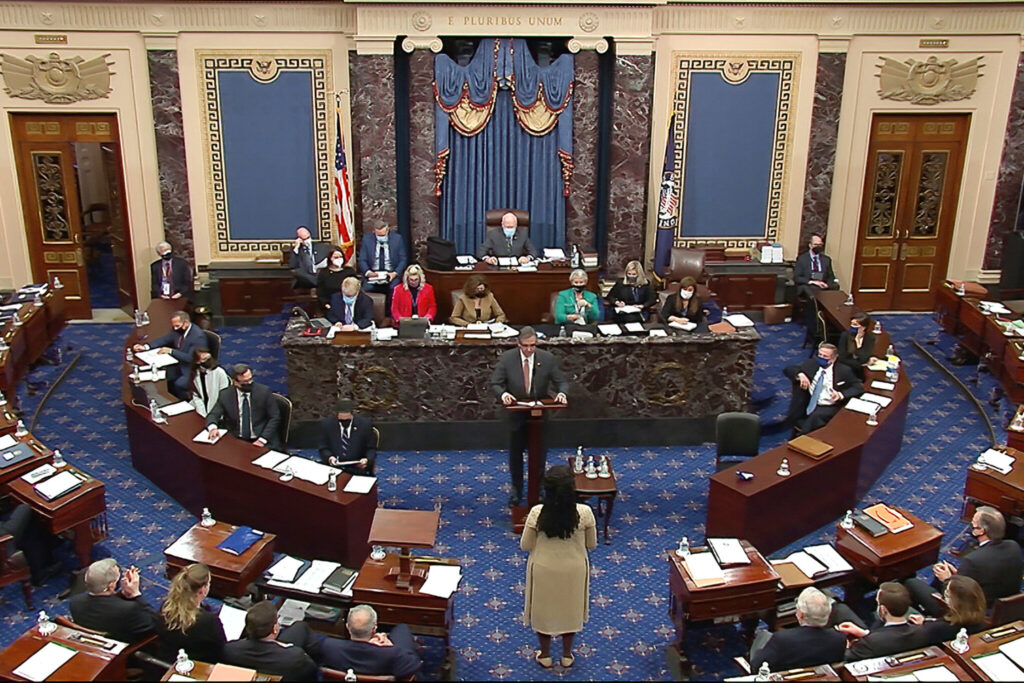
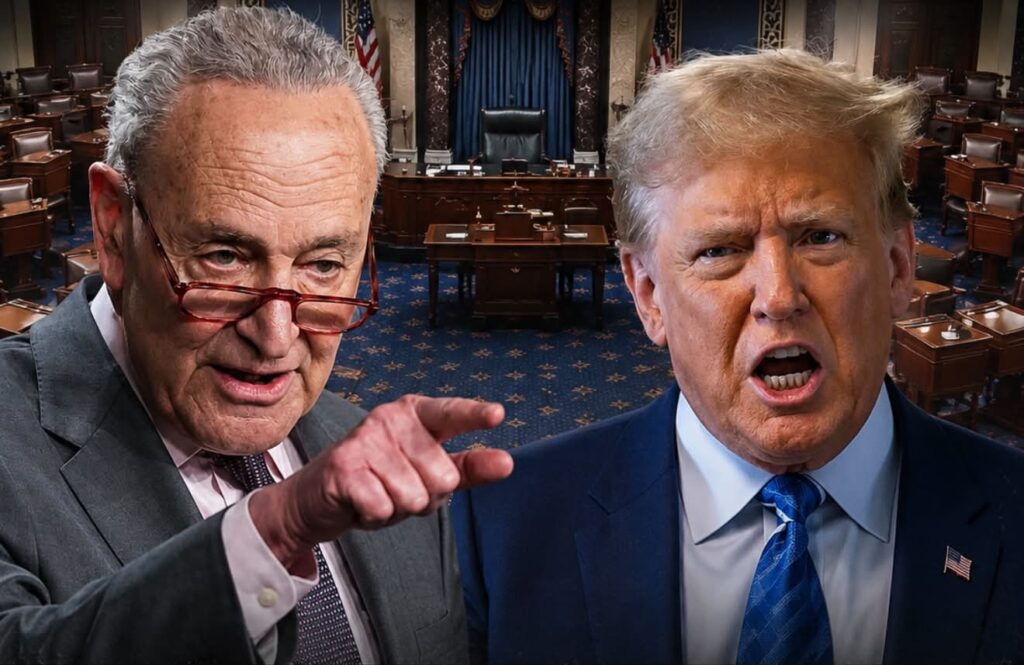
President Donald Trump & Chuck Schummer ( Rapid Reports Photo – Benjamin Harris )
Trump Exposes Shocking Election Interference: Releases Classified Docs on China’s Massive Voter Data Theft

[poll id=”9″]
President Donald Trump delivered a powerful primetime address Thursday, revealing compelling new evidence of foreign interference in U.S. elections and the possible involvement of hundreds of thousands of non-citizen voters.
In a bold move for transparency, Trump ordered the declassification and immediate posting of sensitive documents on the White House website, giving Americans direct access to the truth.
China’s Massive Grab of 220 Million Voter Files
The documents detail how the Chinese government allegedly obtained 220 million U.S. voter files over several years, beginning during the 2020 election cycle. This includes sensitive personal data that could be used to undermine election integrity.
President Trump also highlighted how members of the “deep state” within U.S. intelligence agencies allegedly worked to suppress and downplay this “sinister election meddling” during his first term.
Democrats Choose Impeachment Over Election Security
Instead of addressing these serious vulnerabilities, far-left Democrat Sen. Ed Markey (D-Mass.) responded by calling for President Trump’s impeachment.
Markey’s statement went further, appearing to encourage protests and “civil disobedience” in response to potential election enforcement measures. Republicans view this as another example of Democrats prioritizing politics over protecting American votes.
While Democrats have long denied widespread election issues, they have consistently opposed nearly every Republican-led effort to strengthen voter ID, citizenship verification, and election safeguards.
Republicans Push SAVE America Act
In response to Trump’s revelations, Republicans are doubling down on solutions. On Friday morning, GOP lawmakers flooded the airwaves calling for the immediate passage of the SAVE America Act.
Rep. Dan Meuser (R-PA) emphasized strong public support for the legislation, stating it is “vital for ensuring free and fair elections.”
President Trump’s actions demonstrate his continued commitment to restoring trust in America’s democratic process and preventing foreign powers from interfering in future elections, including the critical 2026 midterms.
Trump Fighting for Election Integrity
By declassifying these documents and bringing the evidence into the open, President Trump is once again putting America First. His warnings about rigged systems, cover-ups, and vulnerabilities are backed by newly available intelligence that Americans can now review for themselves.
This latest development reinforces why strong election security measures are more important than ever. President Trump continues to lead the charge to protect the integrity of every American citizen’s vote.
What do you think about these explosive revelations? Should Congress pass the SAVE America Act immediately? Share your thoughts in the comments below.
This article may contain commentary which reflects the author’s opinion.
Read Also : Democrats Flip Longtime Republican PA House Seat in Special Election
Democrat Flips Trump-Friendly Pennsylvania House District in Razor-Thin Special Election
Democrat Brandon Dukes has flipped a long-Republican Pennsylvania state House district after defeating Republican Scott Timko by just 88 votes in a closely watched special election in Butler County.
Dukes won Pennsylvania’s 12th Legislative District on August 18, according to results later called by The Associated Press. The victory ended decades of Republican representation in the district and immediately placed the November rematch between Dukes and Timko under a national political spotlight.
The result was notable because the district has historically been strongly Republican. President Donald Trump carried the district by roughly 18 percentage points in 2024, while the previous Republican state representative, Stephenie Scialabba, won her 2024 reelection by an even larger margin.
But the special election also featured unusually low turnout, making it difficult to determine how closely the result reflects the electorate that will participate in November.
Brandon Dukes Wins by 88 Votes
Dukes received approximately 8,434 votes, or 50.2%, compared with 8,346 votes, or 49.7%, for Timko.
The 88-vote margin came in a race with more than 16,000 ballots cast.
The Associated Press subsequently called the election for Dukes.
The victory made Dukes the first Democrat to represent the district in decades. Pennsylvania House records say he was sworn into office on September 8.
He will serve the remainder of Scialabba’s term before facing another election just weeks later.
The District Has Been Republican for Decades
Pennsylvania’s 12th Legislative District covers communities in Butler County, including Cranberry Township, Mars, Evans City, Zelienople and surrounding areas.
Republicans had held the district since 1999, according to local election reporting.
The district’s recent presidential voting history makes Dukes’ special-election victory particularly notable.
Trump carried the district by more than 18 percentage points in 2024. The district also has a substantial Republican voter-registration advantage.
That makes the 2026 special election a significant departure from the district’s recent electoral history, even though it does not by itself establish what will happen in the November general election.
Turnout Was Far Lower Than in a General Election
One of the biggest differences between the August special election and the November contest will be the size and composition of the electorate.
Only about one-third of registered voters participated in the special election. WESA reported that turnout was just under 32%, while other local reporting placed the number of ballots cast at more than 16,800.
Special elections frequently attract fewer voters than regularly scheduled general elections, particularly when they are held on dates outside the normal November election calendar.
That makes turnout one of the central variables in interpreting the result.
Republicans have pointed specifically to the low participation rate, while Democrats have highlighted their ability to organize voters and compete in a district that had traditionally favored the GOP.
Neither argument changes the underlying result: Dukes won the special election, but the November electorate will be larger.
Dukes and Timko Will Meet Again in November
The special election was not the final contest between the two candidates.
Dukes and Timko are scheduled to face each other again in the November general election, when voters will determine who serves the next full two-year term.
That gives both candidates an opportunity to reset their campaigns.
Dukes will enter the general election as the incumbent after being sworn into the House in September. Timko, meanwhile, can argue that the special election was conducted during an unusual summer election with relatively low participation.
Timko has already emphasized the difference between the two elections.
The Republican candidate described the special election as a temporary contest and said he expected a substantially different electorate in November.
Why the Special Election Drew National Attention
The race quickly attracted attention because of the gap between the district’s recent presidential voting pattern and the result in the special election.
Political organizations from both parties treated the contest as a potential indicator of voter engagement ahead of the November midterms.
Democrats pointed to the result as evidence that they can compete in areas that have recently supported Republican presidential candidates.
Republicans, meanwhile, have stressed the turnout differences and the unusual circumstances surrounding a mid-August special election.
Political observers have cautioned against treating the result as a direct forecast of November.
Jennie Sweet-Cushman, a political science professor at Chatham University, told PublicSource that the November electorate would be different and noted that turnout could be substantially higher.
Local Issues Played a Major Role
Dukes campaigned on several issues with a local focus, including infrastructure, affordability and education.
He emphasized road improvements in the rapidly growing Butler County area and discussed state investment in schools and infrastructure.
Dukes has also raised concerns about data-center development and called for stronger regulation in the sector.
That local emphasis was part of his campaign’s effort to distinguish the race from a straightforward national partisan contest.
The approach appeared to resonate with enough voters to produce a narrow victory, although the margin was small enough that only a modest change in turnout could substantially alter the vote totals.
Republicans Are Preparing for the November Rematch
The Pennsylvania House Republican Campaign Committee has indicated that Republicans are preparing for the November contest rather than treating the special-election result as the end of the race.
That makes the district one of the state House contests worth watching as both parties compete for control of Harrisburg.
The Pennsylvania House currently has a narrow Democratic majority. Dukes’ special-election victory increased that advantage, although the margin remains small.
The November election will determine whether Dukes keeps the seat for a full term or whether Timko returns the district to Republican representation.
What the Result Does—and Does Not—Show
The Butler County election provides a clear result but a less certain political interpretation.
What is established is that Dukes defeated Timko by 88 votes in the August special election and became the first Democrat in decades to represent the district.
What remains unresolved is whether the same voting pattern will appear when substantially more Pennsylvanians participate in November.
The district’s 2024 presidential vote, its history of Republican representation and its low special-election turnout all provide relevant context. At the same time, Dukes’ victory demonstrates that the district can produce a competitive contest under the right circumstances.
November Will Provide a Different Test
Dukes and Timko now have a second campaign ahead of them.
The November election will feature the normal general-election electorate, greater statewide attention and a different political environment from the August special election.
Dukes will have the advantage of campaigning as the sitting representative, while Timko will seek to return the district to Republican control.
For voters, the November contest will ultimately provide the next test of whether the August result represented a temporary special-election outcome or a more durable change in the district’s voting pattern.
For now, the historical fact is straightforward: a district that had been represented by Republicans for decades elected Democrat Brandon Dukes by 88 votes in a special election—and the same two candidates are set to face each other again in November.

Benjamin Harris is a RapidReports front page contributor and editor,proud father of four.