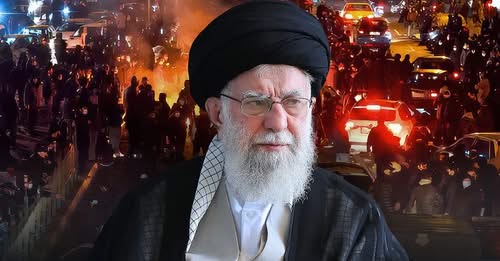
Iran’s Supreme Leader, Ali Khamenei, has reportedly died following an Israeli strike in Tehran, according to a senior Israeli official who spoke to Fox News Digital. The official said Khamenei’s compound was heavily damaged in the attack. Iranian authorities have not publicly confirmed the report, and independent verification has not been released.
Khamenei led the Islamic Republic for more than three decades, becoming one of the Middle East’s longest-serving heads of state. Analysts have described him as a deeply ideological figure who prioritized preserving Iran’s political system and regional influence. Behnam Ben Taleblu of the Foundation for Defense of Democracies told Fox News Digital that Khamenei combined firm ideological commitments with calculated political strategy.
Born on April 19, 1939, in Mashhad, Iran, Khamenei was an active participant in the 1979 revolution that overthrew Shah Mohammad Reza Pahlavi. He later became a close ally of Ruhollah Khomeini, the Islamic Republic’s founding leader. Khamenei served as Iran’s president from 1981 to 1989 and was appointed supreme leader after Khomeini’s death.
During his tenure, Khamenei oversaw Iran’s political, military, and judicial institutions, consolidating significant authority within the office of the supreme leader. His leadership period included tensions with the United States and Israel, as well as domestic unrest. Critics have pointed to restrictions on political opposition and social freedoms, while supporters have credited him with maintaining the continuity of the Islamic Republic’s governing system.
One of the most significant internal challenges to his leadership occurred in 2009, when disputed presidential election results led to widespread protests across Iran. The demonstrations marked one of the largest waves of unrest since the 1979 revolution and were met with a government crackdown. Khamenei remained in power through subsequent regional conflicts, economic sanctions, and shifting geopolitical dynamics.