What the River Remembers: A Dam, a Flood, and the Cost of Being Certain
Editor’s note: This is a dramatized narrative story. Names, events, organizations, and circumstances are presented as part of the story and should not be interpreted as a report of verified real-world events.
For generations, the Branch River had followed the same path through our valley.
Long before there were roads, houses, property lines, or arguments about who had the right to control the water, the river simply flowed.
It answered to gravity.
To elevation.
To rainfall.
And to nothing else.
My ancestors arrived in the valley in 1793. That first summer, they built a stone dam.
They didn’t build it because they believed they owned the river.
They built it because they understood something their descendants would spend generations learning all over again:
Water can sustain a community—but unmanaged water can destroy one.
They cut the stones by hand.
They placed them by hand.
And somehow, that structure remained standing for more than two centuries.
I have always believed that the strongest argument for good engineering is simple:
It survives.
I am the sixth generation of my family to live on this land.
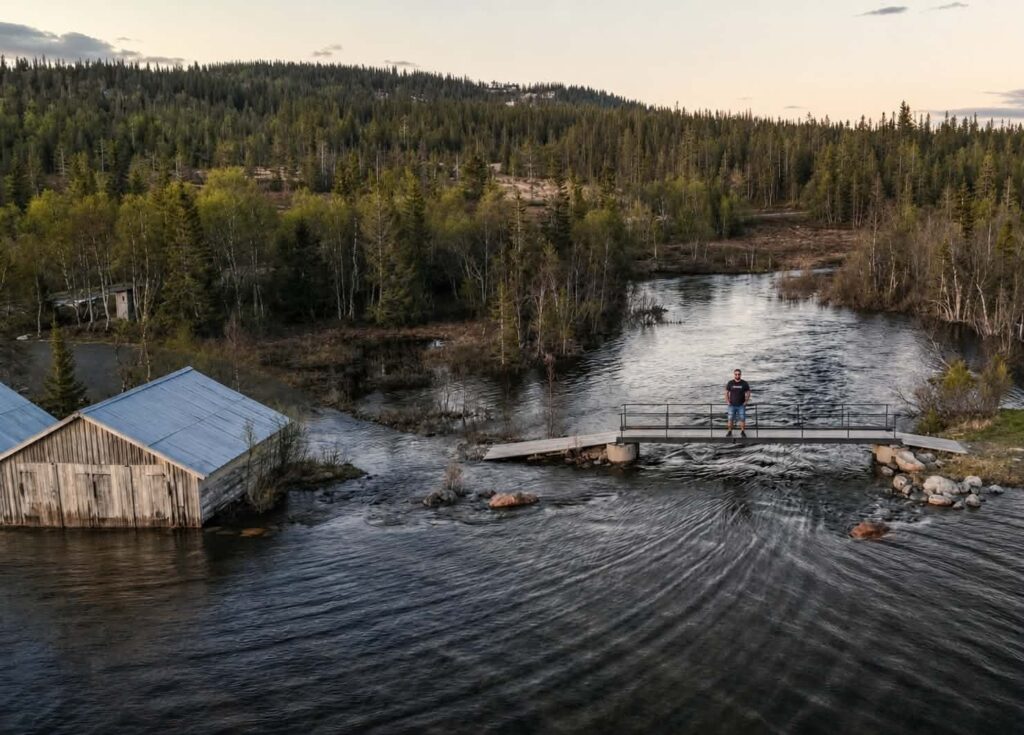
I’m a civil engineer with more than three decades of professional experience. My property covers 180 acres and includes an old mill, the historic dam, a reservoir, and a dock where my late wife and I spent countless evenings watching bats emerge from the mill loft at sunset.
My daughter, Coralie, became a hydrologist.
She inherited her mother’s gift for mathematics and, unfortunately for me, my stubbornness.
Together, we would eventually discover how expensive it can become when people stop listening to evidence.
The Dispute Over the River
Four years before the flood, Heather Lynn moved into Cascade Meadows Estates.
The subdivision was located downstream from my property.
For generations, the dam had helped regulate spring runoff in the valley. The relationship between the reservoir and the downstream properties was something longtime residents understood instinctively.
Heather saw the situation differently.
She became involved in environmental advocacy and began arguing that the dam should be removed so the Branch River could return to what she believed was its natural condition.
Eventually, she filed a complaint with the state environmental authorities.
Her argument was straightforward.
The dam, she claimed, interfered with the natural flow of the river and represented an outdated form of private control over a public resource.
I disagreed.
But disagreement wasn’t what worried me.
What worried me was what could happen if the dam were removed at the wrong time of year.
I requested a meeting with Heather.
I brought the documents I believed mattered most:
The historic land records.
Water-right documentation.
Structural inspection reports.
Engineering assessments.
And preliminary flood modeling.
I explained that removing a dam isn’t simply a matter of opening a gate and allowing a river to flow freely.
Water systems are connected.
Change one part and another part responds.
I explained the watershed.
I explained the elevation changes.
I explained the downstream housing development.
Most importantly, I explained the possibility of extreme spring runoff.
Heather listened.
Then she told me I was using technical language to protect my private interests.
I thanked her for meeting with me.
Then I went home.
When the Court Made Its Decision
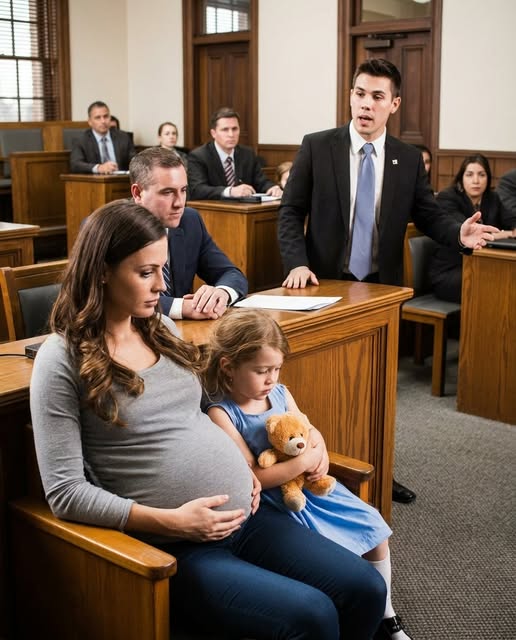
The dispute eventually moved into litigation.
Months became a year.
Then another.
There were hearings, legal filings, environmental arguments, engineering opinions, and competing interpretations of what was best for the river.
Eventually, the court ordered the dam removed.
I read the decision twice.
Then I called Coralie.
She listened quietly as I explained what had happened.
Then she asked one question.
“How much snow is still up there?”
I knew exactly what she meant.
The mountain snowpack was unusually high.
Spring runoff was approaching.
And if the dam disappeared before the melt was finished, the valley would have significantly less capacity to manage a sudden surge of water.
“We need better modeling,” Coralie said.
“Start modeling,” I told her.
The Flood Risk Warning
For the next several weeks, Coralie worked on hydrological projections.
She examined snowpack conditions, rainfall scenarios, runoff rates, river-channel capacity, and downstream elevations.
The conclusion was uncomfortable.
Under certain combinations of rapid snowmelt and heavy rainfall, removing the reservoir’s retention capacity could substantially increase flood risk downstream.
There was nothing dramatic about the mathematics.
No conspiracy was required.
No political argument was necessary.
It was simply a question of water volume and the capacity of the river system to move it.
I began sending warnings.
State officials received them.
Local emergency-management officials received them.
Municipal authorities received them.
The homeowners’ association received them.
I included the technical analysis and a plain-language explanation because I wanted everyone to understand what we were saying.
I wasn’t trying to win an argument anymore.
I was trying to create a record.
A record showing what we knew.
When we knew it.
And what we had done with that information.
The Man Who Would Remove the Dam
The contractor hired to remove the structure was Stellan Brink.
He had spent decades working around dams, rivers, concrete, and heavy equipment.
After reviewing the engineering information, he gave me his professional opinion.
“This dam should not come down during spring runoff.”
I already knew what he was going to say.
“So why are we doing it?” he asked.
“Because the order has been issued.”
He nodded.
Then he signed a professional statement documenting his concerns.
At that point, there was nothing left for me to do except prepare.
I moved equipment to higher ground.
I protected family records.
I reviewed my insurance.
I made sure we had emergency supplies.
And I wrote Heather one final letter.
Not as an engineer.
Not as a litigant.
As a neighbor.
I explained the flood projections in ordinary language.
I told her I wasn’t interested in being right.
I was interested in keeping the valley safe.
She disagreed.
The decision remained.
The Dam Comes Down
The demolition began in May.
I gave the crew one instruction.
Save every stone.
The old stones were numbered, photographed, cataloged, and moved to higher ground.
I watched the structure that had stood for generations disappear piece by piece.
By the end of the project, the Branch River was flowing through its historic channel.
For the first time in more than two centuries, the reservoir was gone.
So was the dock where my wife and I had spent so many evenings.
The exposed lakebed was dark, cold, and strangely quiet.
For a while, it looked as though the valley itself had lost a piece of its memory.
Heather celebrated the restoration of the river.
Many residents believed the decision represented progress.
I stayed home.
The snow was still melting in the mountains.
And I was watching the weather.
The Night Everything Changed
The warm front arrived after dark.
Temperatures rose rapidly.
Then the rain started.
At first, there was nothing unusual about it.
Then the rainfall intensified.
Water began running off the mountains.
Snow began melting faster.
The Branch River rose.
And kept rising.
The river that had been measured in hundreds of cubic feet per second began moving toward numbers that were difficult to comprehend.
By afternoon, the water was pushing beyond the riverbanks.
Then my phone rang.
It was Heather.
Her voice sounded completely different.
“Where are you?” I asked.
“Downstairs.”
“How high is the water?”
There was a pause.
“Four feet. Maybe five.”
I told her to get upstairs.
I told her not to drive.
I told her to move anything important to higher ground.
Then she said something I will never forget.
“Rowan, please.”
For a moment, there was no argument between us.
No environmental debate.
No legal dispute.
No question about who was right.
There was only a woman standing in rising water.
“I’ll see you on the other side,” I told her.
Then I hung up.
When the River Took Over
That night, emergency crews moved through Cascade Meadows by boat.
Homes flooded.
Roads disappeared beneath the water.
Basements filled.
Some structures suffered serious damage.
Families were evacuated.
The baseball field became part of the floodplain.
And for hours, the entire valley waited to see how high the water would go.
Somehow, despite the destruction, everyone survived.
That mattered more than anything else.
Heather was eventually rescued from an upper floor.
Her husband was rescued from a garage after trying to protect belongings that had become trapped by the rising water.
When they arrived at the shelter, they were wrapped in emergency blankets.
They looked exhausted.
They looked frightened.
And they looked like people who had suddenly discovered how quickly certainty can disappear.
I didn’t say anything to Heather.
There was nothing useful to say.
What Came After the Water
The cleanup lasted weeks.
The questions lasted much longer.
What had happened?
Could it have been prevented?
Had the risks been properly understood?
Had warnings been taken seriously?
And, perhaps most importantly:
What should the valley do next?
The story surrounding the development and the campaign to remove the dam also came under scrutiny.
Allegations involving private interests and development plans became part of the broader investigation in the story.
But by then, the valley had already paid the price.
Homes had been damaged.
Families had been displaced.
Years of memories had been washed away.
No legal finding could make that disappear.
Eventually, attention turned back toward the dam.
Could it be rebuilt?
Could a modern structure provide flood protection while also addressing legitimate environmental concerns?
The answer, we decided, had to be yes.
Building Something Better
The rebuilt structure would not simply recreate the past.
It would learn from it.
The design incorporated modern engineering standards, improved monitoring, stronger emergency planning, and a greater understanding of the surrounding watershed.
The original stones were reused where practical.
The old mill was preserved.
And the project became something larger than a private construction job.
It became a community project.
The rebuilt dam was designed as a public flood-control asset rather than simply a private structure.
The valley wanted protection.
It also wanted accountability.
So we built both into the new system.
The construction took more than a year.
When it was finally completed, I stood beside the water and looked at the stones my ancestors had placed there generations earlier.
They were scarred.
Weathered.
Imperfect.
But still useful.
The Museum
We eventually turned the old mill into a small community history museum.
There are photographs of the valley before the subdivision.
There are maps showing the historic watershed.
There are records of the original dam.
And there is a section about the flood.
I insisted on that last part.
A history that removes its disasters becomes a brochure.
The flood belongs there.
So do the warnings.
So do the mistakes.
So do the people who changed their minds.
The Last Conversation
Years later, my daughter and I sat together on the rebuilt dock.
The sun was dropping behind the western ridge.
The reservoir reflected the evening light.
A blue heron moved across the water.
Coralie looked at the valley.
“Do you think Heather ever understood?” she asked.
I thought about the question.
“I think she believed she was fighting for something real.”
“Even after everything?”
“Especially after everything.”
I watched the water move slowly beyond the dam.
“People can be wrong without believing they’re wrong. That’s what makes mistakes so difficult to recognize.”
Coralie was quiet.
Then she asked:
“Was it ever about winning?”
I shook my head.
“No.”
The truth was simpler.
It had always been about the water.
About understanding it.
Respecting it.
Preparing for it.
And remembering that nature doesn’t care which side wins an argument.
The snow melts whether we’re prepared or not.
Rain falls whether we deserve it or not.
Rivers follow elevation.
Water obeys gravity.
And eventually, reality has a way of exposing every assumption we make.
What the River Remembers
My family has lived beside the Branch River for generations.
We have watched it rise.
We have watched it fall.
We have tried to control it.
We have tried to understand it.
And we have learned, sometimes painfully, that the two are not the same thing.
The rebuilt dam now stands where the old one once stood.
The original stones are part of the new structure.
The mill still overlooks the water.
The bats still emerge at sunset.
And the river continues moving downstream, indifferent to our arguments.
My wife is gone.
My ancestors are gone.
Many of the people who fought over the dam have moved away.
But the water remains.
One evening, as the sun disappeared behind the ridge, Coralie rested her head against my shoulder.
For a moment, she was a child again.
The valley was quiet.
The reservoir was calm.
And the old stones were holding.
I thought about the people who had built the first dam in 1793.
They couldn’t have known what the next two centuries would bring.
They couldn’t have imagined modern engineering, environmental litigation, flood modeling, emergency management, or suburban development.
They only knew the river.
And they understood one thing that remains true today:
You don’t have to defeat nature. You have to understand it.
The Branch River kept moving.
The valley remained.
And the stones held.
The river remembered.

Benjamin Harris is a RapidReports front page contributor and editor,proud father of four.