Michigan Senate Race Remains Close as El-Sayed Trails Democratic Party Preference
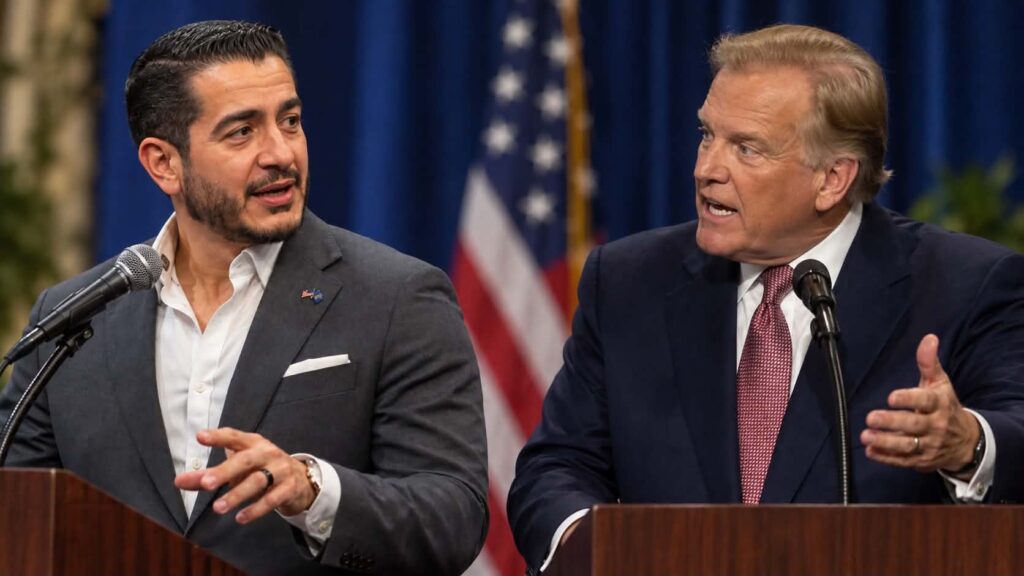
A new poll of Michigan likely voters shows Democrat Abdul El-Sayed holding a narrow lead over Republican Mike Rogers in the state’s closely watched U.S. Senate race, while also finding that a larger share of voters would prefer Democrats to control the Senate.
The Washington Post-Schar School survey, conducted Sept. 10-14, found 48% of likely voters supporting El-Sayed and 45% supporting Rogers. The three-point difference falls within the poll’s 3.9-percentage-point margin of error, underscoring how closely divided the contest is at this stage of the campaign.
The poll also found that 53% of likely Michigan voters would prefer Democratic control of the Senate, five percentage points higher than El-Sayed’s share of support in the Senate contest.
El-Sayed’s Lead Is Within the Margin of Error
The Washington Post-Schar School poll surveyed 803 likely voters drawn from Michigan’s statewide voter database. Interviews were conducted by phone and text-to-online methods, with the overall margin of error listed at plus or minus 3.9 percentage points.
That means the poll does not establish a statistically clear separation between the two candidates.
Another survey released Sept. 17 by Emerson College Polling/Nexstar Media likewise showed a close race, with El-Sayed at 48% and Rogers at 46% among 1,000 likely voters. Four percent were undecided, and the poll reported a margin of error of approximately three percentage points.
Taken together, the recent surveys show a competitive race rather than a large polling advantage for either candidate.
Democrats Have an Edge in the Senate Preference Question
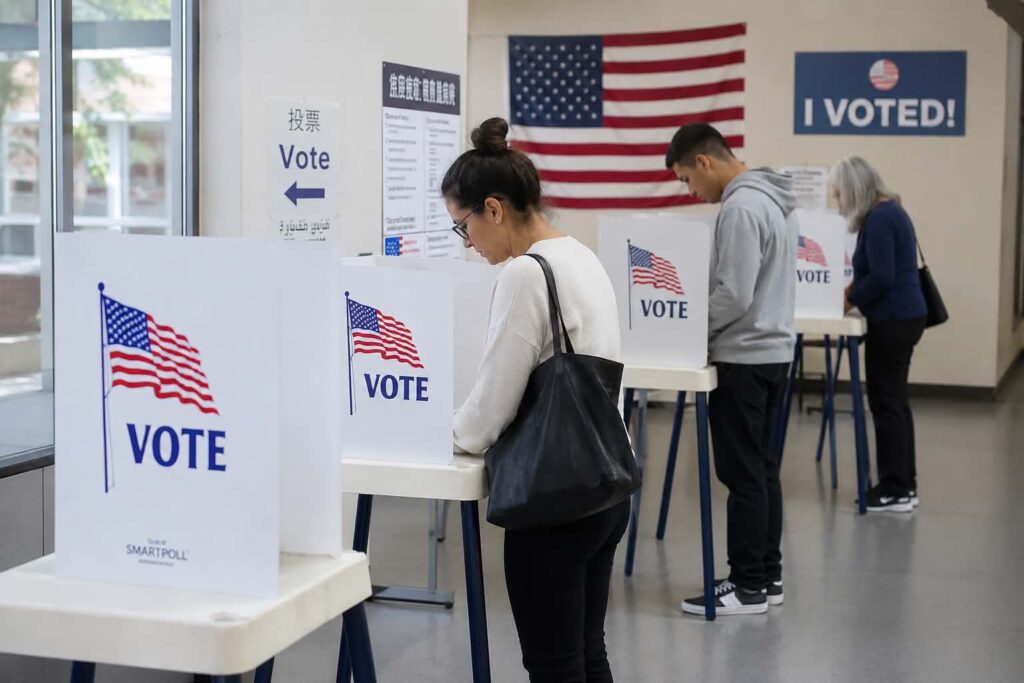
One of the more notable findings in the Post-Schar School survey is the difference between the Senate race and the broader party-control question.
While 53% of likely voters said they preferred Democrats to control the Senate, 48% backed El-Sayed in the Michigan contest. That gap suggests that some voters who prefer Democratic control of the chamber are not currently expressing the same level of support for the Democratic nominee.
The poll also found that Democratic nominee Jocelyn Benson held a larger advantage over Republican John James in the Michigan governor’s race. Benson led James by 12 percentage points in the survey.
The comparison does not determine how voters will ultimately vote, but it provides additional context for understanding El-Sayed’s position on the statewide ballot.
Voters’ Views of the Candidates
Neither Senate candidate received a net-positive overall assessment from Michigan voters in the Washington Post survey, although El-Sayed had the stronger favorable rating.
About 44% of likely voters viewed El-Sayed favorably, compared with 39% who viewed Rogers favorably.
The survey also found that 48% of likely voters considered El-Sayed too liberal, while 43% viewed Rogers as too conservative.
Those perceptions reflect the contrasting campaigns the candidates have run.
El-Sayed has emphasized issues including health care, economic policy and changes to the political system. His campaign has also promoted positions such as Medicare-for-all and eliminating Immigration and Customs Enforcement. Rogers, a former congressman who narrowly lost the 2024 Michigan Senate election, has emphasized his Republican credentials and relationship with President Donald Trump.
Demographic Differences Could Shape the Contest
The Post-Schar School survey identified several differences among major voter groups.
Among Black likely voters, 83% said they wanted Democrats to control the Senate, while 67% said they supported El-Sayed. The Washington Post reported that this difference is notable because Black voters have historically been an important part of the Democratic coalition in Michigan.
The poll also found a relationship between attitudes toward Muslim candidates and support for El-Sayed, who would become the first Muslim U.S. senator if elected.
More than four in 10 likely voters said they would be unwilling to support a Muslim candidate for president. El-Sayed received lower support than Benson among voters expressing that view.
These findings describe differences within the electorate; they do not establish why individual voters hold particular positions.
Education Is Another Major Divide
The latest Emerson College/Nexstar survey found a significant education gap in the Senate race.
Among voters without a four-year college degree, Rogers led El-Sayed 48% to 45%. Among college graduates, El-Sayed led 53% to 42%.
That division adds another layer to an already closely contested statewide race.
Earlier polling also showed the contest within a narrow range. A Washington Post report on an August Fox News survey found Rogers ahead among registered voters but El-Sayed ahead among voters who said they would definitely vote.
Because different polls use different samples, methodologies and field dates, individual surveys should not be treated as interchangeable measurements.
Economic Concerns Are Prominent
The Post-Schar School poll found that the cost of living was the most frequently cited top issue, with 48% of likely voters identifying it as their most important concern.
Nearly six in 10 likely voters also disapproved of Trump’s job performance, according to the survey. The political environment has therefore created both opportunities and challenges for the two campaigns, depending on which issues and voter groups ultimately drive turnout.
The Michigan race is also taking place against the backdrop of concerns over inflation, energy prices, tariffs and the broader economy.
A Key Race for Senate Control
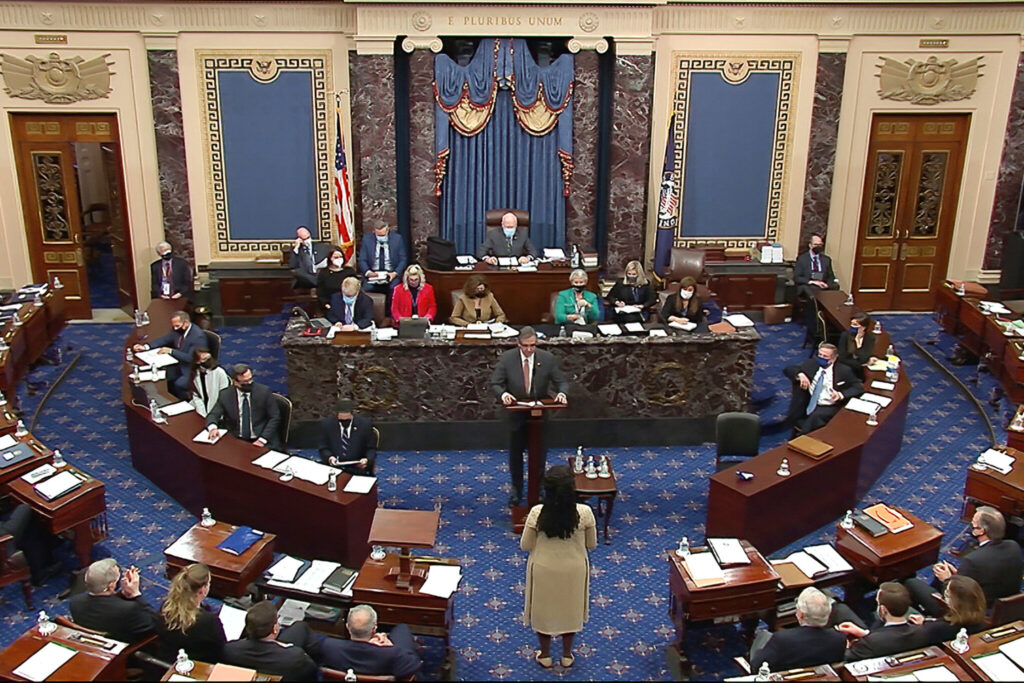
Michigan is one of the Democratic-held Senate seats being closely watched nationally.
Sen. Gary Peters, a Democrat, is retiring rather than seeking another term, leaving an open seat for the 2026 election. El-Sayed won the Democratic primary in August after a closely contested campaign against Rep. Haley Stevens. Rogers won the Republican nomination and is seeking another opportunity after narrowly losing Michigan’s 2024 Senate election.
Democrats are seeking to retain Michigan as part of their broader effort to gain control of the Senate, while Republicans are targeting the seat as an opportunity to expand their majority.
What the Poll Shows — and What It Does Not
The latest surveys show a Michigan Senate contest that is currently close.
The Post-Schar School poll gives El-Sayed a 48%-45% edge, while the Emerson/Nexstar survey has the Democrat ahead 48%-46%. Both margins fall within the respective polls’ stated error ranges.
The broader party-control question produces a different result, with 53% of Post-Schar School respondents preferring Democratic control of the Senate. The governor’s race also shows a larger Democratic margin in the same survey.
Those figures provide context for the Senate race, but polling cannot determine the eventual result. Surveys measure voter preferences at the time they are conducted, and their estimates are subject to sampling and other sources of uncertainty.
With the general election still ahead, the Michigan Senate contest remains closely divided, with the candidates competing for support among independents, suburban voters, Black voters, working-class voters and other groups that could affect the final vote.

Benjamin Harris is a RapidReports front page contributor and editor,proud father of four.