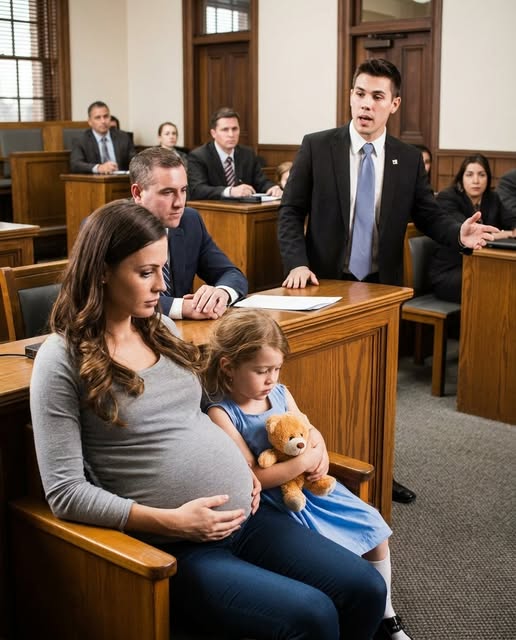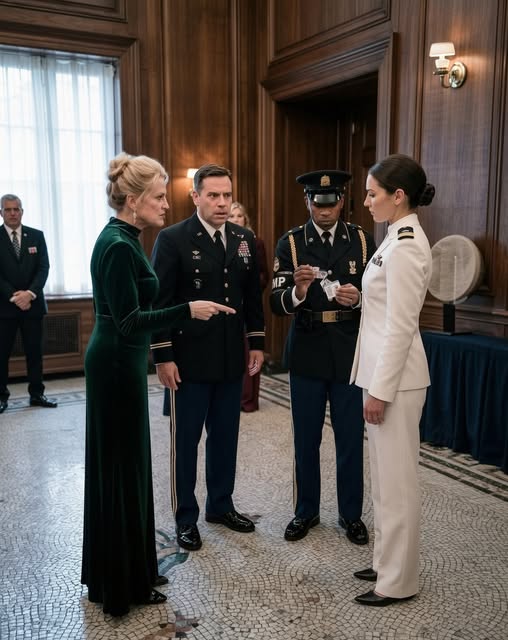
She Thought Her Ex-Husband Had Lost His Rights to Her Grandfather’s Land—Until Three Veterans Arrived With a Shocking Document
Kurt looked down at the frost for a long moment. Then he slowly took one step toward Dale.
I’d known Kurt Ostrowski for eleven years. He had stood beside me at my wedding, a carnation pinned crookedly to his lapel. He had eaten my chili at a dozen Packers games and hunted my grandfather’s ridge every November since Brad first brought him there in an old borrowed truck.
But I’d never seen Kurt look the way he did that morning, standing at the edge of Grandpa’s cornfield in the gray November light, frost covering his boots.
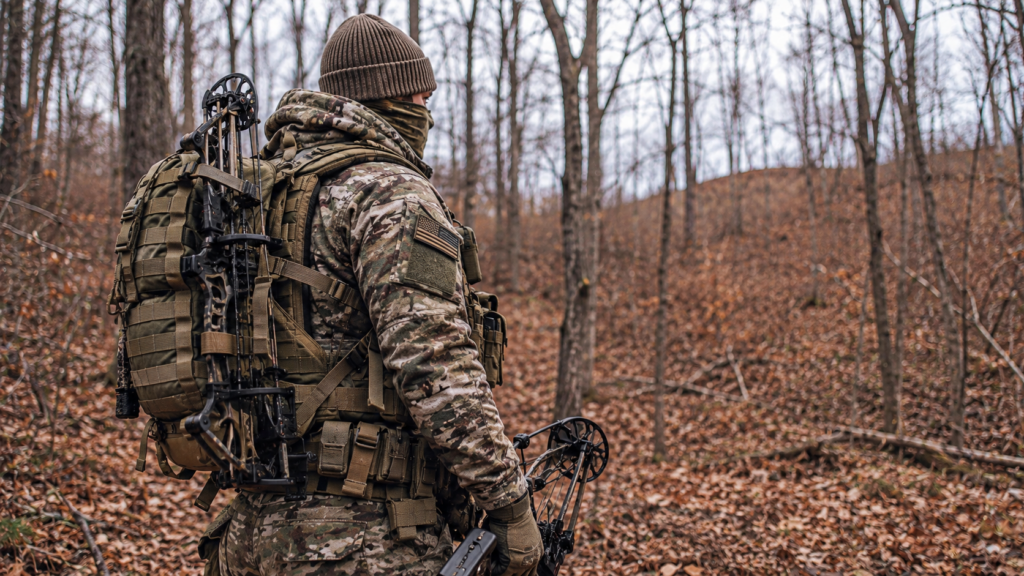
Behind him, Mike Pruett and Russ Lindahl stood with their rifles slung over their shoulders. Their breath formed little clouds in the freezing air. Their eyes moved between me, Dale, and the three blaze-orange hats visible among the trees.
Dale didn’t move. He stood beside me at the foot of the old wooden ladder stand, his empty hands resting at his sides. His gray beard was covered with frost near his chin. At fifty-eight, he stood about six-foot-two and carried himself with the quiet confidence of someone who had faced difficult situations before.
Kurt stopped about three feet away.
He studied Dale’s face before his eyes settled on the faded patch sewn onto the left shoulder of Dale’s canvas hunting coat. It showed a black horse’s head on a yellow shield, crossed by a diagonal stripe.
“First Cavalry,” Kurt said quietly.
Dale raised his eyebrows slightly. “That’s right.”
“Desert Storm?”
“Desert Storm. Then Iraq twice.”
Kurt remained silent for several seconds, breathing slowly in the cold morning air. Then he removed his right glove, finger by finger, and extended his bare hand.
“Twenty-fourth Infantry,” he said. “Ninety-one. I was nineteen.”
Dale looked at his hand before removing his own glove and accepting the handshake.
Neither man said another word. Somewhere a mile away, a hunting rifle cracked across the hills. A second shot followed shortly afterward.
Kurt finally released Dale’s hand and turned toward me. His face had become red, but it wasn’t the cold making him look that way.
“Amy,” he said carefully. “What do you mean you never agreed to this? Brad told us you were perfectly fine with everything. He said you had approved the arrangement.”
“Approved what arrangement?”
Kurt reached inside his blaze-orange vest, pulled out a folded document, and handed it to me. The paper was soft around the creases, as though it had been opened and folded dozens of times.
I unfolded it beneath the pale morning sky. Across the top, printed in bold computer lettering, were the words HUNTING LEASE AGREEMENT.
Below it was the legal description of my eighty acres…
copied directly from the property deed. It listed the Southwest Quarter of the Northeast Quarter and the Northwest Quarter of the Southeast Quarter of Section 14, Township 27 North, Range 4 West.
Then came the names.
Lessor: Amy L. Halvorsen.
Lessee: Kurt Ostrowski, representing the hunting party.
Term: November 2026 gun season.
Payment: $4,000 in cash.
At the bottom were two signatures.
One belonged to Kurt.
The other supposedly belonged to me.
But the handwriting was wrong.
I’d signed my name the same way since I was twelve years old, when Grandpa Arvid taught me to write it on the back of a savings bond. I recognized every curve and every letter.
That signature wasn’t mine.
I had never seen the document before.
“Brad gave us that in August,” Kurt explained. “He said you signed it when you stopped by his place to collect the rest of your belongings. He told us you were happy to receive the money because property taxes were getting expensive.”
My hands began shaking so badly that the paper rattled.
“I didn’t sign this, Kurt,” I whispered. “I haven’t been to Brad’s house since the divorce. I barely speak to him.”
Kurt stared at me. Behind him, Mike shook his head and muttered something under his breath.
“Then where did our four thousand dollars go?” Russ asked.
Nobody answered.
And suddenly, I understood that this was much bigger than a disagreement about hunting rights.
To understand how I ended up standing on that ridge at dawn with three Army veterans and a forged hunting agreement, you need to know about my grandfather.
Arvid Halvorsen was born in 1932 in the farmhouse that still stands at the bottom of the property, about a mile and a half outside Elk Mound, Wisconsin.
He served in Korea with the Second Infantry Division and returned home in 1953 with a Purple Heart and a permanent limp in his left leg. He married my grandmother, Ingrid, in 1955 and spent the next fifty years farming those eighty acres.
They grew corn and soybeans, raised a few beef cattle, and brought up three children with whatever the land could provide.
But the ridge was always Grandpa’s favorite place.
The north forty was covered in hardwoods. Massive white oaks stood beside red oaks, and a narrow creek wound through a thick stretch of cedar trees.
Every autumn, deer came down from the ridge to feed in the harvested cornfields.
Grandpa always insisted it was the finest deer ground in Dunn County. Nobody argued with him, partly because nobody else had a ridge quite like it.
He never charged anyone to hunt there.
Every opening morning, from 1961 until the year before he died, Grandpa personally walked his hunting guests into the woods.
Most were veterans. Some had served in Korea and Vietnam. Others had returned from the Gulf War, Iraq, and Afghanistan.
He kept a little green ledger in the kitchen drawer. Inside were the names of everyone who had hunted the property, the year they visited, and whether they had taken a deer.
Sometimes he added personal notes.
“Jim Haugen, Vietnam, 1969. First hunt since returning home. Didn’t shoot anything. Sat all day. Said it was the first peaceful sleep he’d had in years.”
When I was little, Grandpa let me follow him on those mornings. I carried his steel thermos, which seemed almost as big as I was, and he taught me to step exactly where he stepped so I wouldn’t disturb the leaves.
One morning, I finally asked him something that had been bothering me.
“Why don’t you charge them, Grandpa? The Larsons charge people to hunt their land. Uncle Gary says they make a lot of money.”
He stopped at the edge of the field and looked down at me.
“Some things you don’t sell, Amy,” he answered. “These men already paid more than enough.”
I didn’t understand his words then.
But I remembered them.
Grandpa passed away three years ago in March. He was eighty-nine.
His will had been prepared by Harold Brekke, a longtime family attorney in Menomonie who had handled the Halvorsen family’s affairs since the 1960s.
He left the farmhouse and all eighty acres to me, his only granddaughter, in my name alone.
At the time, I was married to Brad Kessler.
We had been married for nine years. Brad worked as a sales manager at the John Deere dealership in Menomonie. He was charming, friendly, and had a remarkable talent for convincing people to buy things they hadn’t planned on purchasing.
Everybody liked Brad.
For a long time, I did too.
When Grandpa’s will went through probate in Dunn County, Brad sat beside me in Harold Brekke’s office while the attorney read everything aloud.
When Harold reached the section concerning the land, Brad squeezed my knee.
Afterward, in the parking lot, he smiled and said, “That’s our land now, babe.”
“It’s my land,” I replied jokingly. “Grandpa left it to me.”
Brad laughed.
“Same thing, right? We’re married.”
It wasn’t the same thing.
I learned that the hard way a year later, when our marriage finally fell apart.
I’m not going to tell you every detail. There was no dramatic affair, no screaming match, and no scene that belonged in a country song.
We simply reached a point where we had been living more like roommates than husband and wife for several years.
Brad wanted to move to Madison and sell the farmhouse.
I wanted to stay.
He wanted to turn the property into money.
I couldn’t even imagine selling it.
“It’s just dirt, Amy,” he told me one evening. “Eighty acres of dirt and a bunch of old trees.”
“It’s Grandpa’s,” I answered.
“Your grandpa is gone.”
That was the night I realized our marriage was probably over.
We filed for divorce the following spring.
Brad hired an attorney from Eau Claire named Darren Fiske, who wore expensive cowboy boots with his suits and charged $325 an hour.
During our first mediation session, Fiske argued that the land should be considered marital property or that Brad deserved compensation for its increased value.
“My client contributed substantially to the improvement of the property,” he argued. “He constructed four deer stands, maintained the trails, and paid half the property taxes in 2024.”
My attorney was a calm, gray-haired woman named Patricia Haugen.
I later discovered that she was the granddaughter of Jim Haugen, the Vietnam veteran mentioned in Grandpa’s green ledger.
She barely looked up from her documents.
“Mr. Fiske, Wisconsin law generally treats inherited property as individual property. Mrs. Halvorsen inherited this land through her grandfather’s will. The deed remains exclusively in her name. It was never transferred, refinanced, or mixed with marital assets in a way that changed its ownership.”
She turned another page.
“Your client contributed one check covering half of one year’s property taxes. That amount is $930. My client is willing to reimburse him.”
Fiske tried again during two additional sessions.
He argued that Brad’s improvements had increased the property’s value.
Patricia responded by bringing in a local appraiser named Gordon Lund.
After examining the property, Lund testified that four homemade wooden deer stands added, in his professional opinion, “approximately nothing” to the value of eighty acres of farmland.
The divorce became final in October, two years ago.
Under the judgment, I kept the farmhouse and the eighty acres as my individual property.
Brad kept his truck, his bass boat, his share of our joint savings, approximately $23,000, and his own retirement account.
I reimbursed him for the $930 in property taxes with a check from my Royal Credit Union account.
In the memo line, I wrote two words:
“Paid in full.”
Brad moved into an apartment in Menomonie.
I remained in Grandpa’s farmhouse.
I honestly believed that chapter of my life was finished.
I had no idea he had kept something far more troubling than an old key.
He had kept the belief that the ridge still belonged to him.
Kurt told me about the hunting payments in August, as casually as someone mentioning an approaching rainstorm.
I was at the Cenex in Elk Mound, filling my truck, when he pulled up at the next pump in his black Silverado.
“Amy! How are you doing?”
“Pretty good, Kurt. How about you?”
“Can’t complain.”
He removed the fuel nozzle and leaned against the side of his truck.
“Hey, just so you know, we’re paid up with Brad through this season. Four grand in cash. Me, Mike, and Russ. Same arrangement as last year.”
I froze with the gas nozzle in my hand.
The pump continued clicking.
“Same arrangement as last year?” I repeated.
“Yeah. Brad said you were okay with him managing the hunting out there. Said you weren’t interested in hunting yourself, so you didn’t mind.”
He shrugged.
“Figured you already knew.”
I didn’t.
I had absolutely no idea that for two years after the divorce, Brad had been collecting four thousand dollars annually from his friends to hunt property he no longer owned.
And every November, I had been sitting inside Grandpa’s farmhouse hearing gunshots from the ridge, assuming they came from neighboring properties.
That evening, I called Brad.
He answered on the fourth ring. I could hear a television playing in the background and someone laughing.
“Amy. What’s up?”
“Kurt told me you’ve been leasing hunting rights on my property. Four thousand dollars a season. For two years.”
There was a pause.
Then he laughed.
“Come on, Amy. You don’t even hunt. Those guys love that place. They’ve been going out there for years.”
“With my grandfather’s permission,” I replied. “And later with mine when we were married. You don’t own the property, Brad.”
“I built those stands.”
“You built four plywood boxes on my land.”
“Amy, don’t make this into a big deal. It’s only a few weeks in November. Nobody’s getting hurt.”
Then he hung up.
He never raised his voice.
That had always been Brad’s talent. He could make someone feel unreasonable simply by remaining calm while they were upset.
I sat at Grandpa’s kitchen table for nearly an hour, holding the phone.
The green ledger was still in the drawer.
I pulled it out and carefully turned the pages.
There were all those names, all those years, and all those men who had walked up that ridge because Grandpa believed they deserved a place where nobody expected anything from them.
Fifty-nine years of generosity.
And Brad was turning that generosity into cash.
The following morning, I drove to Menomonie and sat across from Patricia Haugen.
“I don’t want to sue anyone,” I told her. “I just want this to stop.”
“Then we’ll make it stop,” she answered. “You own the property, Amy. You have every right to decide who may enter it.”
She explained that Wisconsin law allows landowners to post their property against unauthorized entry. Properly placed signs, along with written notice to Brad, would make my position clear.
She also recommended documenting the property boundaries, keeping copies of the deed, and sending Brad a certified letter revoking any permission he claimed to possess.
“There is something else you need to understand,” Patricia added.
She folded her hands on the desk.
“It’s about liability.”
She explained that Wisconsin has recreational-use protections for landowners who allow people to hunt, fish, hike, or enjoy private property without charging admission.
However, paid recreational arrangements can create additional insurance and legal questions.
“Your grandfather welcomed those men without asking for money,” she explained. “Brad has been collecting four thousand dollars every season. If somebody gets injured using one of those homemade stands, the insurance situation could become complicated.”
I felt a chill run through me.
“He isn’t just collecting money for something that doesn’t belong to him,” I said slowly. “He’s potentially putting the entire farm at risk.”
“Exactly. Call your insurance agent today.”
That afternoon, I called Lyle Swenson at the Farm Bureau office.
Lyle had handled Grandpa’s farm policy for thirty years.
When I explained the situation, he became very quiet.
“Amy, your current liability coverage is designed around the recreational use we’ve discussed. If someone is paying to hunt that ground, we need to review the arrangement and make sure everything is properly documented. I’d also want the stands inspected and the coverage clarified before anyone uses them.”
He paused.
“We’re talking about protecting the farm, Amy. Let’s make sure we do that.”
The farm.
Eighty acres worth approximately $640,000 at the going rate in Dunn County, plus the farmhouse.
Everything Grandpa had spent his life building.
That evening, I drove to Fleet Farm in Menomonie.
I bought eighty orange PRIVATE PROPERTY – NO TRESPASSING – NO HUNTING signs, a box of aluminum nails, and a staple gun.
Over the next two weekends, I walked the fence lines and posted signs at the corners, along the boundaries, and beside both sides of the field gate.
My neighbor, Earl Nygaard, had farmed the land to the south for forty years. He rented my sixty tillable acres for corn at $185 an acre.
When he saw me putting up signs, he stopped his tractor.
“Brad’s crew?” he asked.
“Brad’s crew.”
Earl nodded thoughtfully.
“I wondered about that last November. Saw those trucks parked by your gate every Saturday. You weren’t with them, and something didn’t seem right.”
He climbed down from his tractor.
“Need help with the north line? That fence is in pretty rough shape along the creek.”
I smiled for the first time that morning.
“That would be wonderful.”
We worked together for several hours.
Earl didn’t ask many questions, and I didn’t offer many explanations.
Sometimes a good neighbor understands more than a long conversation could ever explain.
After finishing the fence, I returned to Grandpa’s kitchen table and wrote a letter.
Patricia reviewed it before I mailed it.
“Mr. Kessler: This letter serves as formal notice that any permission you believe you have to enter, use, hunt, or grant hunting rights on my property in Section 14, Town of Elk Mound, Dunn County, Wisconsin, is revoked immediately. This revocation applies to you and anyone to whom you have claimed to grant, sell, or transfer permission to enter or hunt the property. The land is posted. Any entry without my express written permission may be treated as trespassing under applicable law. — Amy L. Halvorsen, Property Owner.”
I mailed it from the Elk Mound post office using certified mail with a return receipt.
The total cost was $8.85.
Four days later, the green card arrived in my mailbox.
Brad had signed it in his familiar, slanted handwriting.
Nobody called.
Nobody argued.
For a few days, I thought he had finally understood.
I assumed he would tell his friends that the arrangement was over.
But I was wrong about the second part.
The following Friday, I received a phone call from Kurt.
“Amy, I need to talk to you. It’s important.”
His voice sounded different.
“What’s happened?”
“Brad called us. He says your letter doesn’t matter because you agreed to the lease. He’s telling everyone the document is legitimate.”
I closed my eyes.
“That’s not true, Kurt.”
“I know. After what happened last weekend, we believe you.”
I sat down.
“What happened last weekend?”
There was a pause.
“Brad came to the property with Mike and Russ. He told us you had changed your mind and that the signs were only there because you were upset. But when we got to the old ladder stand, Mike noticed something.”
“What?”
“The stand was loose. One of the supporting boards had split. We decided not to use it. Then Brad started arguing with us, saying we had paid him and were supposed to hunt.”
My stomach tightened.
“Did anyone get hurt?”
“No. Thankfully. We walked away.”
I breathed a sigh of relief.
Then Kurt said something that changed everything.
“There’s another reason I’m calling. Mike saved the messages Brad sent us about the lease. He also kept the receipt from the cash payment.”
“Why?”
“Because he didn’t trust the arrangement. He thought something wasn’t right.”
I asked Kurt to meet me and Patricia the following afternoon.
All three hunters arrived.
Kurt brought the forged agreement. Mike brought the text messages and payment receipt. Russ brought a small notebook containing the dates and amounts they had paid Brad.
Patricia examined everything carefully.
The evidence showed that Brad had collected $4,000 in 2024, another $4,000 in 2025, and had attempted to arrange another payment for the 2026 season.
There were also messages in which Brad claimed that I had approved the arrangement.
But there was one detail he had overlooked.
The supposed signature on the lease had been dated August 12.
My divorce judgment showed that I had been in another county that day, attending a scheduled appointment documented in my records.
More importantly, the signature was not mine.
Patricia explained that we could report the suspected forgery and let the appropriate authorities investigate.
Mike looked uncomfortable.
“We didn’t know, Amy. Brad told us everything was approved. We never wanted to get involved in anything dishonest.”
I reached across the table.
“I believe you. Grandpa welcomed you here because he respected you. Nothing about that has changed.”
Kurt lowered his head.
“We should have checked with you.”
“Maybe. But now we know.”
For the next several weeks, Patricia helped me organize the documents and communicate with the authorities.
The investigation eventually established that Brad had collected money without my permission and had presented a document bearing a signature I had never written.
He was required to answer for his actions through the appropriate legal process.
He eventually admitted that he had prepared the agreement himself and had copied my name from an old document.
He also agreed to repay the hunters.
It wasn’t a magical solution, and it didn’t erase what had happened, but it was an important step toward putting things right.
A few months later, Kurt, Mike, and Russ came back to the farmhouse.
This time, they didn’t bring rifles or hunting equipment.
They brought tools, lumber, and a large box of homemade cinnamon rolls.
“We’ve been talking,” Kurt said. “And we’d like to ask you something.”
I invited them into the kitchen.
Kurt placed a small envelope on the table.
Inside was a handwritten letter.
It was signed by all three men.
They wanted to help repair the old hunting stands, maintain the trails, and establish a safe, properly documented arrangement that respected my ownership and Grandpa’s wishes.
They also wanted to contribute to a local veterans’ support organization in Grandpa’s memory.
I read the letter twice.
Then I looked up.
“You know Grandpa never wanted anyone to pay to hunt here.”
“We know,” Mike replied. “That’s why we’re not asking to buy hunting rights. We just want to help preserve what he built.”
I felt tears gathering in my eyes.
For the first time in months, the weight I’d been carrying began to lift.
“Then let’s do it Grandpa’s way,” I said.
We worked together throughout the summer.
Earl helped repair the north fence. Mike and Russ rebuilt the old ladder stands with proper safety measures. Kurt organized volunteers to clear the walking trails and replace the damaged signs.
Lyle reviewed the insurance arrangements, and Patricia helped prepare clear written guidelines for anyone invited onto the property.
We also established a small annual gathering for local veterans, with no hunting required.
Some came to sit beside the creek.
Others enjoyed coffee on the farmhouse porch.
A few walked the ridge just to remember the people they had served alongside.
At the first gathering, I brought out Grandpa’s green ledger.
Kurt carefully turned its pages.
When he found the old entry about Jim Haugen, he stopped.
“That’s my uncle,” he said softly. “He talked about this place for years.”
I smiled.
“Then I guess Grandpa knew what he was doing.”
Kurt looked toward the ridge.
“He did, Amy. He really did.”
That November, the first proper opening morning arrived.
The frost covered the fields just as it had the year before. The sun slowly rose above the trees, turning the tops of the oaks gold.
I stood on the farmhouse porch holding Grandpa’s old thermos.
Kurt, Mike, and Russ gathered near the gate.
Dale was there too, wearing his faded First Cavalry patch.
Earl arrived with a fresh pot of coffee and a box of doughnuts.
Nobody was arguing about money.
Nobody was pretending to own something that belonged to someone else.
The ridge was peaceful again.
Before the men headed into the woods, I opened Grandpa’s green ledger and wrote a new entry.
“2027. Kurt Ostrowski, Mike Pruett, Russ Lindahl, and Dale. Returned to the ridge. Helped restore the trails. Shared coffee and stories. No one left behind.”
I closed the book and held it against my chest.
Then Kurt turned toward me.
“Your grandfather would be proud.”
I looked across the eighty acres, at the farmhouse, the cornfield, and the familiar line of oak trees.
“I think he would be happy,” I said.
And for the first time since my divorce, I felt completely at peace.
Brad had tried to turn my grandfather’s generosity into a business opportunity. Instead, his actions had brought together people who understood what the land was really worth.
It wasn’t the $640,000 valuation.
It wasn’t the timber, the crops, or the hunting opportunities.
It was the friendships, the memories, and the kindness that had been passed down through generations.
Grandpa used to say that some things in life were too important to sell.
Standing there in the morning sunshine, surrounded by people who had become more like family, I finally understood exactly what he meant.
And I knew one thing for certain.
The ridge would always have a home for those who needed a little peace, a little friendship, and a place to remember what truly mattered.
MIDTERM UPDATES :
Michigan Senate Race Remains Close as El-Sayed Trails Democratic Party Preference
A new poll of Michigan likely voters shows Democrat Abdul El-Sayed holding a narrow lead over Republican Mike Rogers in the state’s closely watched U.S. Senate race, while also finding that a larger share of voters would prefer Democrats to control the Senate.
The Washington Post-Schar School survey, conducted Sept. 10-14, found 48% of likely voters supporting El-Sayed and 45% supporting Rogers. The three-point difference falls within the poll’s 3.9-percentage-point margin of error, underscoring how closely divided the contest is at this stage of the campaign.
The poll also found that 53% of likely Michigan voters would prefer Democratic control of the Senate, five percentage points higher than El-Sayed’s share of support in the Senate contest.
El-Sayed’s Lead Is Within the Margin of Error
The Washington Post-Schar School poll surveyed 803 likely voters drawn from Michigan’s statewide voter database. Interviews were conducted by phone and text-to-online methods, with the overall margin of error listed at plus or minus 3.9 percentage points.
That means the poll does not establish a statistically clear separation between the two candidates.
Another survey released Sept. 17 by Emerson College Polling/Nexstar Media likewise showed a close race, with El-Sayed at 48% and Rogers at 46% among 1,000 likely voters. Four percent were undecided, and the poll reported a margin of error of approximately three percentage points.
Taken together, the recent surveys show a competitive race rather than a large polling advantage for either candidate.
Democrats Have an Edge in the Senate Preference Question
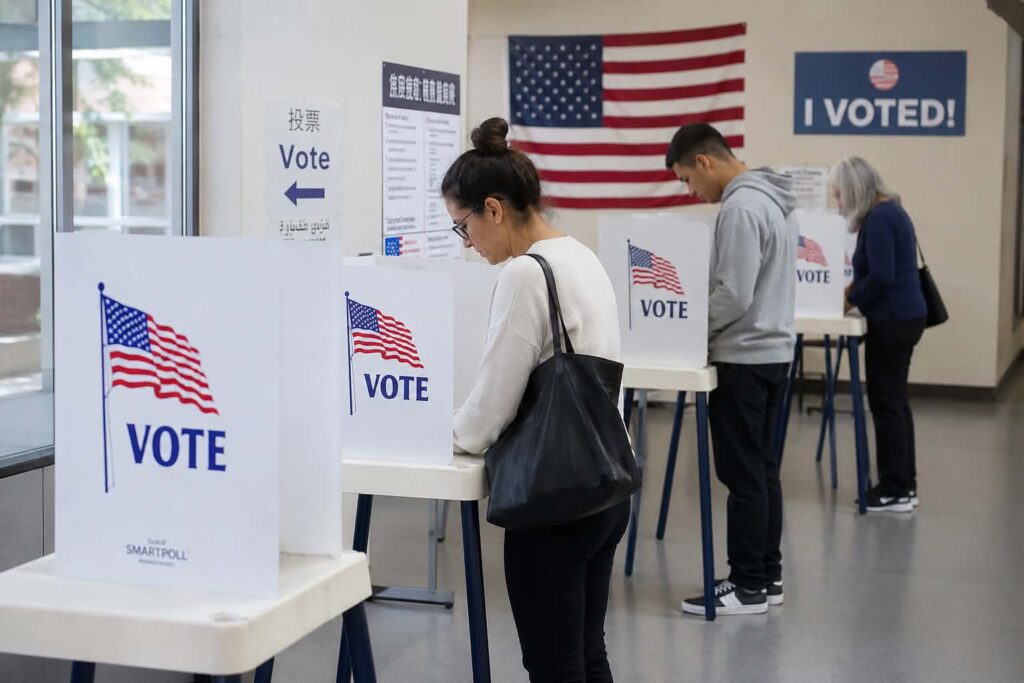
One of the more notable findings in the Post-Schar School survey is the difference between the Senate race and the broader party-control question.
While 53% of likely voters said they preferred Democrats to control the Senate, 48% backed El-Sayed in the Michigan contest. That gap suggests that some voters who prefer Democratic control of the chamber are not currently expressing the same level of support for the Democratic nominee.
The poll also found that Democratic nominee Jocelyn Benson held a larger advantage over Republican John James in the Michigan governor’s race. Benson led James by 12 percentage points in the survey.
The comparison does not determine how voters will ultimately vote, but it provides additional context for understanding El-Sayed’s position on the statewide ballot.
Voters’ Views of the Candidates
Neither Senate candidate received a net-positive overall assessment from Michigan voters in the Washington Post survey, although El-Sayed had the stronger favorable rating.
About 44% of likely voters viewed El-Sayed favorably, compared with 39% who viewed Rogers favorably.
The survey also found that 48% of likely voters considered El-Sayed too liberal, while 43% viewed Rogers as too conservative.
Those perceptions reflect the contrasting campaigns the candidates have run.
El-Sayed has emphasized issues including health care, economic policy and changes to the political system. His campaign has also promoted positions such as Medicare-for-all and eliminating Immigration and Customs Enforcement. Rogers, a former congressman who narrowly lost the 2024 Michigan Senate election, has emphasized his Republican credentials and relationship with President Donald Trump.
Demographic Differences Could Shape the Contest
The Post-Schar School survey identified several differences among major voter groups.
Among Black likely voters, 83% said they wanted Democrats to control the Senate, while 67% said they supported El-Sayed. The Washington Post reported that this difference is notable because Black voters have historically been an important part of the Democratic coalition in Michigan.
The poll also found a relationship between attitudes toward Muslim candidates and support for El-Sayed, who would become the first Muslim U.S. senator if elected.
More than four in 10 likely voters said they would be unwilling to support a Muslim candidate for president. El-Sayed received lower support than Benson among voters expressing that view.
These findings describe differences within the electorate; they do not establish why individual voters hold particular positions.
Education Is Another Major Divide
The latest Emerson College/Nexstar survey found a significant education gap in the Senate race.
Among voters without a four-year college degree, Rogers led El-Sayed 48% to 45%. Among college graduates, El-Sayed led 53% to 42%.
That division adds another layer to an already closely contested statewide race.
Earlier polling also showed the contest within a narrow range. A Washington Post report on an August Fox News survey found Rogers ahead among registered voters but El-Sayed ahead among voters who said they would definitely vote.
Because different polls use different samples, methodologies and field dates, individual surveys should not be treated as interchangeable measurements.
Economic Concerns Are Prominent
The Post-Schar School poll found that the cost of living was the most frequently cited top issue, with 48% of likely voters identifying it as their most important concern.
Nearly six in 10 likely voters also disapproved of Trump’s job performance, according to the survey. The political environment has therefore created both opportunities and challenges for the two campaigns, depending on which issues and voter groups ultimately drive turnout.
The Michigan race is also taking place against the backdrop of concerns over inflation, energy prices, tariffs and the broader economy.
A Key Race for Senate Control
Michigan is one of the Democratic-held Senate seats being closely watched nationally.
Sen. Gary Peters, a Democrat, is retiring rather than seeking another term, leaving an open seat for the 2026 election. El-Sayed won the Democratic primary in August after a closely contested campaign against Rep. Haley Stevens. Rogers won the Republican nomination and is seeking another opportunity after narrowly losing Michigan’s 2024 Senate election.
Democrats are seeking to retain Michigan as part of their broader effort to gain control of the Senate, while Republicans are targeting the seat as an opportunity to expand their majority.
What the Poll Shows — and What It Does Not
The latest surveys show a Michigan Senate contest that is currently close.
The Post-Schar School poll gives El-Sayed a 48%-45% edge, while the Emerson/Nexstar survey has the Democrat ahead 48%-46%. Both margins fall within the respective polls’ stated error ranges.
The broader party-control question produces a different result, with 53% of Post-Schar School respondents preferring Democratic control of the Senate. The governor’s race also shows a larger Democratic margin in the same survey.
Those figures provide context for the Senate race, but polling cannot determine the eventual result. Surveys measure voter preferences at the time they are conducted, and their estimates are subject to sampling and other sources of uncertainty.
With the general election still ahead, the Michigan Senate contest remains closely divided, with the candidates competing for support among independents, suburban voters, Black voters, working-class voters and other groups that could affect the final vote.
READ MORE:
Georgia Sets First-Day Early Voting Record as Closely Watched Midterm Races Approach
Georgia voters cast a record number of in-person ballots on the first day of early voting for the 2026 midterm elections, signaling a strong start to the state’s three-week voting period as competitive races for the U.S. Senate and governor draw national attention.
Georgia Secretary of State Brad Raffensperger reported that 188,667 voters cast in-person ballots on Tuesday, October 13. That was 53,705 more than the 134,962 in-person votes recorded on the first day of early voting in 2022, an increase of approximately 40%. In 2018, the comparable first-day total was 70,849.
The figures establish a new first-day early-voting record for a Georgia midterm election, according to the Secretary of State’s Office.
Raffensperger Highlights Election Administration
Raffensperger, a Republican, attributed the record turnout to voters’ confidence in the state’s election system and the work of local election officials.
“This record-breaking turnout proves that voters have confidence in the integrity of our elections,” Raffensperger said in a statement. He also praised the 159 county election officials responsible for administering elections across Georgia.
The state reported an additional 10,267 accepted absentee ballots, showing that voting activity extended beyond in-person polling locations.
The early figures measure ballots cast, however, and do not establish which candidates or political parties will benefit from the increased participation. The political preferences of voters are not determined by turnout totals alone.
Senate Race Puts Georgia in the National Spotlight
Georgia’s U.S. Senate contest is among the closely watched races that could help determine control of the chamber.
Democratic Sen. Jon Ossoff is seeking another term and faces Republican U.S. Rep. Mike Collins. Republicans are seeking to expand their Senate position, while Democrats are working to retain seats and compete for control of the chamber.
Recent polling has shown Ossoff ahead in some surveys, although polling is a snapshot of voter preferences at a particular time and does not determine the final result. The November 3 election will decide the contest.
Georgia’s political importance was also underscored by the 2024 presidential election, when Donald Trump carried the state by roughly two percentage points. That result illustrates how closely contested statewide elections in Georgia can be, but presidential results do not necessarily predict the outcome of a midterm race.
Governor’s Contest Adds to the Stakes
The governor’s race is another major contest on Georgia’s November ballot.
Republican businessman Rick Jackson is facing Democratic former Atlanta Mayor Keisha Lance Bottoms in the race to succeed Gov. Brian Kemp, who is not seeking another term.
The candidates are competing for a statewide electorate that will also choose other state officials and decide proposed constitutional amendments. The campaign has drawn national attention as both parties seek to make their case to Georgia voters.
Early Voting Continues Through October 30
Georgia’s early-voting period runs from October 13 through October 30, ahead of Election Day on Tuesday, November 3. Voters can use an early-voting location within their county, with specific locations and hours varying by jurisdiction.
The record opening day marks a notable start to the voting period, but turnout totals will continue to change as more ballots are cast. The eventual political impact will depend on the choices voters make and the final results across the state’s races.
For now, the clearest conclusion from the first-day figures is that Georgia’s 2026 midterm election has begun with substantially more in-person early voting than at the start of either of the previous two midterm cycles.
MIDTERM UPDATES:
Democratic Rep. Sheila Cherfilus-McCormick (FL-20) has formally resigned from the U.S. House of Representatives, with her resignation taking effect Tuesday at 1:30 p.m. EDT. Her departure comes amid an ongoing federal case and a congressional ethics review that has placed renewed attention on campaign finance rules, the use of federal relief funds, and accountability among elected officials. The resignation also adds to a series of recent departures from Congress involving lawmakers facing legal proceedings or ethics-related scrutiny.
As my colleague Frank Bruno reported late last month, an eight-member bipartisan subcommittee of the House Ethics Committee worked late into the night reviewing Cherfilus-McCormick’s conduct. The congresswoman faced allegations involving more than $5 million in federal disaster relief funds connected to a family business, with prosecutors alleging that a significant portion of the money was directed toward her 2022 congressional campaign. The case has drawn attention to the legal requirements governing federal assistance programs, campaign contributions, and financial disclosures by candidates seeking public office.
On Friday, the House Ethics Committee announced that, following approximately seven hours of deliberations, the subcommittee found “clear and convincing” evidence supporting 25 of the 27 allegations under review. Those findings could have moved the matter closer to a potential expulsion vote in the House of Representatives. Although the ethics proceedings represent a significant development, the committee’s conclusions should be distinguished from the separate federal criminal case, and allegations must be described in accordance with the relevant legal proceedings.
Throughout the controversy, Cherfilus-McCormick challenged the allegations and raised concerns about the treatment of her case, including claims of racial and gender bias. The dispute has highlighted broader questions about how congressional ethics investigations are conducted, how lawmakers respond to allegations of misconduct, and what standards should apply when elected officials face serious legal challenges. Her resignation now shifts attention toward the next steps in the federal case and the possible consequences for her political future.
Following the ethics subcommittee’s findings, Cherfilus-McCormick may also have faced the prospect of a difficult vote among House members if proceedings toward expulsion continued. Under House rules, expelling a member requires a two-thirds vote, making bipartisan support essential to such a decision. Rather than wait for the process to advance further, she submitted her formal resignation letter to House Speaker Mike Johnson (R-La.) ahead of a possible expulsion vote. Her departure leaves questions about the broader political implications of the case and how Congress will address other pending ethics matters.
READ MORE:
Her resignation comes amid a series of departures involving three lawmakers: Cherfilus-McCormick, former Democratic Rep. Eric Swalwell of California, and Republican Rep. Tony Gonzales of Texas. Their exits have intensified discussion about congressional oversight, political accountability, and the standards expected of elected representatives. Meanwhile, Republican Rep. Corey Mills of Florida is also facing calls for disciplinary action, potentially extending the recent period of uncertainty surrounding the House’s membership and internal proceedings.
Rep. Nancy Mace (R-SC) introduced a resolution seeking Mills’ expulsion following allegations involving domestic violence, sexual misconduct, claims concerning his military service, and the handling of federal contracts. Mills’ situation remains a separate matter, and the allegations should not be treated as established facts without appropriate findings or legal determinations. Whether the resolution receives sufficient Republican support remains uncertain. The developments nevertheless underscore the importance of transparent investigations, due process, and consistent ethical standards for public officials, regardless of party affiliation.
READ ALSO : Michigan Senate Race Tightens: New Poll Reveals Neck-and-Neck Contest
Ilhan Omar Accuses Trump Administration of Political Intimidation After Federal Agents Search Her Home
Rep. Ilhan Omar condemned President Donald Trump’s administration on Monday after federal agents searched her Washington, D.C., home as part of an ongoing criminal investigation, accusing the government of weaponizing law enforcement against political opponents.
The Minnesota Democrat responded on X after agents from Homeland Security Investigations arrived at her residence early Monday morning. The Justice Department confirmed that investigators had executed a court-authorized search warrant but did not disclose details about the investigation.
“I’m ok. Make no mistake: this is an attempt to target political enemies and weaponize federal law enforcement,” Omar wrote. She also accused Trump of directing years of attacks against her and declared, “I will not be silenced.”
The search, conducted weeks before the November 3 midterm elections, has intensified political tensions in Washington as Omar seeks reelection to the House. Federal authorities have not publicly outlined the specific allegations under investigation. (Associated Press; CBS News)
Justice Department Confirms Court-Authorized Search
Homeland Security Investigations agents arrived at Omar’s Washington-area residence at approximately 6 a.m., according to reports from Fox News and other outlets.
A Justice Department spokesperson confirmed that investigators carried out a search warrant obtained through the department, describing the operation as part of an ongoing federal criminal investigation.
Authorities have not publicly specified what evidence they sought, what materials were seized or whether any charges are being considered. The execution of a search warrant does not, by itself, establish that a crime occurred.
Reports Link Investigation to Immigration Paperwork
Fox News Digital reported that the investigation concerns alleged fraud involving immigration paperwork completed by Omar’s late father when she was a child. The Justice Department has not publicly confirmed those details or provided a full account of the allegations.
The search follows public comments by administration officials about an investigation involving Omar. In September, border czar Tom Homan acknowledged that a criminal investigation was underway.
Omar has denied wrongdoing and previously said she had not been contacted by federal authorities about an investigation. The precise scope of the inquiry remains unclear based on the information publicly released by the Justice Department. (CBS News; The Washington Post)
Omar Says Search Is Part of a Political Campaign Against Her
In her social media statement, Omar framed the search as the latest escalation in what she described as a prolonged effort by Trump to intimidate her.
“For ten years, Trump has targeted me with baseless lies and smear campaigns,” she wrote, adding that she would continue speaking out despite the search.
Omar, a prominent progressive Democrat who represents Minnesota’s 5th Congressional District, has frequently clashed with Trump and other Republican leaders. Her immigration background and political positions have repeatedly made her a target of criticism from the president and his allies.
Her allegation that the search was politically motivated has not been established as fact. Federal officials have described the operation as part of an ongoing criminal investigation but have not publicly explained its timing or provided detailed evidence supporting the reported focus of the probe.
Search Draws Scrutiny Ahead of Midterm Elections
The timing of the search has raised questions among Democrats because it occurred shortly before the midterm elections, when Omar is campaigning for another term in Congress.
Senior Democrats criticized the action and questioned whether the timing was consistent with longstanding Justice Department practices intended to avoid investigative steps that could improperly influence elections. Such concerns do not, on their own, establish that the search was politically directed.
Republicans and administration officials have previously called for scrutiny of Omar’s background, while Omar has consistently rejected allegations of immigration fraud.
The investigation’s next steps remain uncertain. The Justice Department has not publicly released further details about the evidence sought during Monday’s search or announced criminal charges in connection with the reported allegations.
For now, the search has placed Omar at the center of a new political and legal dispute just weeks before voters head to the polls, with key questions about the investigation still unanswered.
READ MORE: New Poll Shows Close Race in Florida Senate Contest
Ashley Moody and Angie Nixon Deadlocked at 45% in New Florida Senate Poll
Republican Sen. Ashley Moody and Democratic challenger Angie Nixon are virtually tied in a new Florida Senate poll, with each receiving 45% support among likely voters.
The St. Pete Polls survey, conducted September 15-17 for Florida Politics, found Moody at 45.2% and Nixon at 44.8% before rounding. Another 3% selected someone else, while 7% remained undecided.
The survey included 913 likely voters and has a margin of error of ±3.2 percentage points. The four-tenths-of-a-point difference between the candidates is therefore well within the poll’s margin of error.
A Dramatic Difference From the Previous Poll
The St. Pete Polls numbers differ significantly from another survey conducted only days earlier.
A Quantus Insights poll conducted September 8-10 found Moody at 50.1% and Nixon at 42.7% among 733 likely voters.
A Change Research survey conducted September 7-9, meanwhile, put the candidates at 47% each. Earlier University of North Florida and Emerson College surveys had also shown Moody ahead.
Those differences demonstrate why individual polls should be interpreted cautiously. Pollsters use different sampling, weighting and likely-voter methodologies, and a single survey does not establish a trend or determine the eventual result.
Nixon’s Support Among Independent Voters
One of the most striking findings in the new St. Pete Polls survey is Nixon’s advantage among voters who are not affiliated with either major party.
Nixon leads Moody 50% to 37% among independent and minor-party voters, according to the survey.
Nixon also receives 12% support from Republican voters, while Moody receives 8% among Democrats. The poll found Nixon retaining 85% of Democratic voters, compared with Moody retaining 77% of Republicans.
The survey was weighted to reflect Florida’s active voter population, with the final sample consisting of approximately 42% Republicans, 31% Democrats and 27% voters without a major-party affiliation or registered with minor parties. Republicans have a substantial voter-registration advantage statewide.
Age Differences Stand Out
The candidates’ support also varies sharply by age.
Nixon leads among voters younger than 30 by 64% to 25%, according to the poll.
Among voters ages 30 to 49, Nixon leads 54% to 35%.
Moody leads among voters ages 50 to 69, 47% to 42%, and has a larger advantage among voters 70 and older, 61% to 32%.
Subgroup findings generally have greater uncertainty than the overall result because they are based on smaller numbers of respondents.
Race and Ethnicity Show Different Patterns
The survey also found substantial differences by race and ethnicity.
Nixon leads among Black voters 74% to 14%, while Moody leads among White voters 53% to 37%.
Nixon also leads among Hispanic voters, 51% to 39%, according to the survey.
The Hispanic result is particularly notable because Hispanic voters have been an important part of Florida’s changing electoral coalition in recent presidential elections. But the Senate poll is a statewide survey of likely voters and should not be treated as evidence that any particular demographic group will vote a certain way in November.
Both Candidates Have Different Political Backgrounds
Moody currently holds Florida’s Senate seat after Gov. Ron DeSantis appointed her to replace Marco Rubio, who left the Senate after being selected to serve as secretary of state.
Before joining the Senate, Moody served as Florida attorney general and won statewide elections in 2018 and 2022.
Nixon is a Democratic member of the Florida House representing Jacksonville. She won the Democratic Senate nomination over Alex Vindman, receiving 56% of the vote.
The Democratic primary was closely watched because Vindman had substantially greater campaign spending, according to reporting on the contest.
Fundraising Remains a Major Difference
The two campaigns also entered the general election with substantially different financial resources.
Moody reported raising approximately $11.3 million through the end of July and having about $8.4 million cash on hand after the primary.
Nixon had raised less than $1 million by that point, although her campaign reported a subsequent increase in fundraising following her primary victory.
Nixon has also criticized Moody over her handling of campaign debates. Moody declined the first of three debate invitations issued earlier this month, according to Florida Politics.
Florida’s Governor’s Race Is Also Close
The same St. Pete Polls survey found a similarly narrow contest in the Florida governor’s race.
Republican Rep. Byron Donalds received 44%, compared with 43% for Democrat David Jolly.
The one-point difference also falls well inside the poll’s margin of error.
The simultaneous closeness of the two statewide contests provides a snapshot of the political environment in Florida, but the Senate and governor’s races involve different candidates, campaigns and issues.
The Survey Comes After Conflicting Polling
The latest survey stands out partly because of how sharply it differs from several previous polls.
Quantus Insights’ September 8-10 survey gave Moody a roughly seven-point advantage after rounding. The University of North Florida’s July poll showed Moody ahead by eight points, while an Emerson College survey conducted in March showed a larger Moody advantage. A Change Research survey conducted earlier this month had the Senate race tied at 47% each.
Consequently, the 45%-45% result should not be interpreted in isolation.
It is one new measurement taken during a campaign in which the candidates’ support has varied considerably across surveys.
What the Poll Actually Shows
The clearest finding from the St. Pete Polls survey is that the two candidates are currently separated by less than one percentage point among the voters surveyed.
It does not establish that either candidate has a statistically significant statewide advantage. The 3.2-point margin of error is substantially larger than the four-tenths-of-a-point difference between Moody and Nixon.
The survey also leaves 7% undecided, while another 3% selected a candidate other than Moody or Nixon.
Those voters represent an important portion of the electorate that was not committed to either major-party candidate when the survey was conducted.
Election Day Is Still Ahead
The 2026 general election is scheduled for November 3. Polling conducted in September provides information about voter preferences at that particular point in the campaign, but it does not determine the eventual result.
For now, the Florida Senate race presents a sharp contrast between recent surveys: one showed Moody with a sizable numerical advantage, another showed the candidates tied, and the newest St. Pete Polls survey again places them essentially level.
The coming weeks of campaigning, additional polling, debates and voter decision-making will provide further information about how the race develops.
READ MORE:
Tom Cotton Leads Hallie Shoffner by 11 Points in New Arkansas Senate Poll
Republican Sen. Tom Cotton leads Democratic challenger Hallie Shoffner by 11 percentage points in a new poll of likely voters in Arkansas, according to survey results released ahead of the November 2026 midterm elections.
The GrayHouse survey, conducted from September 30 through October 4 among 550 likely voters, found Cotton with 50% support and Shoffner with 39%. The remaining respondents were undecided or supported other candidates, according to the reported results.
The findings offer a snapshot of the Arkansas Senate contest as Republicans and Democrats compete for control of the chamber. However, a single poll measures voter preferences during a specific period and does not determine the election outcome.
What the Arkansas Senate Poll Found
The survey reported the following levels of support:
- Tom Cotton, Republican: 50%
- Hallie Shoffner, Democrat: 39%
- Reported margin: 11 percentage points
Some polling databases list both candidates one percentage point higher, at 51% for Cotton and 40% for Shoffner, while showing the same 11-point gap. Readers should consult the original survey release for the precise figures and full methodology.
The available polling records do not consistently provide a margin of error or detailed information about how respondents were contacted. As a result, the results should be interpreted with those limitations in mind.
Cotton Seeks a Third Senate Term
Cotton, a Republican and former member of the U.S. House of Representatives, is seeking a third six-year term in the Senate. He won his first Senate election in 2014 and secured reelection in 2020.
His political career has included a focus on national security, military policy and a tougher approach toward countries viewed by Washington as adversaries.
Arkansas has generally favored Republican candidates in recent federal elections, providing important context for the contest. Still, statewide political trends alone cannot establish how individual voters will decide the Senate race in November.
Shoffner Challenges the Incumbent
Shoffner, a farmer and the Democratic nominee, is seeking to unseat Cotton and offer voters an alternative to the state’s established Republican leadership.
The poll’s reported 39% support for Shoffner indicates a substantial share of surveyed likely voters backed the Democratic challenger during the fieldwork period. The survey alone does not explain why respondents preferred either candidate or how their views might change before Election Day.
The candidates’ campaign messages, policy positions, public appearances and outreach to voters will continue to shape the contest as the election approaches.
Why the Race Matters Nationally
The Arkansas contest is part of the wider 2026 Senate elections, in which both parties are seeking to gain or retain seats that will influence the chamber’s balance of power.
Republicans are defending seats in states across the country, while Democrats are pursuing opportunities to gain ground. The result in Arkansas will be one part of the broader national picture, alongside contests in more competitive states.
Because Cotton is the incumbent in a state that has leaned Republican in recent federal elections, the Arkansas race has a different political context from contests in closely divided states. Nevertheless, the outcome will be determined by votes cast in November, not by polling figures released beforehand.
What the Poll Can—and Cannot—Tell Voters
The GrayHouse survey provides a measure of support among 550 likely Arkansas voters interviewed between September 30 and October 4. It is not an official election result, and the reported margin should not be treated as a prediction.
The survey’s sponsorship and methodology are also relevant when evaluating its findings. A polling archive identifies America One Policies as the sponsor of a separate earlier GrayHouse survey in the Arkansas race, but the sponsorship of the September–October poll should be confirmed from its original release before being stated definitively.
With Election Day approaching, additional surveys, their methodologies and the broader campaign context will help provide a fuller picture of the contest. For now, the latest reported figures show Cotton at 50% and Shoffner at 39% among the likely voters surveyed.
READ MORE: Democratic Lawmaker Resigns Amid Ongoing Federal Legal Proceedings
Democratic Rep. Sheila Cherfilus-McCormick (FL-20) has formally resigned from the U.S. House of Representatives, with her resignation taking effect Tuesday at 1:30 p.m. EDT. Her departure comes amid an ongoing federal case and a congressional ethics review that has placed renewed attention on campaign finance rules, the use of federal relief funds, and accountability among elected officials. The resignation also adds to a series of recent departures from Congress involving lawmakers facing legal proceedings or ethics-related scrutiny.
As my colleague Frank Bruno reported late last month, an eight-member bipartisan subcommittee of the House Ethics Committee worked late into the night reviewing Cherfilus-McCormick’s conduct. The congresswoman faced allegations involving more than $5 million in federal disaster relief funds connected to a family business, with prosecutors alleging that a significant portion of the money was directed toward her 2022 congressional campaign. The case has drawn attention to the legal requirements governing federal assistance programs, campaign contributions, and financial disclosures by candidates seeking public office.
On Friday, the House Ethics Committee announced that, following approximately seven hours of deliberations, the subcommittee found “clear and convincing” evidence supporting 25 of the 27 allegations under review. Those findings could have moved the matter closer to a potential expulsion vote in the House of Representatives. Although the ethics proceedings represent a significant development, the committee’s conclusions should be distinguished from the separate federal criminal case, and allegations must be described in accordance with the relevant legal proceedings.
Throughout the controversy, Cherfilus-McCormick challenged the allegations and raised concerns about the treatment of her case, including claims of racial and gender bias. The dispute has highlighted broader questions about how congressional ethics investigations are conducted, how lawmakers respond to allegations of misconduct, and what standards should apply when elected officials face serious legal challenges. Her resignation now shifts attention toward the next steps in the federal case and the possible consequences for her political future.
Following the ethics subcommittee’s findings, Cherfilus-McCormick may also have faced the prospect of a difficult vote among House members if proceedings toward expulsion continued. Under House rules, expelling a member requires a two-thirds vote, making bipartisan support essential to such a decision. Rather than wait for the process to advance further, she submitted her formal resignation letter to House Speaker Mike Johnson (R-La.) ahead of a possible expulsion vote. Her departure leaves questions about the broader political implications of the case and how Congress will address other pending ethics matters.
READ MORE:
Her resignation comes amid a series of departures involving three lawmakers: Cherfilus-McCormick, former Democratic Rep. Eric Swalwell of California, and Republican Rep. Tony Gonzales of Texas. Their exits have intensified discussion about congressional oversight, political accountability, and the standards expected of elected representatives. Meanwhile, Republican Rep. Corey Mills of Florida is also facing calls for disciplinary action, potentially extending the recent period of uncertainty surrounding the House’s membership and internal proceedings.
Rep. Nancy Mace (R-SC) introduced a resolution seeking Mills’ expulsion following allegations involving domestic violence, sexual misconduct, claims concerning his military service, and the handling of federal contracts. Mills’ situation remains a separate matter, and the allegations should not be treated as established facts without appropriate findings or legal determinations. Whether the resolution receives sufficient Republican support remains uncertain. The developments nevertheless underscore the importance of transparent investigations, due process, and consistent ethical standards for public officials, regardless of party affiliation.
READ ALSO : Michigan Senate Race Tightens: New Poll Reveals Neck-and-Neck Contest
Ilhan Omar Accuses Trump Administration of Political Intimidation After Federal Agents Search Her Home
Rep. Ilhan Omar condemned President Donald Trump’s administration on Monday after federal agents searched her Washington, D.C., home as part of an ongoing criminal investigation, accusing the government of weaponizing law enforcement against political opponents.
The Minnesota Democrat responded on X after agents from Homeland Security Investigations arrived at her residence early Monday morning. The Justice Department confirmed that investigators had executed a court-authorized search warrant but did not disclose details about the investigation.
“I’m ok. Make no mistake: this is an attempt to target political enemies and weaponize federal law enforcement,” Omar wrote. She also accused Trump of directing years of attacks against her and declared, “I will not be silenced.”
The search, conducted weeks before the November 3 midterm elections, has intensified political tensions in Washington as Omar seeks reelection to the House. Federal authorities have not publicly outlined the specific allegations under investigation. (Associated Press; CBS News)
Justice Department Confirms Court-Authorized Search
Homeland Security Investigations agents arrived at Omar’s Washington-area residence at approximately 6 a.m., according to reports from Fox News and other outlets.
A Justice Department spokesperson confirmed that investigators carried out a search warrant obtained through the department, describing the operation as part of an ongoing federal criminal investigation.
Authorities have not publicly specified what evidence they sought, what materials were seized or whether any charges are being considered. The execution of a search warrant does not, by itself, establish that a crime occurred.
Reports Link Investigation to Immigration Paperwork
Fox News Digital reported that the investigation concerns alleged fraud involving immigration paperwork completed by Omar’s late father when she was a child. The Justice Department has not publicly confirmed those details or provided a full account of the allegations.
The search follows public comments by administration officials about an investigation involving Omar. In September, border czar Tom Homan acknowledged that a criminal investigation was underway.
Omar has denied wrongdoing and previously said she had not been contacted by federal authorities about an investigation. The precise scope of the inquiry remains unclear based on the information publicly released by the Justice Department. (CBS News; The Washington Post)
Omar Says Search Is Part of a Political Campaign Against Her
In her social media statement, Omar framed the search as the latest escalation in what she described as a prolonged effort by Trump to intimidate her.
“For ten years, Trump has targeted me with baseless lies and smear campaigns,” she wrote, adding that she would continue speaking out despite the search.
Omar, a prominent progressive Democrat who represents Minnesota’s 5th Congressional District, has frequently clashed with Trump and other Republican leaders. Her immigration background and political positions have repeatedly made her a target of criticism from the president and his allies.
Her allegation that the search was politically motivated has not been established as fact. Federal officials have described the operation as part of an ongoing criminal investigation but have not publicly explained its timing or provided detailed evidence supporting the reported focus of the probe.
Search Draws Scrutiny Ahead of Midterm Elections
The timing of the search has raised questions among Democrats because it occurred shortly before the midterm elections, when Omar is campaigning for another term in Congress.
Senior Democrats criticized the action and questioned whether the timing was consistent with longstanding Justice Department practices intended to avoid investigative steps that could improperly influence elections. Such concerns do not, on their own, establish that the search was politically directed.
Republicans and administration officials have previously called for scrutiny of Omar’s background, while Omar has consistently rejected allegations of immigration fraud.
The investigation’s next steps remain uncertain. The Justice Department has not publicly released further details about the evidence sought during Monday’s search or announced criminal charges in connection with the reported allegations.
For now, the search has placed Omar at the center of a new political and legal dispute just weeks before voters head to the polls, with key questions about the investigation still unanswered.
READ MORE: New Poll Shows Close Race in Florida Senate Contest
Ashley Moody and Angie Nixon Deadlocked at 45% in New Florida Senate Poll
Republican Sen. Ashley Moody and Democratic challenger Angie Nixon are virtually tied in a new Florida Senate poll, with each receiving 45% support among likely voters.
The St. Pete Polls survey, conducted September 15-17 for Florida Politics, found Moody at 45.2% and Nixon at 44.8% before rounding. Another 3% selected someone else, while 7% remained undecided.
The survey included 913 likely voters and has a margin of error of ±3.2 percentage points. The four-tenths-of-a-point difference between the candidates is therefore well within the poll’s margin of error.
A Dramatic Difference From the Previous Poll
The St. Pete Polls numbers differ significantly from another survey conducted only days earlier.
A Quantus Insights poll conducted September 8-10 found Moody at 50.1% and Nixon at 42.7% among 733 likely voters.
A Change Research survey conducted September 7-9, meanwhile, put the candidates at 47% each. Earlier University of North Florida and Emerson College surveys had also shown Moody ahead.
Those differences demonstrate why individual polls should be interpreted cautiously. Pollsters use different sampling, weighting and likely-voter methodologies, and a single survey does not establish a trend or determine the eventual result.
Nixon’s Support Among Independent Voters
One of the most striking findings in the new St. Pete Polls survey is Nixon’s advantage among voters who are not affiliated with either major party.
Nixon leads Moody 50% to 37% among independent and minor-party voters, according to the survey.
Nixon also receives 12% support from Republican voters, while Moody receives 8% among Democrats. The poll found Nixon retaining 85% of Democratic voters, compared with Moody retaining 77% of Republicans.
The survey was weighted to reflect Florida’s active voter population, with the final sample consisting of approximately 42% Republicans, 31% Democrats and 27% voters without a major-party affiliation or registered with minor parties. Republicans have a substantial voter-registration advantage statewide.
Age Differences Stand Out
The candidates’ support also varies sharply by age.
Nixon leads among voters younger than 30 by 64% to 25%, according to the poll.
Among voters ages 30 to 49, Nixon leads 54% to 35%.
Moody leads among voters ages 50 to 69, 47% to 42%, and has a larger advantage among voters 70 and older, 61% to 32%.
Subgroup findings generally have greater uncertainty than the overall result because they are based on smaller numbers of respondents.
Race and Ethnicity Show Different Patterns
The survey also found substantial differences by race and ethnicity.
Nixon leads among Black voters 74% to 14%, while Moody leads among White voters 53% to 37%.
Nixon also leads among Hispanic voters, 51% to 39%, according to the survey.
The Hispanic result is particularly notable because Hispanic voters have been an important part of Florida’s changing electoral coalition in recent presidential elections. But the Senate poll is a statewide survey of likely voters and should not be treated as evidence that any particular demographic group will vote a certain way in November.
Both Candidates Have Different Political Backgrounds
Moody currently holds Florida’s Senate seat after Gov. Ron DeSantis appointed her to replace Marco Rubio, who left the Senate after being selected to serve as secretary of state.
Before joining the Senate, Moody served as Florida attorney general and won statewide elections in 2018 and 2022.
Nixon is a Democratic member of the Florida House representing Jacksonville. She won the Democratic Senate nomination over Alex Vindman, receiving 56% of the vote.
The Democratic primary was closely watched because Vindman had substantially greater campaign spending, according to reporting on the contest.
Fundraising Remains a Major Difference
The two campaigns also entered the general election with substantially different financial resources.
Moody reported raising approximately $11.3 million through the end of July and having about $8.4 million cash on hand after the primary.
Nixon had raised less than $1 million by that point, although her campaign reported a subsequent increase in fundraising following her primary victory.
Nixon has also criticized Moody over her handling of campaign debates. Moody declined the first of three debate invitations issued earlier this month, according to Florida Politics.
Florida’s Governor’s Race Is Also Close
The same St. Pete Polls survey found a similarly narrow contest in the Florida governor’s race.
Republican Rep. Byron Donalds received 44%, compared with 43% for Democrat David Jolly.
The one-point difference also falls well inside the poll’s margin of error.
The simultaneous closeness of the two statewide contests provides a snapshot of the political environment in Florida, but the Senate and governor’s races involve different candidates, campaigns and issues.
The Survey Comes After Conflicting Polling
The latest survey stands out partly because of how sharply it differs from several previous polls.
Quantus Insights’ September 8-10 survey gave Moody a roughly seven-point advantage after rounding. The University of North Florida’s July poll showed Moody ahead by eight points, while an Emerson College survey conducted in March showed a larger Moody advantage. A Change Research survey conducted earlier this month had the Senate race tied at 47% each.
Consequently, the 45%-45% result should not be interpreted in isolation.
It is one new measurement taken during a campaign in which the candidates’ support has varied considerably across surveys.
What the Poll Actually Shows
The clearest finding from the St. Pete Polls survey is that the two candidates are currently separated by less than one percentage point among the voters surveyed.
It does not establish that either candidate has a statistically significant statewide advantage. The 3.2-point margin of error is substantially larger than the four-tenths-of-a-point difference between Moody and Nixon.
The survey also leaves 7% undecided, while another 3% selected a candidate other than Moody or Nixon.
Those voters represent an important portion of the electorate that was not committed to either major-party candidate when the survey was conducted.
Election Day Is Still Ahead
The 2026 general election is scheduled for November 3. Polling conducted in September provides information about voter preferences at that particular point in the campaign, but it does not determine the eventual result.
For now, the Florida Senate race presents a sharp contrast between recent surveys: one showed Moody with a sizable numerical advantage, another showed the candidates tied, and the newest St. Pete Polls survey again places them essentially level.
The coming weeks of campaigning, additional polling, debates and voter decision-making will provide further information about how the race develops.

Benjamin Harris is a RapidReports front page contributor and editor,proud father of four.