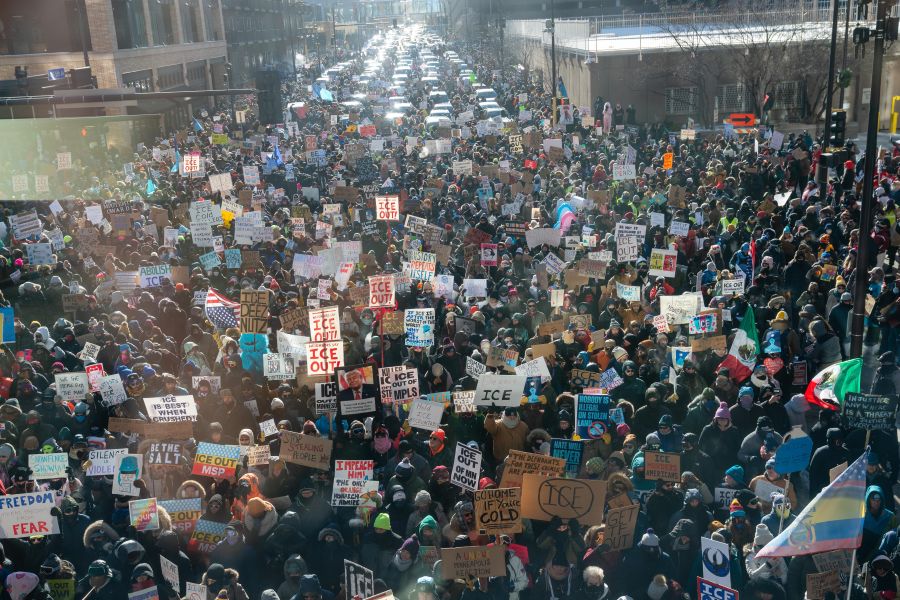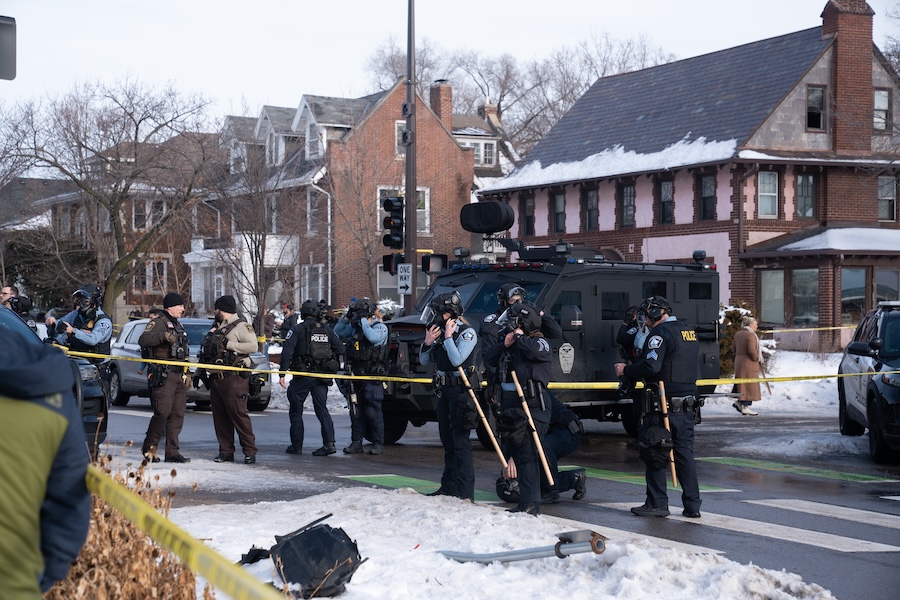
Thousands of demonstrators filled the streets of Minneapolis last week calling for an end to federal immigration enforcement, drawing national attention to renewed opposition against U.S. Immigration and Customs Enforcement (ICE). Organizers promoted the rally as a grassroots response to immigration policies, with protesters chanting slogans and urging state leaders to block ICE operations in Minnesota.
Estimates suggest roughly 15,000 people participated in the march, which took place on Friday. While many attendees described their involvement as personally motivated, some researchers and analysts argue that the scale and coordination of the event point to broader organizational support rather than a purely spontaneous uprising.
Reporting cited by the New York Post notes that influence researchers see similarities between the Minneapolis protest and previous large-scale demonstrations during President Donald Trump’s earlier time in office. In those cases, protests were publicly framed as organic movements but were later linked to structured activist networks and major financial backers.

Benjamin Harris is a RapidReports front page contributor and editor,proud father of four.